





Emerald and Diamond Band
Emerald and diamond band rings combine rich green beryl and bright stones in gold and platinum settings spanning the Edwardian period to the mid-twentieth century.
Emerald and Diamond Band
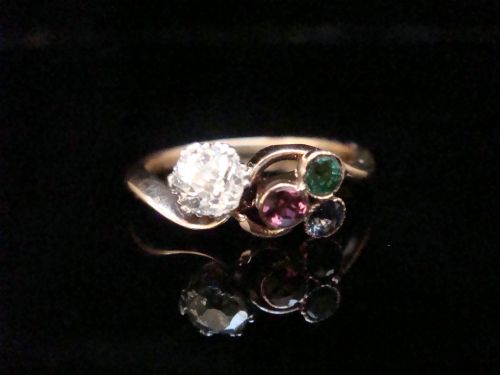
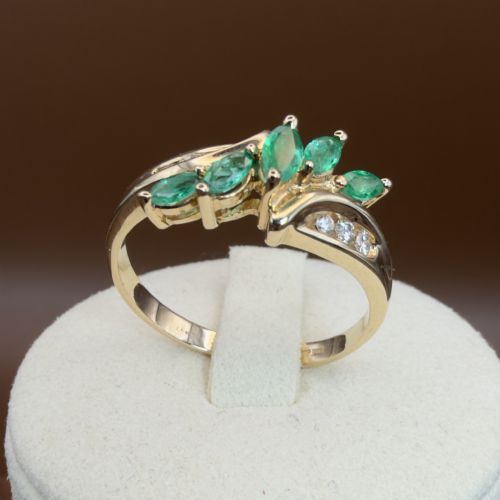
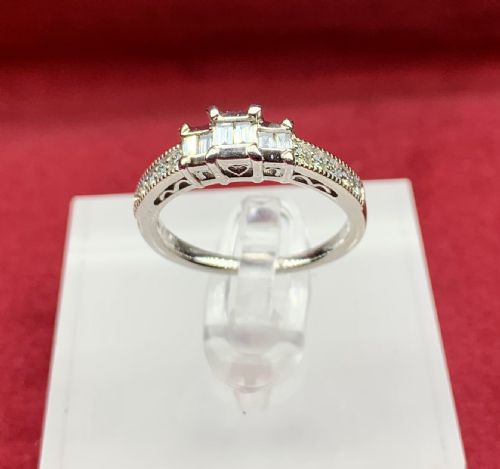
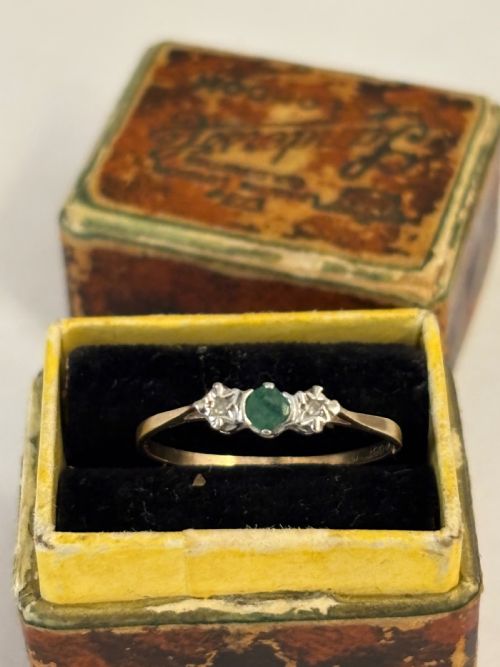
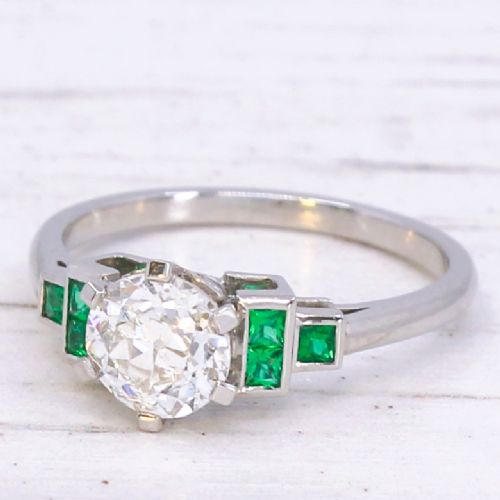
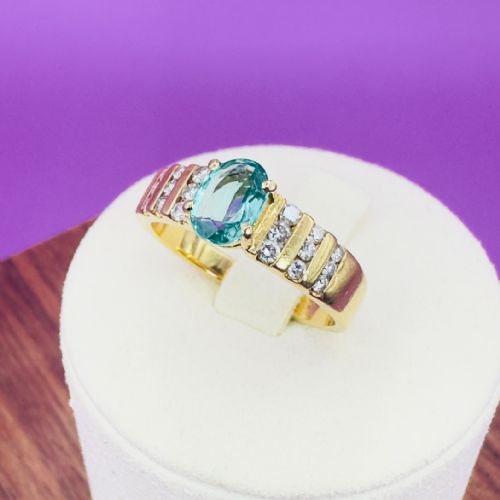
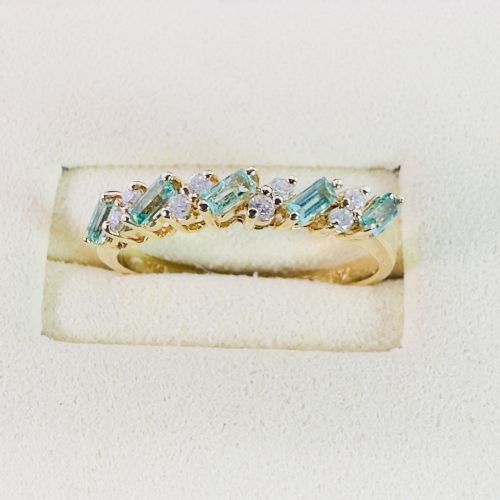
An emerald and diamond band brings together vibrant green emeralds and sparkling diamonds set into precious metals, taking forms such as traditional five-stone rings, geometric cluster settings, and cocktail rings. These pieces emerge across varied eras including the Edwardian period, the Art Deco years, and the mid-century decades, showing how makers arranged these contrasting stones over time.
The selections available here range from delicate antique yellow gold bands set with alternating gems to bold platinum cocktail pieces featuring substantial central emeralds flanked by old-cut diamonds. Buyers frequently encounter nineteenth and twentieth-century designs where white gold, yellow gold, or platinum frames linear rows or tiered cluster layouts of emerald and diamond.
Makers utilised different mounting styles to suit the fashion of each decade, from the refined symmetry typical of Edwardian work to the assertive geometry of Art Deco design and the substantial weight of Retro tank rings. Every piece highlights the enduring partnership between green beryl and colourless diamonds housed within durable precious metal bands.
Materials and construction methods
Goldsmiths constructed these rings primarily in platinum, 18ct yellow gold, 18ct white gold, and occasionally 14ct gold, matching the metal choice to the prevailing style of the period. Platinum provided the strength needed for delicate Edwardian and Art Deco settings, while yellow gold dominated earlier and mid-century designs.
Setting techniques relied on precise claw, bezel, and pavé methods to secure both emeralds and diamonds into the metal band without obscuring their facets. The combination of durable white and yellow metals with carefully cut stones ensured structural integrity for everyday wear.
Periods represented span from 1900 through the Edwardian era, Art Deco, and mid-century decades up to the late twentieth century.
Distinctions in quality
Quality in an emerald and diamond band rests upon the clarity and natural colour distribution of the emeralds alongside the cut and brilliance of the supporting diamonds. Pieces featuring unheated or natural emeralds with balanced saturation command greater appreciation than those with lesser stones.
The standard of metalwork and setting precision further separates standard examples from exceptional items, particularly in antique platinum and gold where fine hand-finishing defines the construction. Heavier gauge metal and secure, flush-fitting stones indicate superior workshop execution.
Asprey
The Emerald and Diamond Band Glossary
- Cluster ring
- A ring featuring a central stone surrounded by a border of smaller gems, commonly seen in emerald and diamond combinations from the Art Deco period.
- Old-cut diamond
- A diamond cut with a small table, high crown, and open culet, typical of stones set in antique and Edwardian jewellery before modern brilliant cutting standardised.
- Platinum
- A dense, durable, and naturally white precious metal favoured in Edwardian and Art Deco jewellery for securing delicate stone settings.
- Tank ring
- A bold, sculptural ring style popular during the Retro period, characterised by voluminous stepped gold work resembling military machinery.
- Five stone ring
- A traditional setting style featuring five gems of graded or uniform size arranged in a linear row across the finger.
Emerald and Diamond Band: Frequently Asked Questions
What is an emerald and diamond band?
An emerald and diamond band is a finger ring featuring a combination of green emeralds and diamonds set into precious metals such as gold or platinum. These pieces range from simple multi-stone rows to elaborate cocktail designs.
Such rings have been produced across multiple eras, incorporating design traits from Edwardian, Art Deco, and mid-century periods while maintaining the classic pairing of green and white stones.
How do I date an antique band?
Dating an antique band involves examining the metal types, stone cuts, and overall stylistic motifs used in its construction. Edwardian pieces often utilise delicate platinum work, whereas Art Deco examples display geometric symmetry.
Hallmarks stamped inside the band also provide specific clues regarding the year of assay and the workshop responsible for manufacturing the piece.
Are these rings suitable for daily wear?
Many of these rings can be worn daily provided they receive proper care and regular checks by a jeweller to ensure the stone settings remain secure. Platinum and 18ct gold offer good durability for regular use.
Emeralds require gentle treatment due to their natural internal characteristics, meaning wearers should avoid harsh chemicals and heavy impacts during physical tasks.
What styles are common in these listings?
Common styles include geometric Art Deco cluster rings, Edwardian five-stone designs, and substantial mid-century retro tank rings. Each style reflects the aesthetic preferences of its decade of origin.
Makers utilised varying band widths and stone arrangements, offering everything from understated stackable bands to prominent cocktail pieces.