





Embroidered Velvet Hanging
An embroidered velvet hanging brings rich texture and intricate needlework to a room, offering centuries of global craftsmanship from Central Asian, European, and Asian workshops.
Embroidered Velvet Hanging
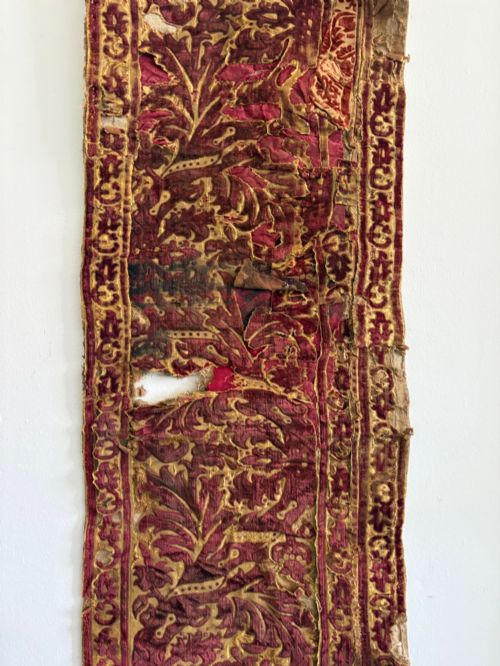
An embroidered velvet hanging encompasses a diverse range of textiles designed for display, spanning centuries from the sixteenth to the twentieth. When searching for an embroidered velvet hanging, buyers encounter everything from ecclesiastical vestments and Spanish Baroque copes to Central Asian tribal dowry pieces and large Asian relief panels.
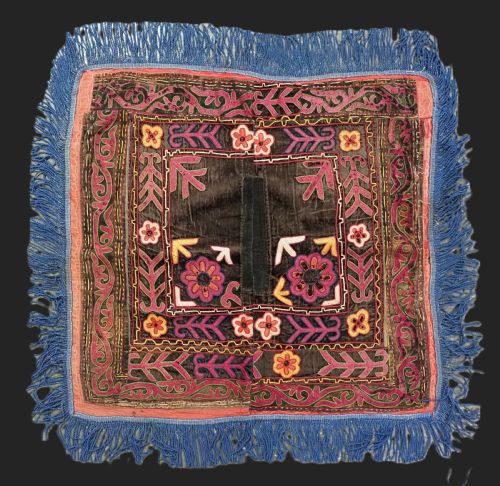
The selection on this page demonstrates remarkable geographical reach, including items from Ottoman Turkey, Central Asia, India, Burma, France, and Spain. Forms range from structural pilaster hangings and wall panels to repurposed coverlets and specific tribal ilgich pieces.
How they were made
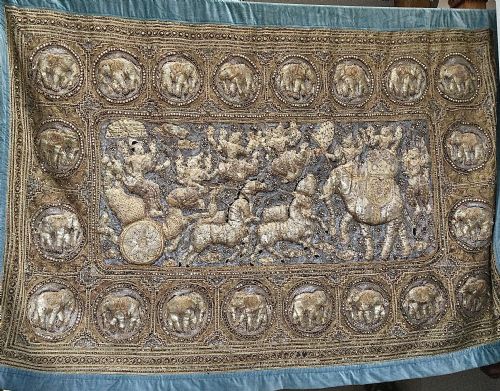
Makers utilised silk velvet as a primary ground, providing a dense and tactile pile that supported elaborate needlework. Artisans then applied metallic threads, gold wire, and sequins to build shimmering surface relief against the soft fabric.
Stitching techniques varied by region and period, employing silk and cotton threads to render complex botanical, figurative, and geometric motifs. Whether constructed for European church interiors or Central Asian nomadic dowries, these textiles relied on meticulous hand embroidery.
Embroidered Velvet Hanging Retail Price Guide 2026
Typical asking prices for embroidered velvet hanging among the pieces listed under this phrase on Sellingantiques today, from the lower quarter to the upper quarter. They describe what is for sale here now, not the wider market.
Some tigers and dragons stare out from twentieth-century relief embroidery with startling domestic intensity.
What varies in quality
The distinction between ordinary and exceptional examples rests upon the density of the metal threadwork and the complexity of the silk embroidery. Pieces featuring refined gold wire and intricate relief show a higher level of artisan investment.
Preservation of the delicate velvet pile and the original integrity of the ground fabric dictate the standing of a textile. Survivals that retain their vibrant metallic sheen and structural cohesion represent the finer tier of historical production.
The Embroidered Velvet Hanging Glossary
- Velvet
- A woven tufted fabric in which the cut threads are distributed in a short dense pile, giving it a distinctively soft feel. This material serves as the foundational ground for the embroidery across many periods.
- Cope
- A long ecclesiastical vestment resembling a cape, worn by clergy during processions and ceremonies. Spanish examples in velvet often feature heavy metal-thread decoration.
- Ilgich
- A traditional embroidered hanging produced by Central Asian tribes, often created as dowry items. These textiles display distinct tribal patterns and symbolic motifs.
- Metallic Thread
- Fine wire or metal-wrapped fibre used in needlework to create reflective linear designs. It appears frequently in Ottoman and Asian decorative hangings.
- Pilaster Hanging
- A tall, narrow textile panel designed to fit architectural wall spaces between windows or doors. Pairs of these items were utilised in formal European interiors.
Embroidered Velvet Hanging: Frequently Asked Questions
How were embroidered velvet hangings used historically?
These textiles served multiple functions across different cultures, acting as decorative wall coverings in elite European homes, structural panels in grand interiors, and sacred vestments in ecclesiastical settings.
In other traditions, such as Central Asian tribal communities, they functioned as essential dowry items intended to mark significant life milestones and adorn domestic spaces.
How do I care for an antique velvet hanging?
Protect antique textiles from direct sunlight to prevent the fading of silk velvet and the oxidation of metallic threads. Display them away from high humidity and heat sources to maintain the integrity of the ground fabric.
Support the weight of large hangings evenly across the upper edge when mounting them, avoiding direct pin pressure on fragile areas.
How can I tell the period of a velvet hanging?
Dating relies on analysing the stylistic markers of the embroidery, such as Baroque scrollwork, Ottoman motifs, or Central Asian tribal patterns. The weave of the backing velvet and the composition of the metallic threads also provide crucial evidence.
Comparing the decorative vocabulary with documented examples from specific regions helps narrow down the century of production.
What materials are common in these textiles?
Silk velvet forms the primary background for the vast majority of these historical pieces, offering a luxurious pile that contrasts with flat stitching. Artisans enhanced this foundation using silk and cotton threads for colourful pictorial elements.
Gold thread, gold wire, and sequins are frequently integrated to introduce shimmering textural relief, particularly in pieces originating from Ottoman, Indian, and European workshops.