


Embossed Metal Log Bucket
An embossed metal log bucket brings functional warmth to a hearth, combining sturdy fire-side storage with decorative metalwork.
Embossed Metal Log Bucket
When you search for an embossed metal log bucket, you encounter heavy hearth vessels designed to hold wood, coal, and peat next to the fireplace. These objects frequently double as planters, cachepots, and jardinieres, reflecting multipurpose domestic use across different eras.
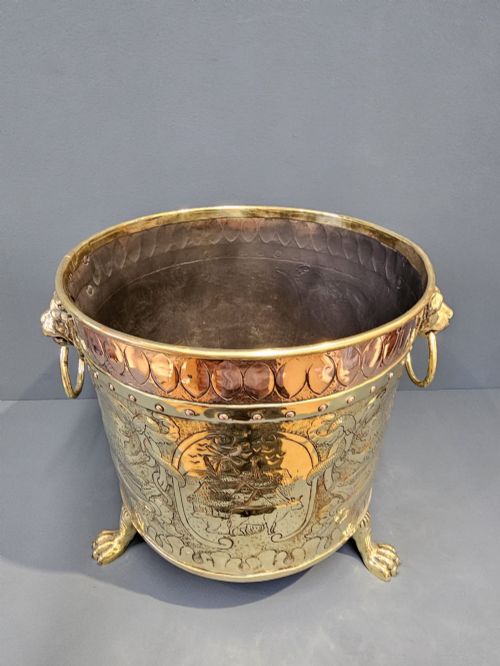
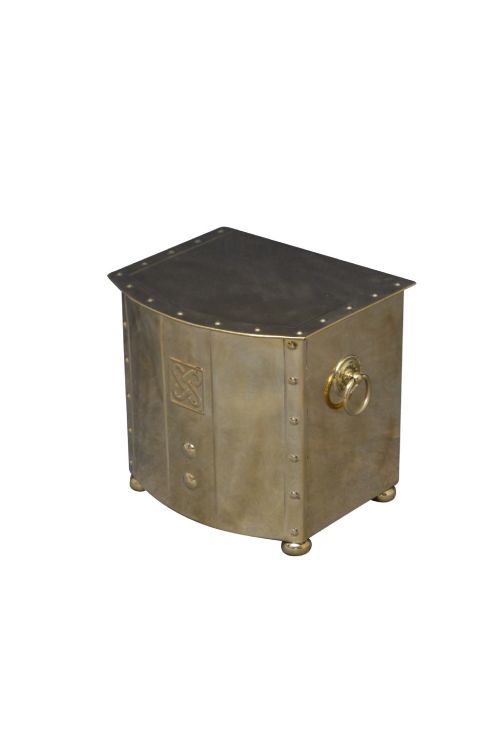
The pieces appearing on this page span the Victorian, Regency, and Art Deco periods, drawing on Arts and Crafts, Victorian Dutch Revival, and Indo-Persian styles. You are most likely to meet Victorian brass and copper examples featuring raised relief decoration.
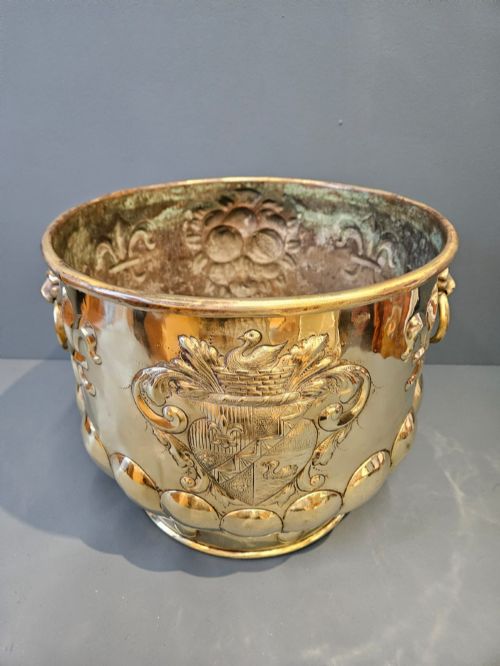
Forms range from traditional circular bins and helmet scuttles to large planters adorned with crests, tavern scenes, and metal bands. Origin varies from English workshops to French makers and continental dinanderie production.
Materials and construction methods
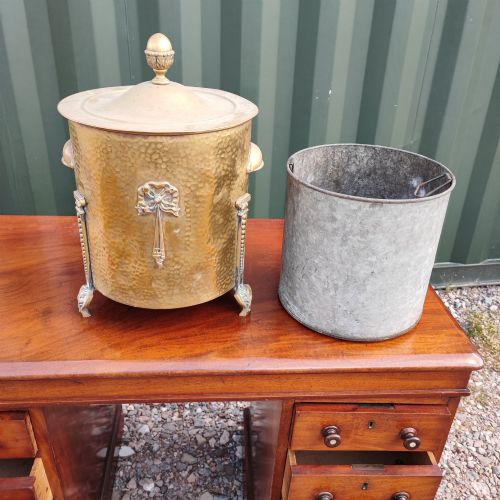
Construction relies primarily on brass and copper, occasionally incorporating galvanised metal, silver plate, and wooden components for handles or internal structures. Metals are beaten, shaped, and joined to form durable vessels capable of withstanding heavy daily use by the hearth.
Embossing and repoussé techniques create the textured patterns characteristic of these pieces, pushing the metal from behind to form crests, tavern scenes, and decorative motifs. Additional elements such as copper bands, swing handles, and applied crests are riveted or soldered onto the main body.
Some Victorian brass buckets feature lively tavern scenes, bringing noisy pub life straight to the domestic fireplace.
Distinctions in quality and finish
Quality rests in the crispness of the hand-embossed detail and the structural integrity of the metal body. Finer vessels display deep, well-defined relief work on tavern scenes or crests, whereas simpler items show softer, shallower stamping.
The choice of materials and the weight of the metal distinguish standard production from superior pieces. Heavier gauge brass and copper, combined with robust handles and secure joints, indicate higher grade fireside hardware designed to endure.
Petrus Ramus·Henry Loveridge
The Embossed Metal Log Bucket Glossary
- Embossed
- Decorated with a raised pattern or design moulded or stamped into the metal surface. This technique gives texture and visual depth to the body of the bucket.
- Jardiniere
- An ornamental pot or stand for holding flowers or plants. Many large brass and copper vessels originally made for plants serve equally well as log holders.
- Helmet scuttle
- A coal bucket shaped like a classical helmet with a flared mouth and a swing handle. It allows for easy pouring of fuel onto the fire.
- Repoussé
- A metalworking technique where the metal is hammered from the reverse side to create a raised design on the front. It provides the detailed relief seen on many fireside pieces.
Embossed Metal Log Bucket: Frequently Asked Questions
What is an embossed metal log bucket?
These items are rigid metal containers built to store firewood, coal, or peat beside an open hearth. They combine practical utility with decorative surface patterns.
Many examples double as large planters or jardinieres, reflecting how domestic objects served multiple purposes in historical interiors.
How do I clean brass and copper?
Careful dusting with a soft cloth preserves the antique surface and accumulated patina of older metalwork. Aggressive polishing removes the historical finish that collectors value.
Consult a specialist before applying commercial cleaners to pieces featuring delicate embossed details or applied crests.
Were these always used for logs?
Historical domestic inventory records show these vessels holding coal, peat, and logs for fireside consumption. Their robust construction handled heavy solid fuels daily.
Many pieces were also manufactured as ornamental jardinieres or planters for large indoor house plants, blurring the line between utility and decor.
How do I date an antique bucket?
Dating relies on identifying stylistic markers, manufacturing techniques, and specific design movements associated with the piece. Victorian examples often display heavy brass construction with distinct relief work.
Comparing construction methods, handles, and decorative motifs against recorded pieces helps narrow down the period of manufacture.
Can I use them as planters today?
These metal vessels adapt easily to holding large potted plants, functioning much like their original secondary uses as jardinieres. Their waterproof metal bodies contain soil and water effectively.
Protecting the interior lining helps prevent moisture damage and preserves the historic metal from aggressive corrosion.