


Elm Writing Bureau
An elm writing bureau is a fitted desk with a sloping fall-front lid, prized for its figured timber and practical storage.
Elm Writing Bureau
An elm writing bureau combines a hinged writing flap with internal pigeonholes and drawers, offering a compact workspace that conceals correspondence when closed. Buyers searching for an elm writing bureau seek pieces that showcase the distinctive grain and rich honey tones characteristic of this native timber.
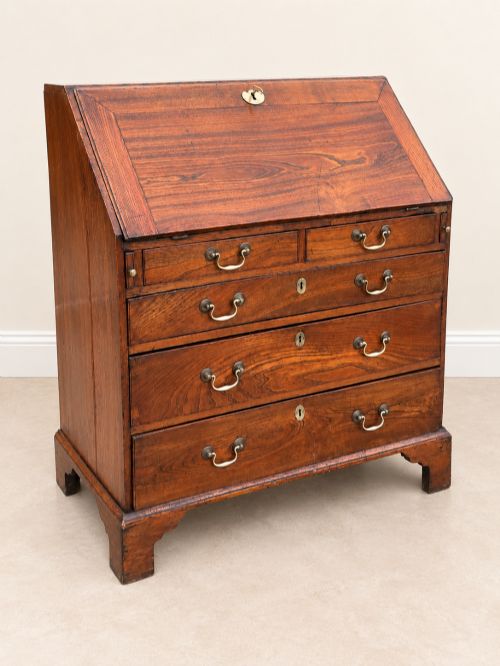
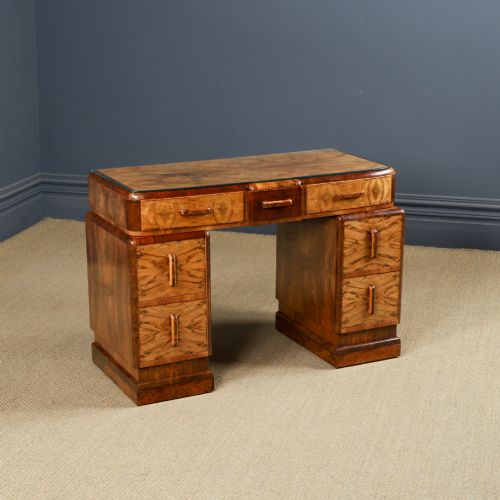
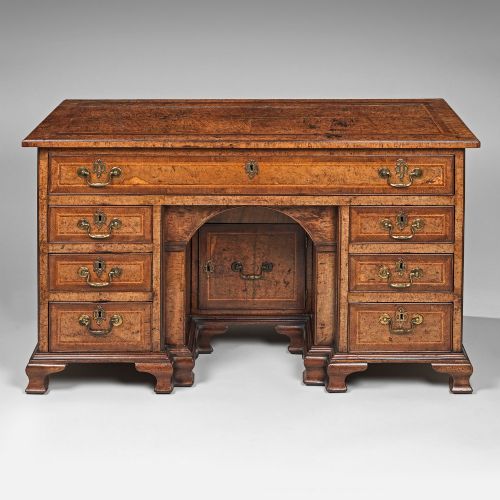
The selections span centuries, featuring vernacular country furniture alongside sophisticated Georgian and Queen Anne examples. Visitors to this page will frequently encounter straightforward 18th century bureaus, alongside smaller kneehole desks, tabletop versions, and taller secretaire chests.
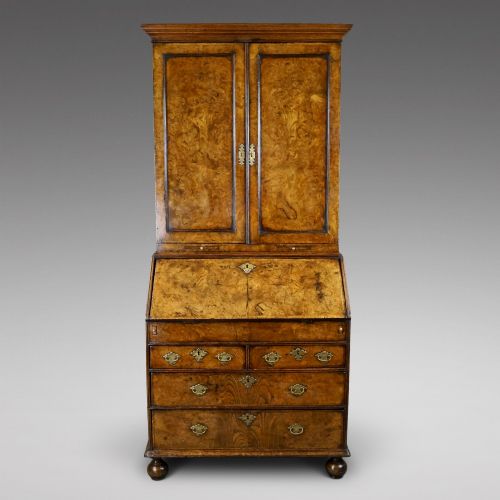
Makers often paired elm with walnut, oak, or yew to create contrasting panels and crossbanding on the fall-front and drawer fronts. These hybrid woods add visual depth to pieces ranging from early 17th century bookcase combinations to later Art Deco pedestals.
How they were made
Joiners relied on solid elm and burr elm veneers for the primary surfaces, frequently mounting them over secondary structural woods like oak. Burr elm sections, prized for their swirling patterns, were meticulously sliced and laid to create symmetrical facades on the writing flap.
Brass hardware, including escutcheons, drop handles, and hinges, secured the fall-fronts and drawers while providing functional contrast to the timber. Leather inserts occasionally lined the writing surfaces of later desks, while glass featured prominently in the upper doors of taller bureau bookcases.
Listings feature elm and burr elm pieces spanning from the 17th century through the Georgian era to 20th-century Art Deco interpretations.
What varies in quality
The calibre of an elm writing bureau depends heavily on the choice and matching of the timber figure, particularly on the drop-front lid. Pieces utilising dense, highly figured burr elm across the primary surfaces command attention for their visual impact.
Construction methods and the retention of original interior fittings heavily influence the standing of any given desk. The survival of original brasses, secondary drawer linings, and tightly fitted internal pigeonholes distinguishes superior examples from heavily altered pieces.
The Elm Writing Bureau Glossary
- Bureau
- A writing cabinet featuring a sloping lid that opens to form a desk surface over a set of drawers. These pieces often contain small compartments and hidden nooks for stationery.
- Burr Elm
- A growth deformity in the elm tree that produces highly decorative, swirling grain patterns. Cabinetmakers sliced these burls into thin veneers for statement furniture.
- Fall-Front
- The hinged flap of a desk that folds down to create a horizontal writing surface. It is typically supported by lopers or side arms when opened.
- Kneehole Desk
- A compact desk featuring a central recess for the user's legs, flanked by pedestals of small drawers. This form became popular during the Georgian period.
- Secretaire Chest
- A tall chest of drawers where the top drawer pulls out or drops down to reveal a fitted writing compartment. It merges the storage capacity of a chest with the utility of a desk.
Elm Writing Bureau: Frequently Asked Questions
How do I care for my elm bureau?
Keep wooden surfaces away from direct heat sources and strong sunlight to prevent the elm timber from splitting or warping over time. Apply a traditional wax polish occasionally to nourish the grain and maintain a protective finish.
Avoid using modern liquid cleaners or silicone sprays, which can damage historic polish and attract dust to carved details. Gentle dusting with a soft, dry cloth is usually sufficient for regular maintenance.
What is inside an elm bureau?
Lifting the sloping fall-front reveals a fitted interior comprising small pigeonholes for letters, tiny drawers for stationery, and often a central concealed compartment. These inner sections were designed to keep private documents and writing materials organised.
Many examples feature a sliding well cover or secret drawers hidden behind removable partitions. The arrangement of these internal compartments varies depending on the period and the maker's workshop.
Are elm bureaus sturdy enough for daily use?
Elm is a famously tough, interlocking timber that resists splitting, making these desks durable for everyday tasks like writing or laptop use. The fall-front is supported by wooden pull-out bars called lopers, which bear the downward pressure of writing.
However, historical joints and hinges require gentle treatment compared to modern office furniture. Regular inspection of the lopers and hinges ensures the writing flap remains secure during use.
How can I tell an 18th-century bureau from a later revival?
Examine the drawer construction and timber boards for hand-cut dovetails, tool marks, and signs of hand-planing rather than uniform machine sawing. Historic pieces often show minor irregularities in the drawer linings and backboards that reflect period hand-craftsmanship.
Revival pieces from later centuries frequently utilise machine-standardized fixings and cleaner, more uniform interior timbers. Inspecting the secondary woods inside the drawers usually clarifies the true age of the piece.