

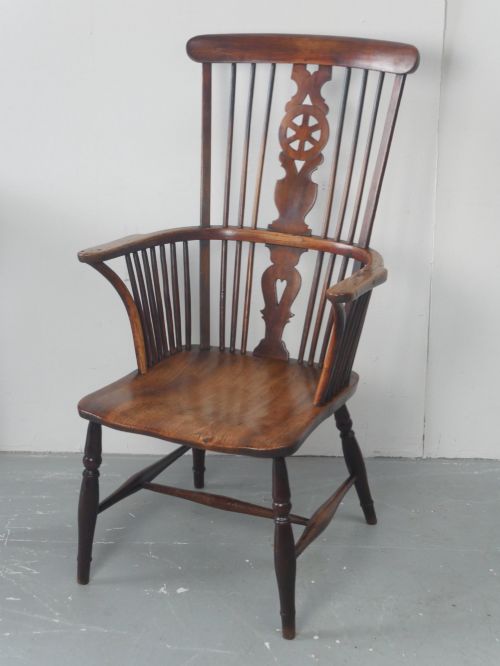
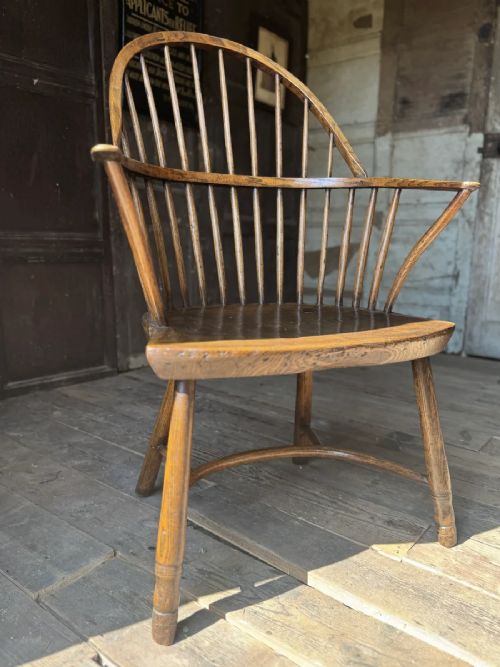
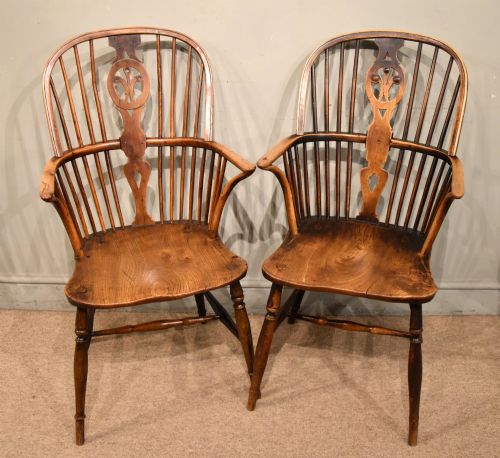
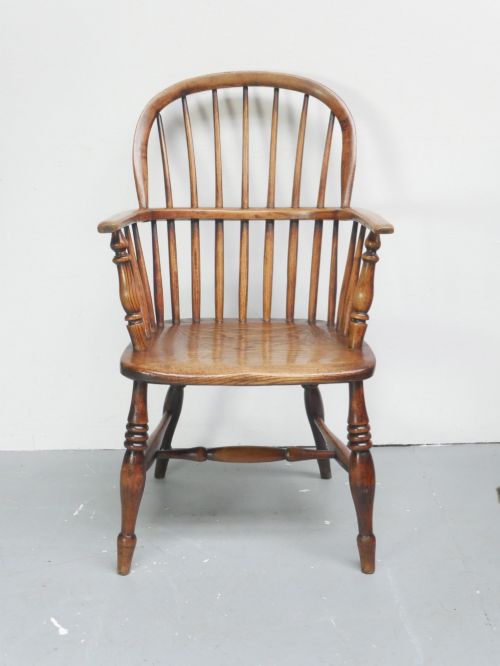
Elm Stick Armchair
An elm stick armchair brings tactile country character into a room, offering sturdy vernacular seating shaped by generations of rural use.
Elm Stick Armchair
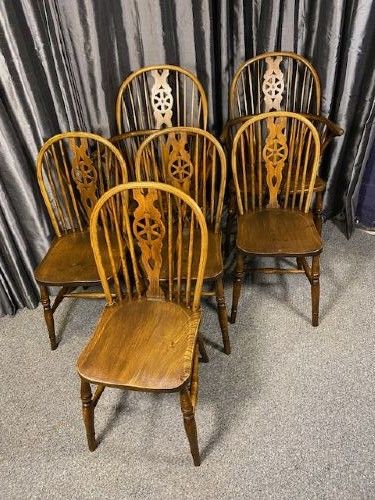
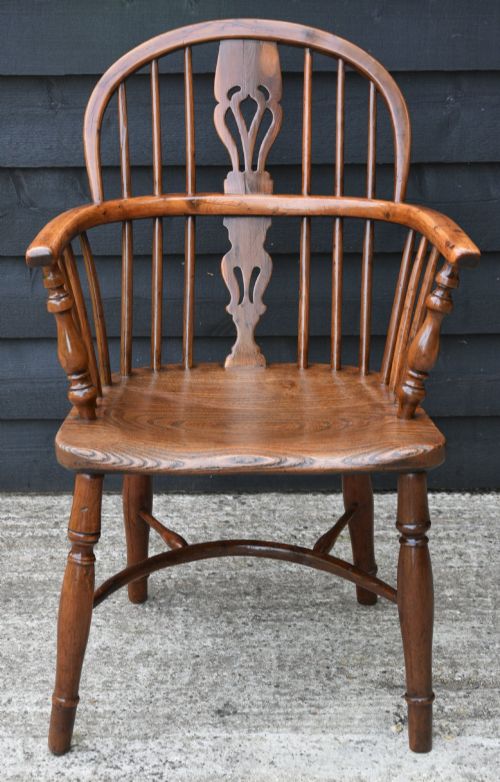
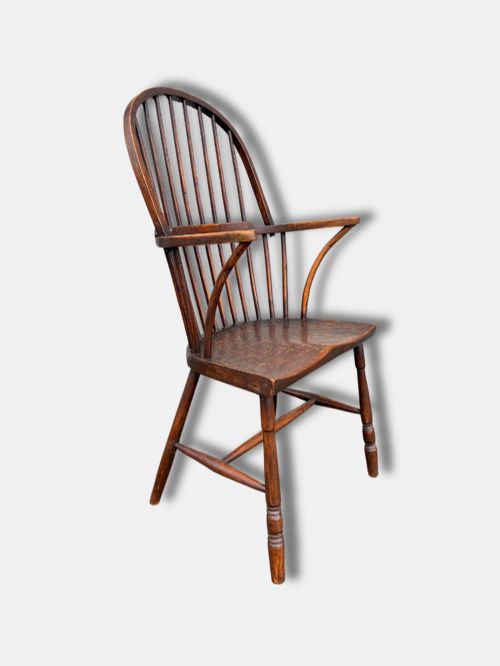
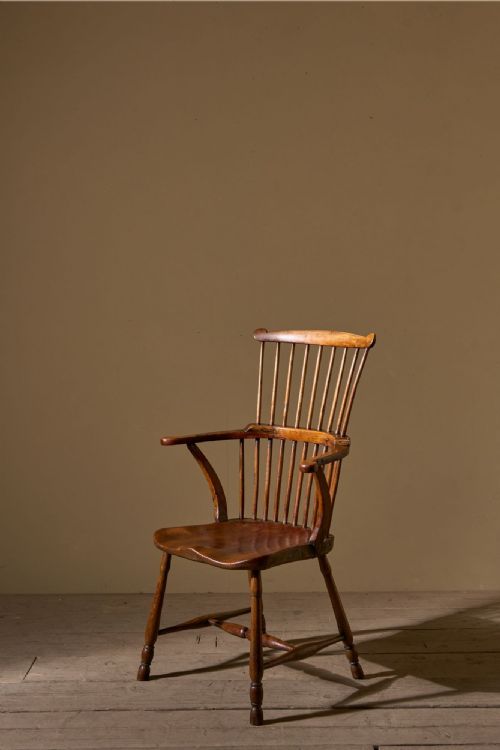
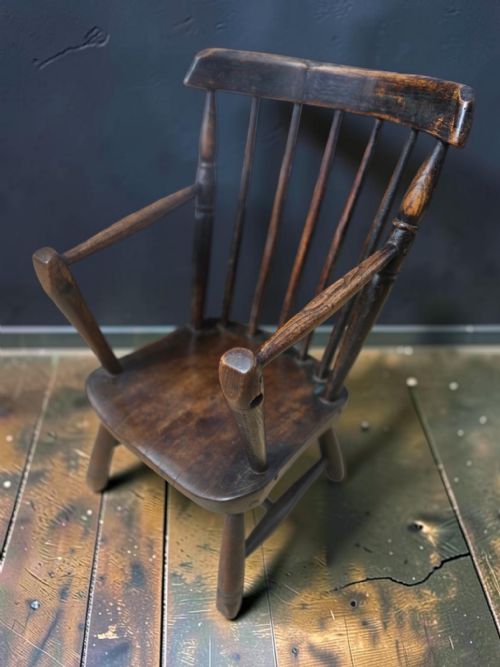
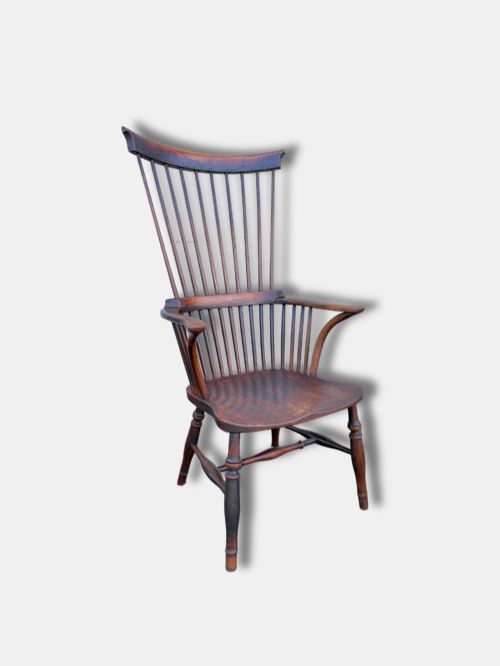
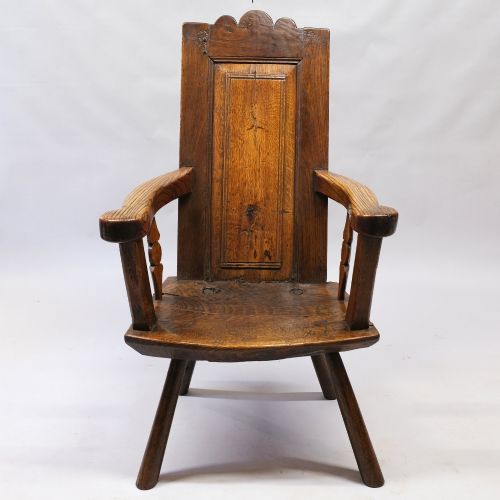
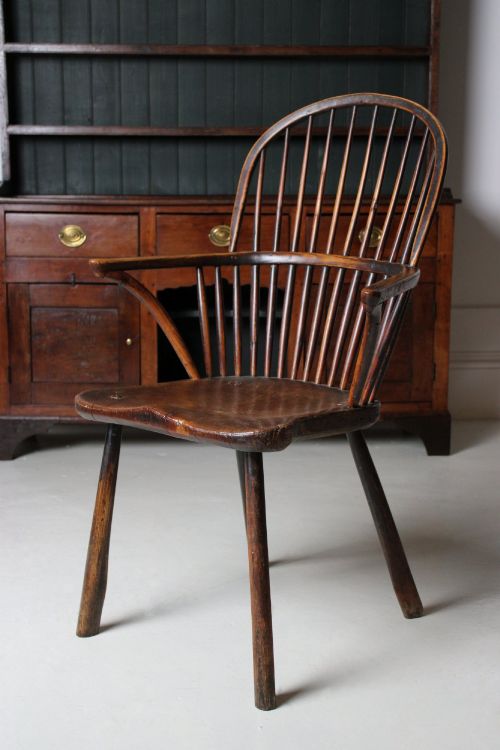
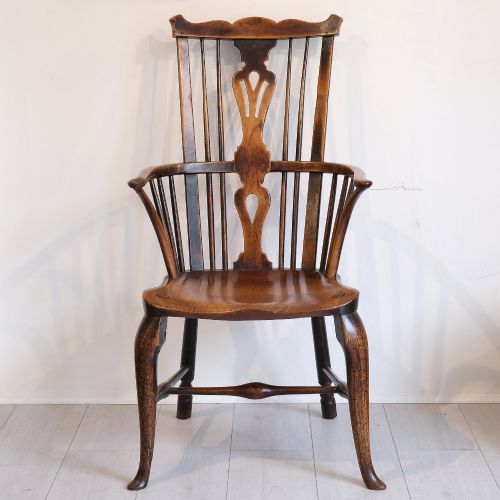
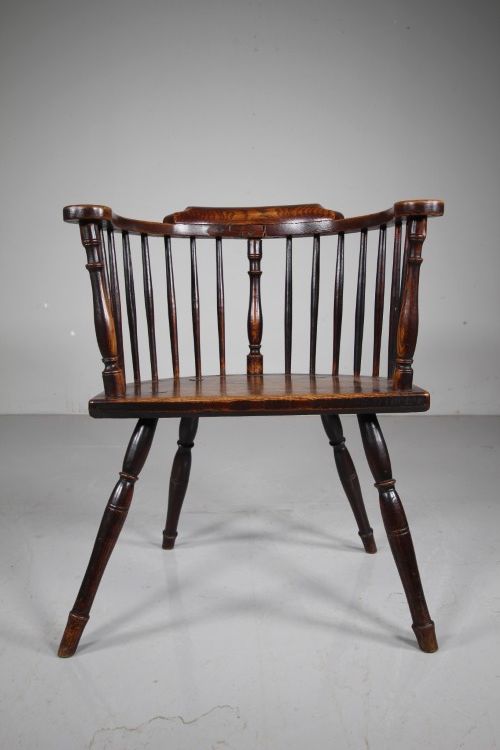
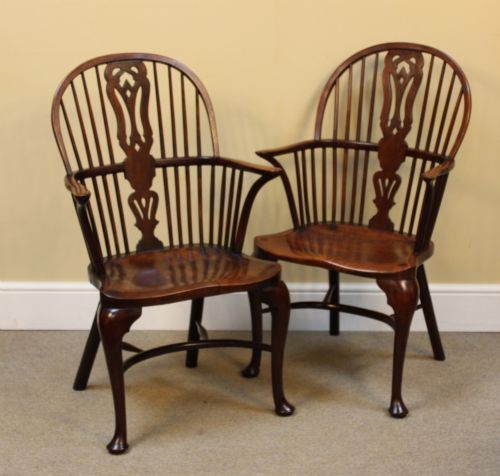
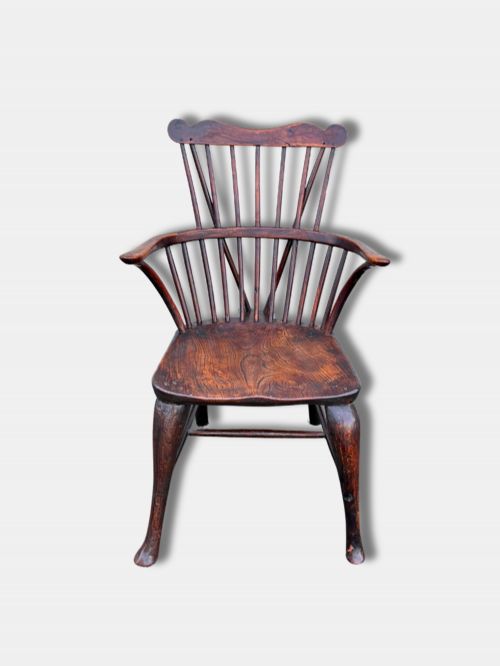
When you search for an elm stick armchair, you meet vernacular seating largely rooted in English, Welsh and Scottish country traditions spanning the eighteenth and nineteenth centuries. These chairs encompass low-back, hoop-back and high comb-back Windsor variants, alongside child chairs and occasional panel-backed forms.
The version you are most likely to encounter on this page is an English country stick-back or Windsor armchair combining an elm seat with ash spindles, frequently originating from regional workshops in the Thames Valley or West Country.
Materials and Construction
Maker construction relies on a solid plank of elm for the saddle-shaped seat, chosen because its interlocking grain resists splitting when heavy legs and spindles are wedged into place. Ash supplies strong, flexible stems for the comb backs and stick uprights, while occasional pieces integrate yew, fruitwood, laburnum or beech.
Makers shaped these components using drawknives and shaves, turning legs on pole lathes and boring stretcher joints directly into the thick wooden seats to build a rigid, unified frame without metal nails.
Elm Stick Armchair Retail Price Guide 2026
Typical asking prices for elm stick armchair among the pieces listed under this phrase on Sellingantiques today, from the lower quarter to the upper quarter. They describe what is for sale here now, not the wider market.
Judging Quality
Quality rests upon the sculptural rhythm of the spindle arrangement and the careful thinning of the comb-back or hoop timber, where a lighter, more graceful sweep distinguishes superior examples from heavy, blockish ones.
The integration of secondary timbers such as burr elm or contrasting yew grain elevates a piece, as does a deeply carved saddle seat that maintains substantial thickness around the leg joints.
The Elm Stick Armchair Glossary
- Windsor chair
- A seat built with a solid wooden saddle into which the legs, back spindles and armbow are independently socketed. Regional variations include hoop-backs, low-backs and stick-backs.
- Crinoline stretcher
- A bentwood or wooden reinforcement ring connecting the legs of a chair to provide rigidity. It frequently curves outward beneath the seat in West Country examples.
- Vernacular furniture
- Objects made by local rural craftsmen using regional timber traditions rather than following strict metropolitan stylistic guilds. These pieces prioritise practical utility and local material availability.
Elm Stick Armchair: Frequently Asked Questions
What is an elm stick armchair?
An elm stick armchair is a traditional wooden seat featuring a solid shaped elm base and slender upright wooden sticks forming the back support. They developed as robust utilitarian seating in rural homes and farmhouses.
Over decades of domestic use, these chairs acquired deep surface patinas and minor structural repairs that reflect their long working histories.
How do I date an elm stick armchair?
Dating relies on observing construction methods, tool marks and the evolution of the back design from low profiles to high comb backs. Eighteenth-century examples often display simpler, heavier turnery and primitive joined elements.
Nineteenth-century variants frequently incorporate steam-bent components and lighter spindle arrangements reflecting industrial improvements in regional workshops.
Where were elm stick armchairs made?
These chairs originated in rural workshops across England, Wales and Scotland, with specific regional hubs like the Thames Valley and West Country developing distinct turning styles. Local woodcutters and bodgers supplied shaped parts to local chairmakers.
Regional preferences dictated whether makers selected ash, yew, fruitwood or elm for the spindles and arms.
How do I live with an elm stick armchair?
Live with these chairs by placing them away from direct heat sources and sudden humidity shifts that cause old timber to dry and crack. Their compact footprints suit dining tables, reading corners or hallways.
Regular dusting and occasional application of appropriate wax help preserve the timeworn surface character without masking its history.