

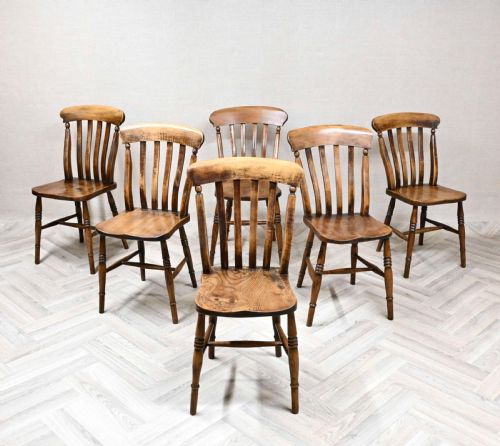
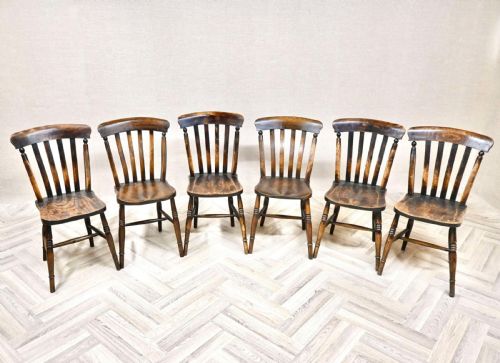
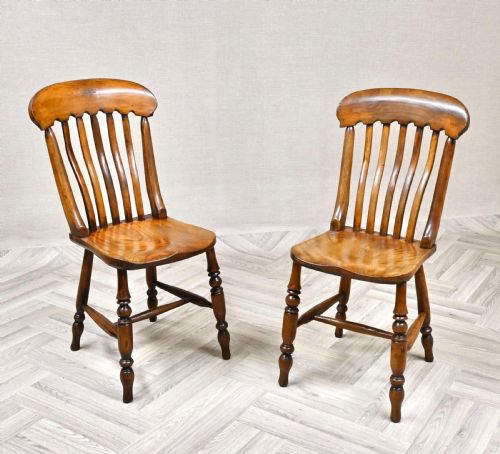
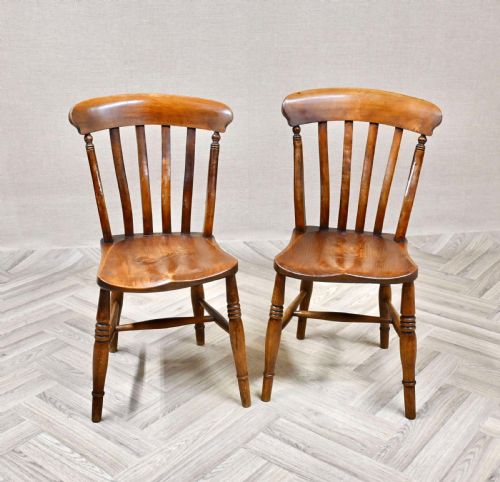
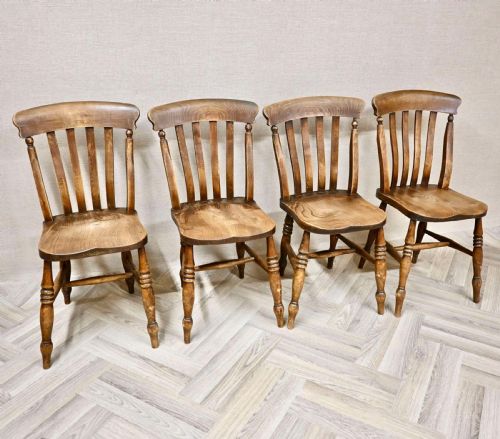
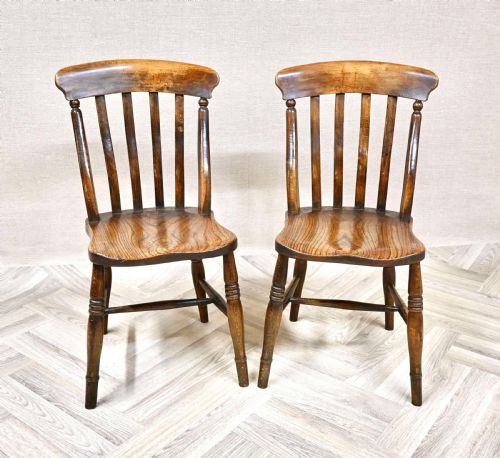

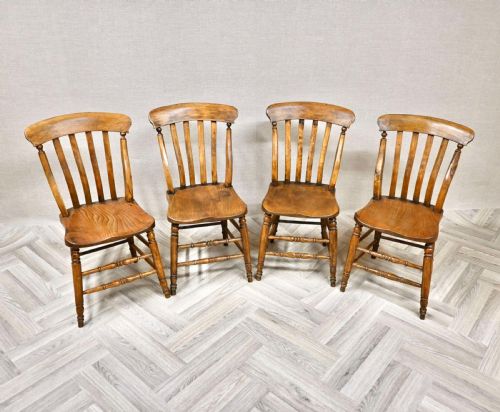
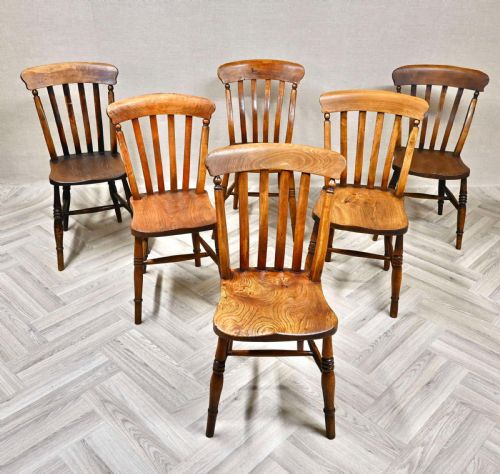


Elm Slat Back Chairs
Elm slat back chairs bring honest country character to a room, offering sturdy wooden construction shaped by generations of rural makers.
Elm Slat Back Chairs
Elm slat back chairs encompass traditional seating forms built primarily in rural workshops across the eighteenth, nineteenth, and early twentieth centuries. Buyers seeking elm slat back chairs frequently encounter Windsor kitchen chairs, kitchen armchairs, and farmhouse dining sets shaped by vernacular traditions.
The selection here ranges from grander Georgian armchairs and Victorian carvers down to matched sets of six kitchen chairs and small children's examples. Regional country makers favoured elm for its tough grain, often pairing it with beech, ash, or oak for structural stability.
Design variations include lath back, lathe back, and slat back configurations, alongside occasional corner chairs and fireside armchairs. Seating options across these pieces span solid timber seats, rush seating, and upholstered pads in fabric or tapestry.
How they were made
Country chair makers relied on a mix of native hardwoods, selecting tough elm for seats because the interlocking grain resists splitting under heavy use. Spindles, legs, and bow frames typically utilised straight-grained beech, ash, or oak to provide rigid support.
Joinery combined traditional turning techniques with Windsor construction methods, where legs and back spindles fit directly into thick solid timber seats. Individual slats were steam-bent or shaped by hand to create supportive backs designed for daily domestic service.
Elm Slat Back Chairs Retail Price Guide 2026
Typical asking prices for elm slat back chairs among the pieces listed under this phrase on Sellingantiques today, from the lower quarter to the upper quarter. They describe what is for sale here now, not the wider market.
Makers occasionally sized down these sturdy country chairs for children, leaving tiny Windsor forms built to withstand nursery life.
What varies in quality
Quality in these country chairs rests on the harmony of timber selection and the retention of original structural form. Examples featuring deeply sculpted solid elm seats and well-balanced turned undercarriages represent the higher tier of regional craftsmanship.
The integrity of the original joints and the preservation of untreated or naturally aged wood surfaces distinguish superior surviving pieces. Matched sets displaying consistent proportions and honest patination hold greater distinction than heavily altered or mismatched groups.
The Elm Slat Back Chairs Glossary
- Lath back
- A chair back featuring flat wooden slats, or laths, pegged vertically into a bentwood bow or top rail.
- Windsor
- A traditional chair construction method where legs and back components are tenoned directly into a solid wooden seat rather than an independent frame.
- Vernacular
- Objects built by local craftsmen following regional traditions rather than formal academic design rules.
- Carver
- An armchair, typically designed for the head of a dining table or household use.
- Patina
- The surface texture and soft sheen developed by wood through age, handling, and wear.
Elm Slat Back Chairs: Frequently Asked Questions
Are these chairs comfortable for daily use?
Solid elm seats are contoured to fit the body, making them surprisingly supportive for sitting through long meals.
Adding a loose cushion can increase comfort while keeping the original timber seat visible.
How do I spot a Georgian chair from a Victorian one?
Georgian country chairs often show simpler, heavier proportions and regional hand-carved details worked entirely by local joiners.
Victorian examples frequently display steam-bent components and standard factory-influenced turnings produced to supply growing towns.
Can I mix different sets around a dining table?
Mixing single country chairs with a matched set is a traditional way to seat a busy household.
Matching similar wood tones and slat heights helps keep the arrangement visually balanced.
How should I clean a rush seat?
Rush seats benefit from gentle brushing to remove dust from the natural woven reeds.
Excess moisture can damage dried plant fibres, so liquids should be avoided during cleaning.