


Elm Hoop Back Chairs
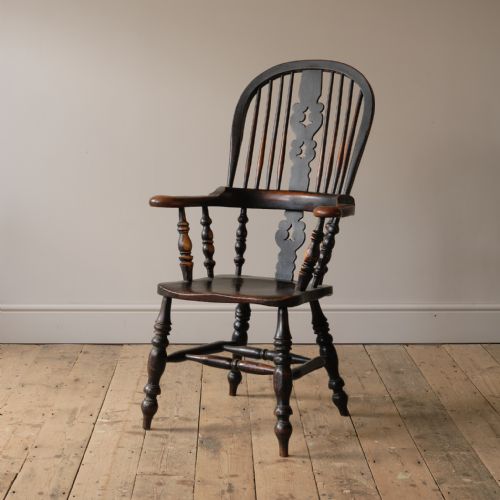
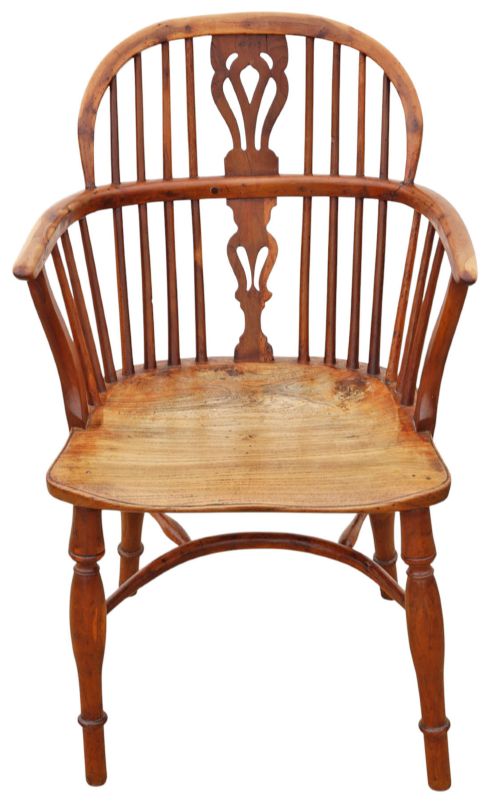
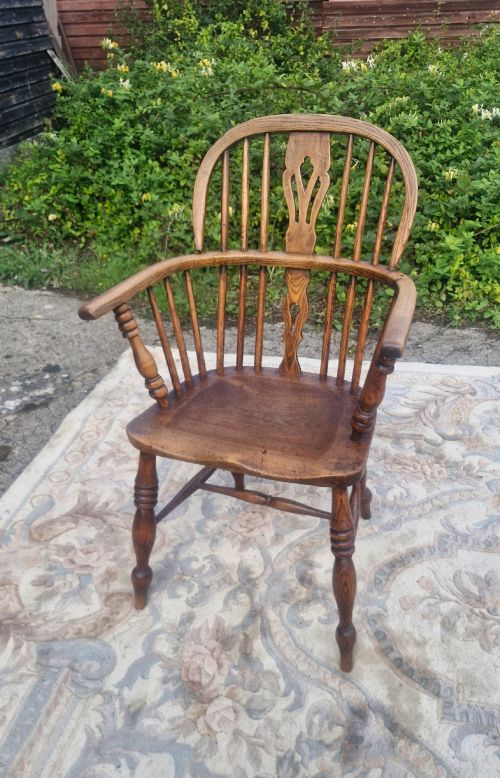
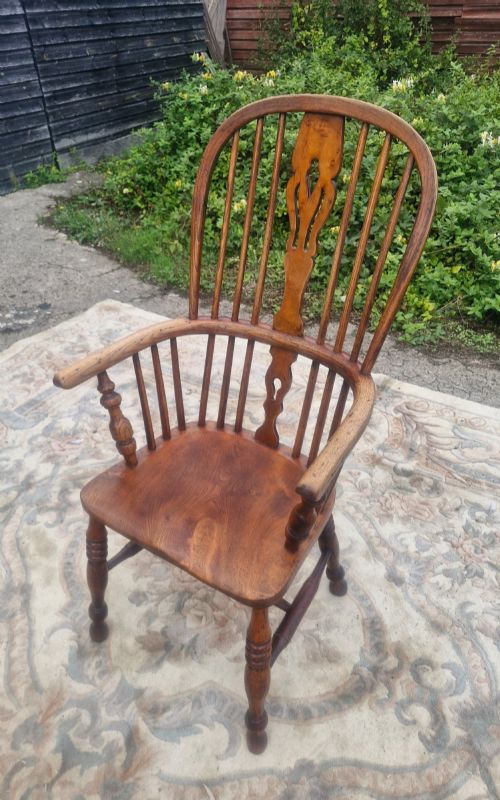
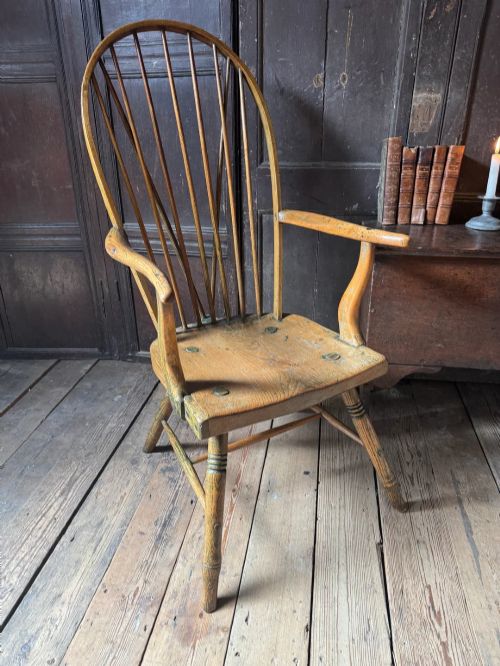
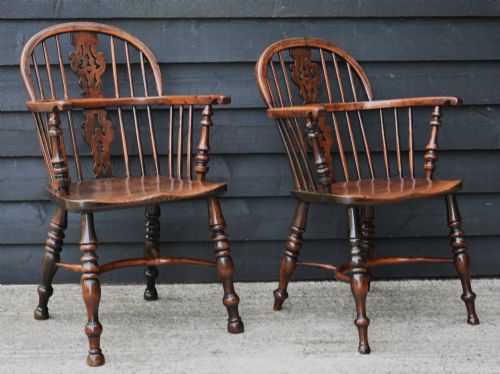
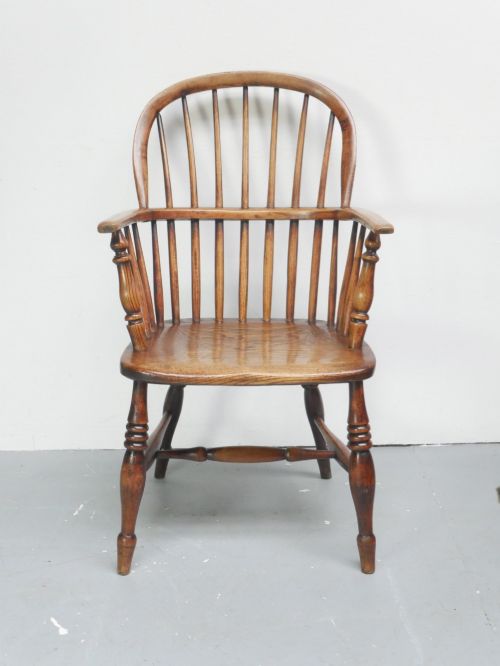
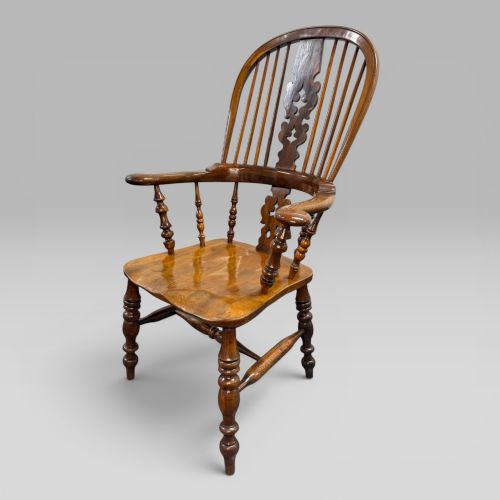
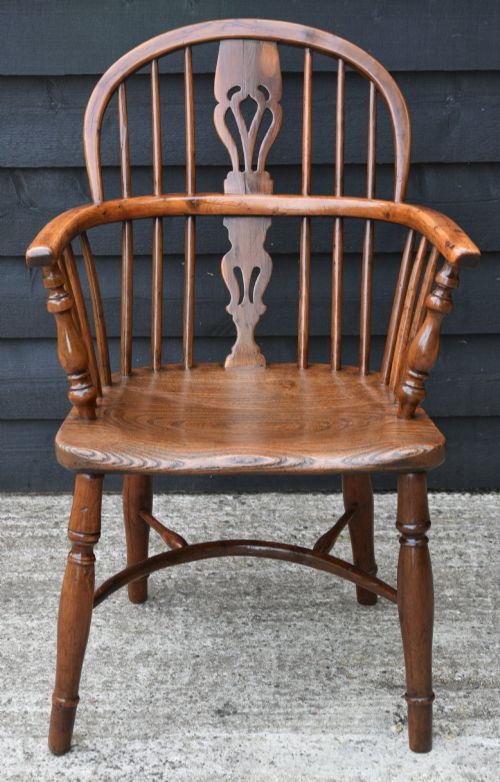
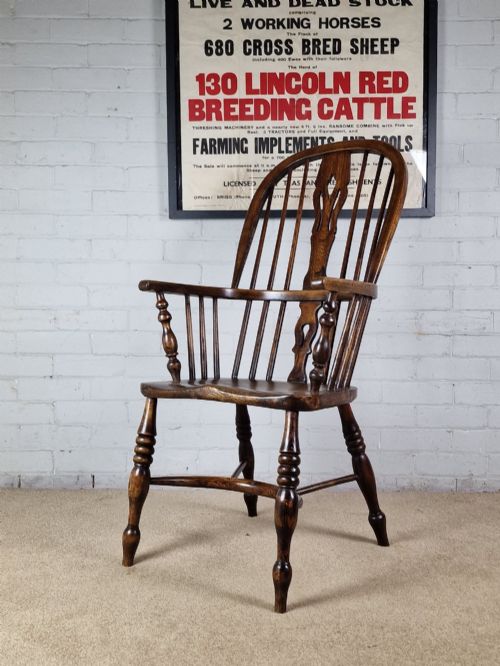
Elm hoop back chairs are traditional wooden seating pieces valued for their robust vernacular construction and comfortable saddled seats.
Elm Hoop Back Chairs
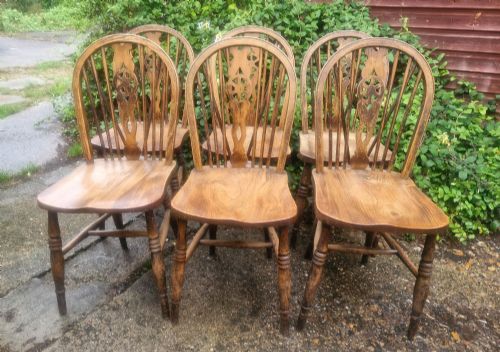
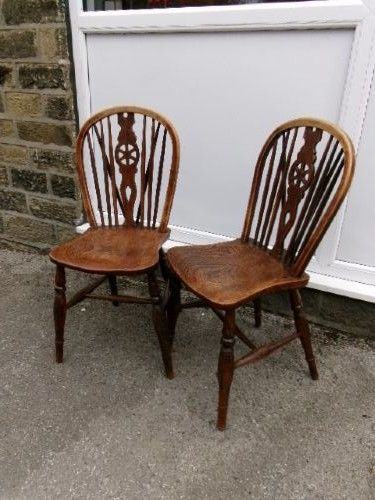
Elm hoop back chairs represent a staple form of traditional British country seating, particularly associated with the Windsor tradition. When browsing this selection, buyers encounter examples originating across the eighteenth, nineteenth and early twentieth centuries.
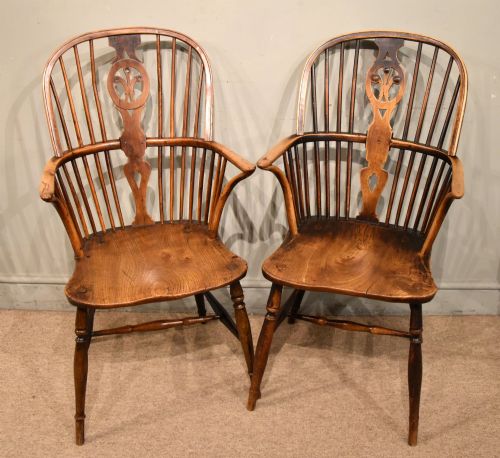
The inventory encompasses single armchairs, matched pairs, and larger dining sets intended for farmhouse kitchens and vernacular interiors. Makers utilised elm primarily for the seats, combining it with other timbers for the structural framework.
How They Were Made
Craftsmen built these chairs using a combination of solid timber and turned components, pairing thick elm for the saddled seat with ash, beech or yew for the spindles, legs and bentwood hoops.
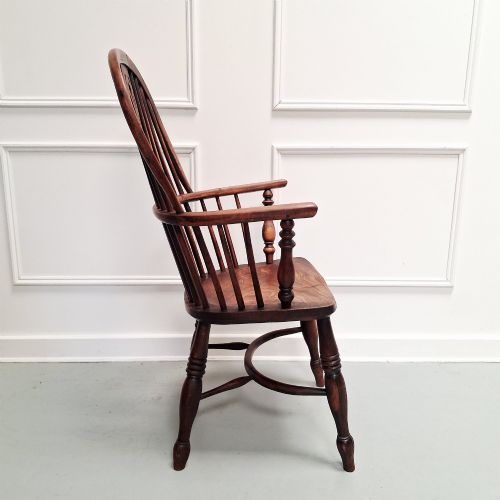
The hoop back relies on steam-bending a single continuous rail to form the backrest and arm support, secured directly into the thick wooden seat base utilising wedged tenon joints.
Some resilient examples even served the War Department before retiring to modern dining rooms.
What Varies in Quality
Quality in these vernacular chairs rests upon the depth and comfort of the sculptured elm seat, alongside the elegance of the spindle turnings and the crispness of any wheel-back or splat carving.
The integrity of the original construction, the balanced proportions of the hoop, and the harmonious grain and colour of the mixed timbers distinguish finer regional examples from utilitarian kitchen seating.
J Spencer
The Elm Hoop Back Chairs Glossary
- Hoop back
- A continuous bentwood rail forming the upper backrest and arms of a Windsor chair. This steam-bent element provides structural strength and ergonomic support.
- Saddled seat
- A thick wooden seat base carved with hollows to match human contours for comfort. Elm is traditionally chosen for this component due to its interlocking grain.
- Crinoline stretcher
- An arched underframe connecting the legs of a Windsor chair to provide rigidity. It often takes a curved shape reminiscent of historical petticoats.
- Carver
- A traditional term for an armchair, frequently used to describe larger dining chairs with elbow rests. These pieces usually match a set of smaller side chairs.
- Vernacular
- A style of object shaped by local tradition, available materials, and practical utility rather than formal academic design. These pieces reflect regional British country craftsmanship.
Elm Hoop Back Chairs: Frequently Asked Questions
What is an elm hoop back chair?
An elm hoop back chair is a traditional wooden seat featuring a steam-bent continuous rail and a sculpted elm wood seat base. These pieces belong to the wider Windsor seating tradition.
They combine vernacular country craftsmanship with sturdy construction, utilising mixed timbers like ash, beech and yew alongside the central elm components.
How were these chairs used historically?
These chairs served primarily as practical seating in farmhouse kitchens, cottages, and provincial dining spaces throughout Britain. Their robust construction suited daily domestic use.
Armchairs often stood by the hearth or served as head-of-the-table seating, while smaller side chairs gathered around kitchen dining tables in sets.
How do I date an antique hoop back chair?
Dating relies on examining the turning styles of the legs, the thickness and shaping of the seat, and the method of construction. Earlier eighteenth-century examples often feature simpler, heavier proportions.
Later Victorian and early twentieth-century versions frequently incorporate wheel-back motifs or standardised factory-turned spindles while retaining traditional stick-back joinery.
How do I care for antique elm furniture?
Maintain antique elm seating by keeping it away from direct heat sources and sudden humidity changes to prevent the timber from splitting. Regular dusting preserves the dry-scraped or polished finish.
Application of traditional beeswax helps nourish the wood and maintain the natural lustre of the grain over decades of domestic use.