
Elm Farmhouse Dining Chairs
Elm farmhouse dining chairs bring robust vernacular character and enduring utility to domestic spaces.
Elm Farmhouse Dining Chairs
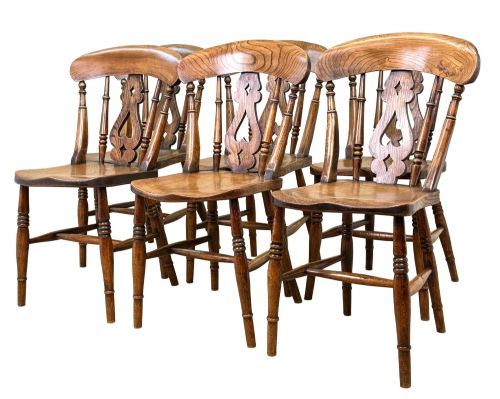
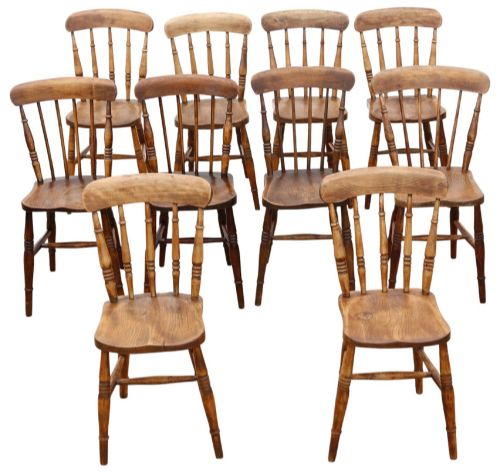
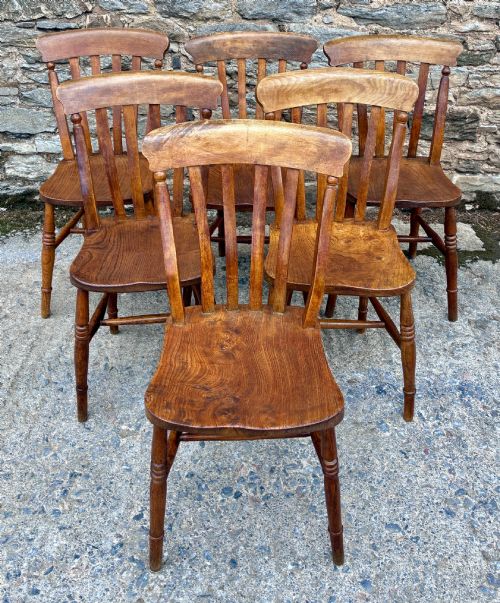
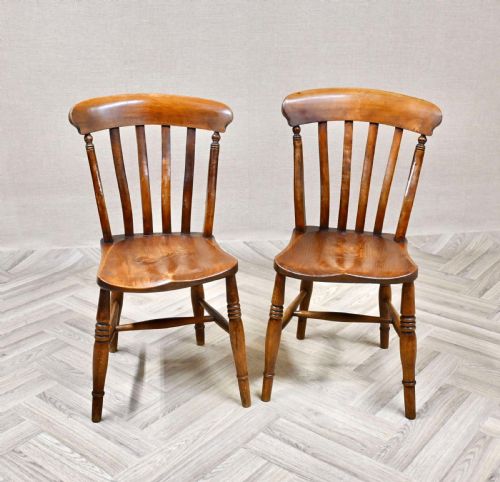
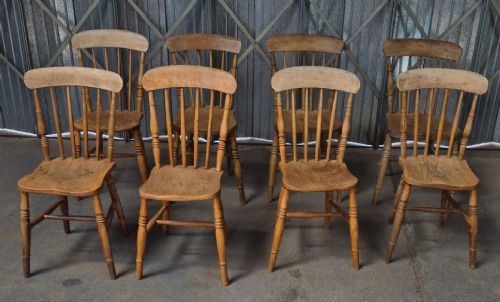
When you search for elm farmhouse dining chairs, you encounter sturdy wooden seating produced for domestic and rural use throughout the nineteenth century and into the early twentieth century. These pieces encompass both single chairs and matched or harlequin sets designed around everyday practicality.
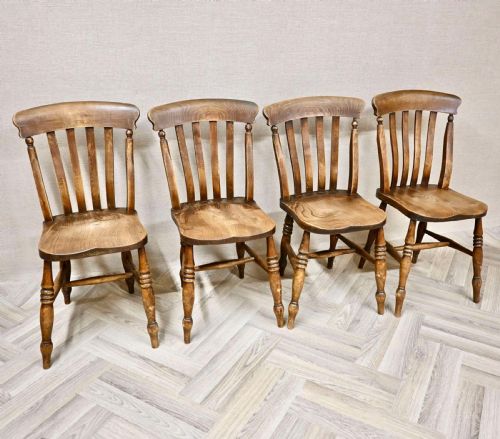
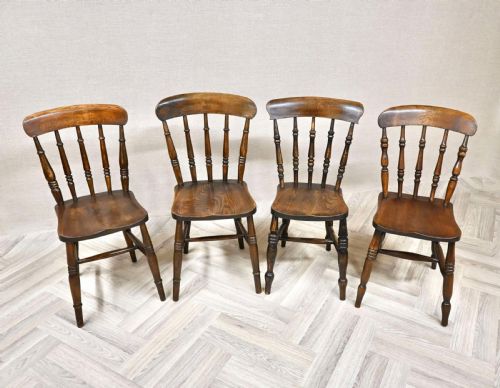
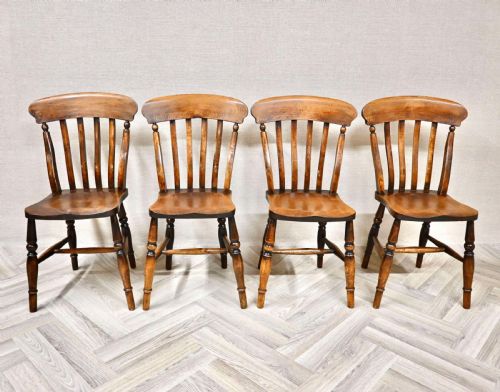
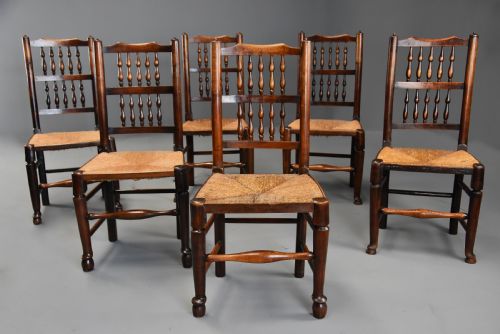
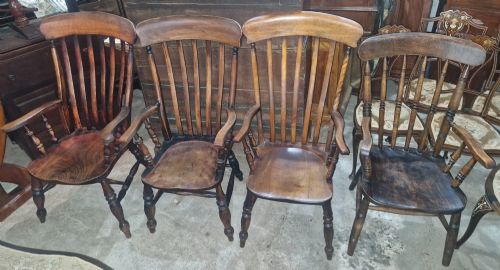
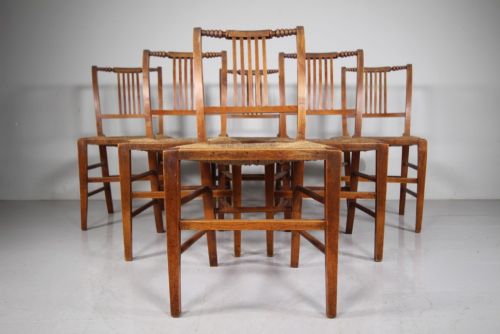
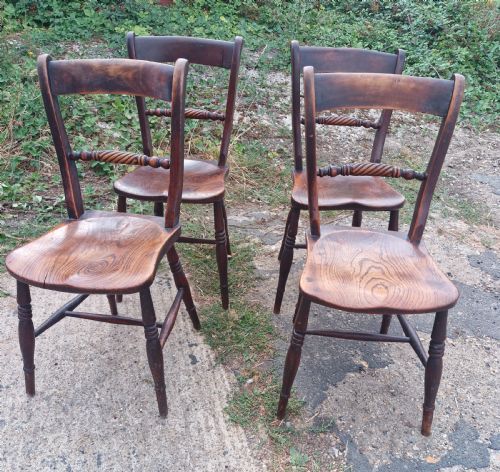
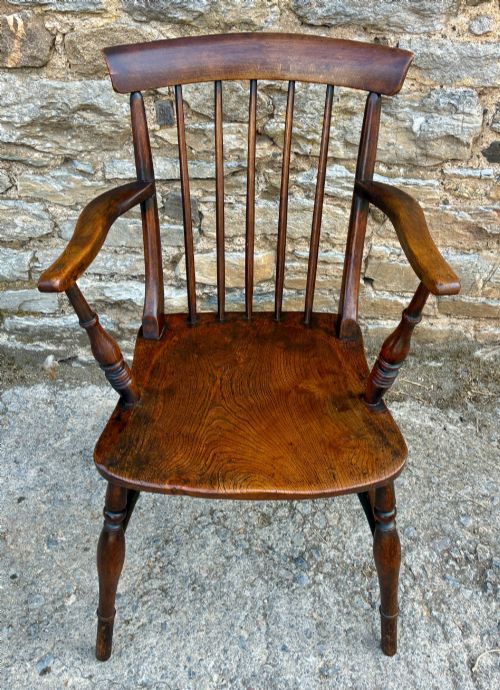
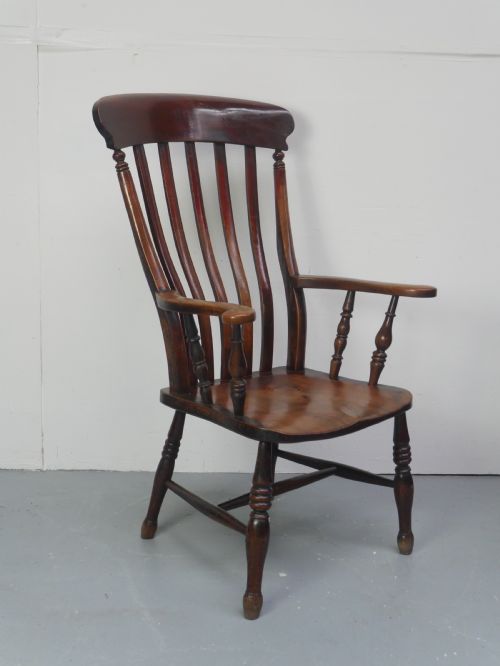
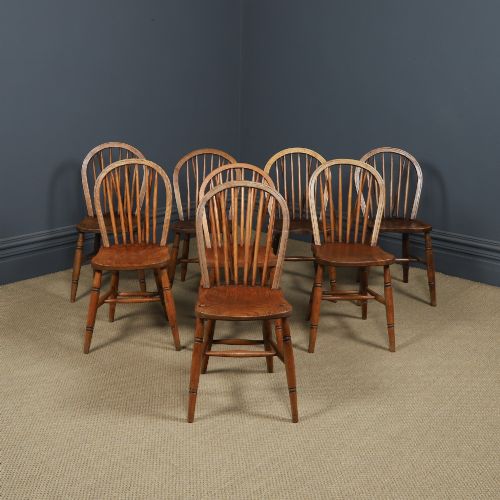
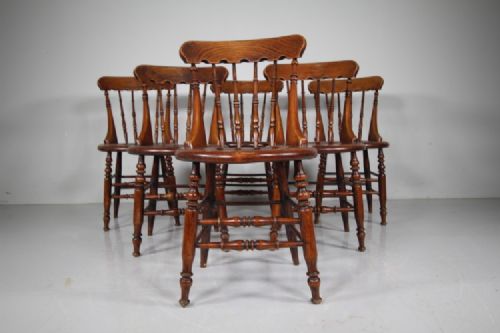
The most common examples on this page are Windsor chairs featuring distinctive stick, lathe, or comb backs. You will also find regional ladder back and spindle back forms originating from traditions in Lancashire and the Thames Valley.
The dominant material combination pairs elm seats with ash or beech framing and spindles, often supported by rush or solid wood bases. Armchairs and carvers appear alongside standard dining chairs to complete larger room settings.
How They Were Made
Maker skill relied on combining native timbers for specific structural properties, using dense elm for thick, saddled seats that resist splitting under daily weight. Turned beech or ash provided flexible spindles and robust legs, while fruitwood and oak appeared in regional framework variations.
Joinery depended heavily on traditional pegged and wedged mortise and tenon joints, allowing unyielding rigid frames to accommodate seasonal wood movement. Steam bending shaped the continuous hoop and bow backs characteristic of Windsor forms without compromising the grain.
Surfaces received minimal industrial finishing, acquiring deep patination over generations of daily use, scrubbing, and waxing. Rush seating was woven tightly over wooden frames to create supportive, resilient pads.
Many chairs bear generations of kitchen polish and wear, recording decades of family suppers on a single elm seat.
What Varies in Quality
The distinction between ordinary utility seating and finer examples rests upon the depth of the seat carving and the balance of the proportions. Superior elm seats exhibit a pronounced, comfortable saddling shape rather than a flat slab of timber.
Construction integrity separates unified sets from assembled collections, particularly where turned leg profiles and stretcher configurations match precisely. The crispness of the spindle turnings and the tightness of the wedged joints indicate the original workshop standard.
Worksop Allsop
The Elm Farmhouse Dining Chairs Glossary
- Windsor chair
- A wooden chair built with a thick solid timber seat into which the legs, back spindles, and arms are separately jointed. This form dominates nineteenth-century vernacular seating.
- Spindle back
- A chair back constructed from multiple slender, turned vertical wooden rods secured between the seat and a top rail. These components provide resilient back support.
- Lath back
- A regional chair variant featuring a flat, often curved wooden splat or slat running vertically up the centre of the backrest. It offers a broader surface than standard round spindles.
- Harlequin set
- A collection of dining chairs that share a general period, material, and style but vary in minor details such as turning or back design. They were often gathered together over time rather than purchased as one original batch.
- Stretcher
- A horizontal wooden brace connecting the legs of a chair to provide structural rigidity and prevent splaying under load. Double stretchers offer additional bracing strength.
Elm Farmhouse Dining Chairs: Frequently Asked Questions
What is a harlequin set?
A harlequin set is a group of dining chairs that match in general period, timber, and vernacular style but differ in minor structural details. These collections were typically assembled over time rather than bought as a single matched suite from a workshop.
Such sets offer a practical way to seat larger numbers around a dining table while maintaining a consistent historic aesthetic. The subtle variations between individual chairs highlight their manual production origins.
How do I date these chairs?
Dating relies on observing construction methods, timber selection, and distinct regional styles documented across the nineteenth and early twentieth centuries. Earlier pieces often display bolder turnings and heavier ash framing alongside deeply sculpted elm seats.
Later Victorian and Edwardian examples tend toward more standardised turning patterns and slightly lighter overall proportions. Comparing stretcher arrangements and backrest profiles helps narrow the manufacturing period.
Are rush seats durable?
Rush seats woven from natural dried marsh grasses offer remarkable resilience and flexibility under daily use. When cared for properly in stable indoor environments, they support weight comfortably for decades.
Maintenance involves keeping the material dry and occasionally applying neutral beeswax to preserve the fibre strength. Avoid placing rush-seated chairs in damp conditions that could weaken the natural strands.
Why use different woods?
Country chairmakers selected specific native timbers for their unique mechanical properties within a single piece of furniture. Elm provided a tough, interlocking grain ideal for thick, carved seats that would not split easily.
Meanwhile, straight-grained ash and beech offered the bending strength and tensile resilience required for slender back spindles and turned legs. This pragmatic material combination ensured the chairs could withstand heavy daily wear in farmhouse kitchens.