

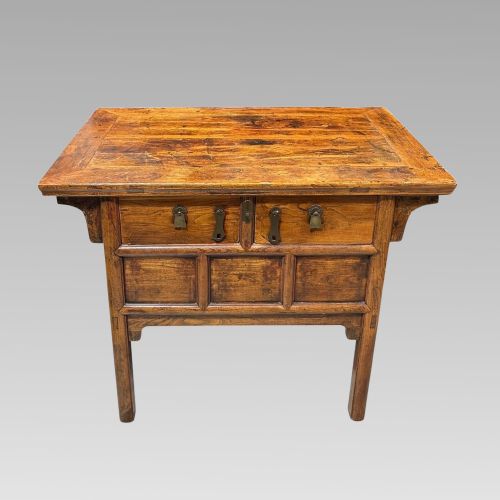
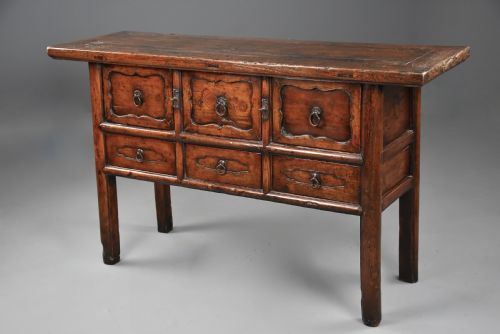


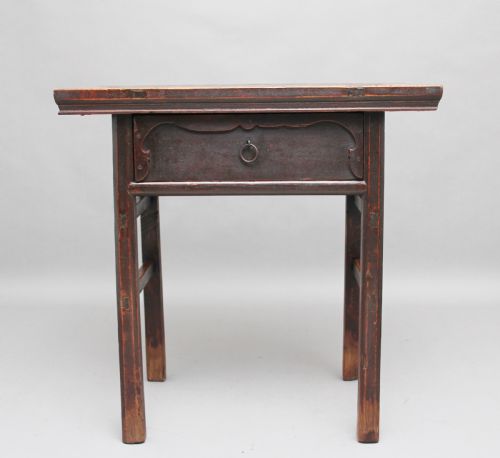


Elm Altar Console
An elm altar console brings centuries of Chinese provincial craftsmanship into a modern interior, offering a grounded surface shaped by time.
Elm Altar Console
An elm altar console represents a specific category of traditional Chinese furniture designed for display or ceremonial use, frequently adapted into contemporary living spaces as side tables or low sideboards. When you search for an elm altar console, you encounter pieces shaped by centuries of provincial woodworking traditions, ranging from simple side tables to substantial three-drawer console tables.
The material character of these items relies heavily on elm and associated varieties like locust wood, often displaying a fine patina developed over decades of use. Surviving examples date predominantly from the nineteenth century, including pieces associated with the Qing dynasty aesthetic, alongside eighteenth-century formats.
Formations vary from plank-top trestle tables and writing desks to small sideboards, side cabinets, and half tables finished in red lacquer. The typical console or altar table combines structural timber with functional surface area, suiting hallways, living rooms, and dining spaces.
Materials and construction methods
Makers utilised solid elm timber and related hardwoods, valuing the wood for its robust grain and durability under daily use. Construction often employed traditional joinery techniques suitable for provincial workshops producing functional furniture.
Surfaces frequently received treatments such as clear finishes to highlight the natural grain or applications of red lacquer, sometimes paired with brass or iron metal fittings.
Carpenters shaped plank tops and trestle supports to bear weight securely, resulting in stable side tables, desks, and altars that survived generations of wear.
Elm Altar Console Retail Price Guide 2026
Typical asking prices for elm altar console among the pieces listed under this phrase on Sellingantiques today, from the lower quarter to the upper quarter. They describe what is for sale here now, not the wider market.
Even sturdy nineteenth-century elm altars occasionally reveal faint ink splashes from forgotten scholars writing hurried notes.
Evaluating quality and condition
The distinction between ordinary and superior pieces rests on the depth of the patina and the integrity of the original timber. Examples retaining an undisturbed, aged surface finish alongside sound structural timber command greater interest.
Carved details and proportion also dictate standing, with finer items exhibiting balanced lines and careful execution in architectural elements like trestles and drawers. Lesser examples might show more utilitarian repairs or heavily altered surfaces that obscure the original grain.
The Elm Altar Console Glossary
- Patina
- The lustrous surface sheen developed on wood through years of handling, polishing, and natural ageing. This quality is central to identifying older elm furniture.
- Trestle table
- A table structure consisting of a horizontal plank top supported by two or more upright frame assemblies. These designs provide sturdy foundations for altar and console forms.
- Lacquer
- A durable resin finish applied to wooden surfaces, frequently seen in red tones on traditional Chinese furniture. It protects the timber while adding decorative colour.
- Qing Dynasty
- The imperial dynasty ruling China from sixteen forty-four to nineteen eleven, whose aesthetic heavily influences the provincial furniture seen in these listings.
Elm Altar Console: Frequently Asked Questions
What is an elm altar console?
An elm altar console is a traditional Chinese table originally used for ritual or display, constructed from solid elm timber.
Today, these pieces serve as versatile console tables or sideboards in modern homes, valued for their distinct grain and history.
How do I date an elm table?
Dating relies on assessing construction methods, timber patination, and stylistic markers associated with periods like the nineteenth century.
Most surviving pieces reflect Qing dynasty provincial traditions, though rarer eighteenth-century examples also appear on the market.
Where should I place an altar table?
These tables suit narrow hallways, living room walls, or behind sofas where their shallow depth makes efficient use of space.
They provide a practical surface for lamps, books, and decorative objects while introducing warmth through natural timber.
Are these tables made entirely of elm?
Most pieces utilise elm or closely related hardwoods such as locust wood, paired with timber framing and occasional metal hardware.
Some variations include lacquered finishes or secondary timbers used in internal construction like drawer linings.