






Eighteenth Century Writing Table
An eighteenth century writing table brings proper craftsmanship into a room, offering genuine period timber and purposeful design for daily use.
Eighteenth Century Writing Table
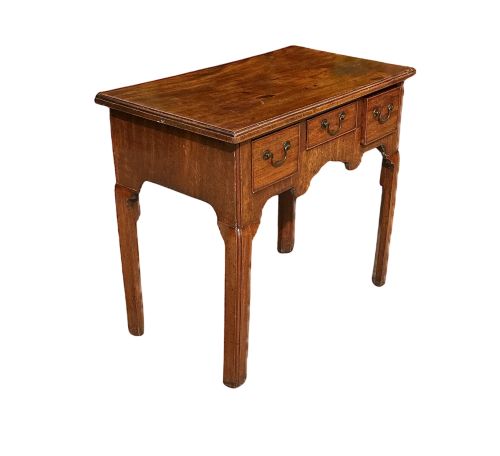
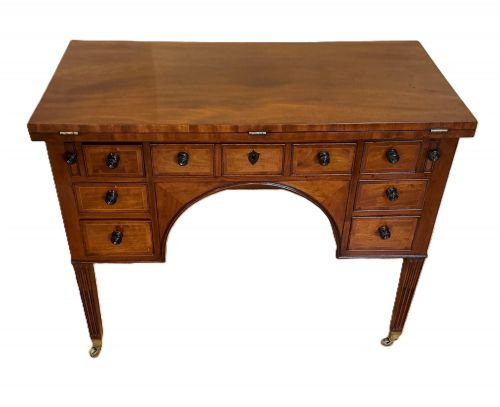
An eighteenth century writing table encompasses robust mahogany kneehole desks, satinwood library pieces, and painted pine side tables originating from the Georgian era.
Buyers seeking an eighteenth century writing table will encounter variations ranging from early walnut George I forms to later Sheraton oval designs and French Directoire examples.
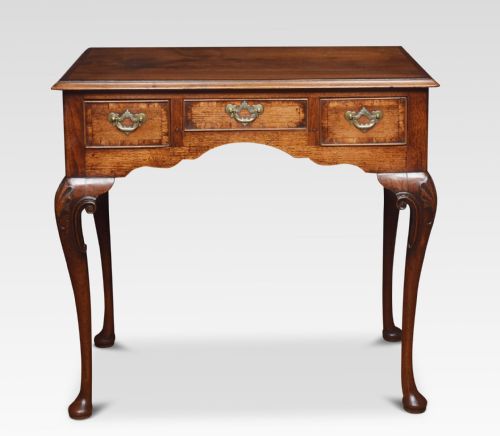
The objects listed combine utility and form, appearing as side tables, lowboys, partners desks, and specialised writing desks.
Materials and construction
Cabinetmakers relied on dense timbers like mahogany, walnut, and satinwood, frequently pairing them with secondary woods such as pine.
Surfaces often incorporate inset leather writing panels alongside cast brass hardware for drawer pulls and handles.
Eighteenth Century Writing Table Retail Price Guide 2026
Typical asking prices for eighteenth century writing table among the pieces listed under this phrase on Sellingantiques today, from the lower quarter to the upper quarter. They describe what is for sale here now, not the wider market.
Mahogany and satinwood dominate the timber selections across these listings, alongside walnut examples originating from the early Georgian period.
Judging the work
Quality rests upon the selection of timber grain, particularly in figured mahogany and contrasting satinwood veneers.
Refined pieces demonstrate disciplined proportions and careful handling of period details, distinguishing them from later revival items such as twentieth century Chippendale style desks.
Gamichon A Paris
The Eighteenth Century Writing Table Glossary
- Kneehole desk
- A compact desk featuring a central recessed space for the legs, flanked by pedestals of small drawers.
- Bonheur du jour
- A light lady's writing desk originating in France, usually featuring a small superstructure of shelves and drawers above the main writing surface.
- Lowboy
- A small side table with one or more rows of drawers beneath the top, frequently used as a dressing or writing surface in earlier periods.
- Partners desk
- A large double-sided writing table designed for two people to work opposite one another, incorporating drawers on both long sides.
Eighteenth Century Writing Table: Frequently Asked Questions
What is an eighteenth century writing table used for?
These tables served primarily for correspondence, accounting, and private study in period homes. Their multiple drawers kept ink, quills, and paper organised close to hand.
Today, they function effectively as standalone desks in home offices or as decorative side tables in reception rooms, providing surface area and concealed storage.
How do I distinguish a Georgian desk from a later copy?
Examine the construction methods, timber ageing, and secondary woods used within the drawer linings and internal frames. Period pieces show hand-cut joinery and natural timber oxidation.
Revival pieces from later centuries often employ uniform machine-sawn timber and lack the subtle wear patterns accumulated over generations of use.
Are these tables suitable for daily computer work?
Many period writing tables offer ample surface space for modern laptops and writing materials, provided the working height matches your chair. Kneehole versions require checking the clearance of the central arch.
Care should be taken with antique leather writing surfaces, which benefit from protective blotters during heavy daily use.
What is the difference between a writing table and a library table?
Library tables were traditionally freestanding centrepieces designed for large rooms, finished on all sides to hold heavy volumes and manuscripts. Writing tables often sat against walls or served specific functional roles.
Library examples tend to feature more substantial proportions and broader top surfaces compared to standard kneehole desks.