



Eighteenth Century Credenza
An eighteenth century credenza brings substantial presence to a room, offering both historical depth and practical surface space.
Eighteenth Century Credenza
When searching for an eighteenth century credenza, buyers encounter a diverse selection of period forms including mahogany sideboards, oak dresser bases, and serpentine commodes. These large serving and storage pieces originate primarily from Georgian Britain and continental Europe.
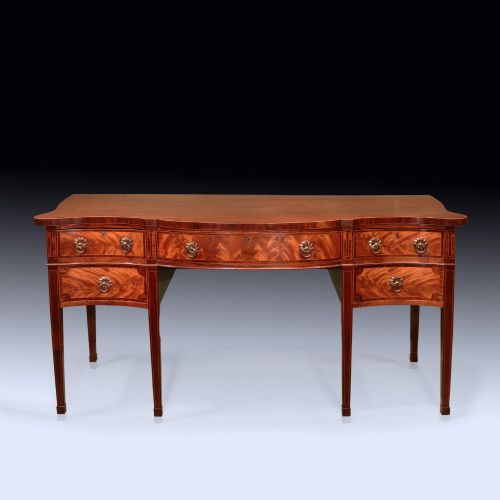
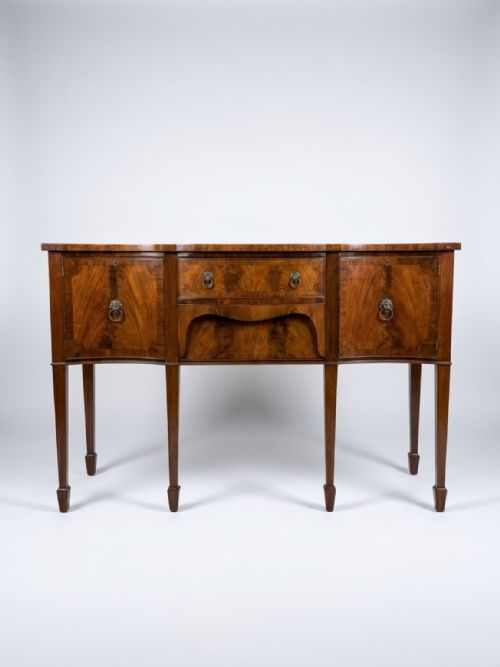
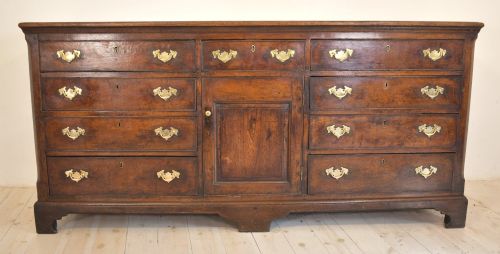
The most common examples on this page are mahogany sideboards with bowfront or serpentine shapes, alongside sturdy oak dresser bases. While true period pieces share space with later revivals, the core of the selection centres on functional wooden furniture intended for dining rooms and grand halls.
Makers and craftsmen utilised native and imported timbers to build furniture designed for storage and display. The variety spans from understated country oak to refined inlaid mahogany and decorative lacquered finishes.
How they were made
Makers constructed these pieces using solid timbers such as oak and mahogany, often applying flame mahogany veneer and satinwood inlay to create decorative focal points on drawer fronts and doors. Brass hardware, including handles and key escutcheons, provides functional contrast to the dark wood surfaces.
Construction techniques involved traditional joinery suited to heavy use, with drawers framed securely within carcass structures. Surface treatments range from polished wood grains to painted finishes and red lacquer associated with Chinoiserie styles.
Eighteenth Century Credenza Retail Price Guide 2026
Typical asking prices for eighteenth century credenza among the pieces listed under this phrase on Sellingantiques today, from the lower quarter to the upper quarter. They describe what is for sale here now, not the wider market.
Object forms on this page include sideboards, commodes, dresser bases, and cabinets with serpentine or bowfront profiles.
What varies in quality
The refinement of the timber selection distinguishes pieces, particularly the choice of figured mahogany and the precision of satinwood inlay work. Superior items display harmonious proportions and careful alignment of grain across multiple drawers and doors.
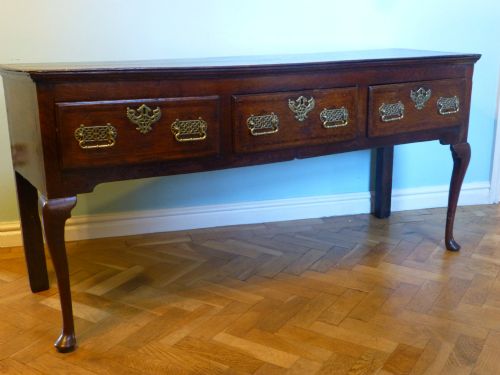
Execution of decorative details marks the difference between standard production and exceptional craftsmanship. Carved cabriole legs, serpentine fronts, and hand-painted lacquer scenes demonstrate greater artisan skill than plain rectilinear forms.
The Eighteenth Century Credenza Glossary
- Serpentine front
- A furniture front curving outward in the centre and inward at the sides. This shape demands high carpentry skill to execute cleanly.
- Bowfront
- A convex, outward-curving front typical of late period sideboards. It softens the room's geometry while adding interior capacity.
- Dresser base
- A low wooden storage unit featuring drawers and sometimes cupboards beneath a flat top. These originated in working country kitchens before entering formal spaces.
- Commode
- A decorative low chest of drawers or cabinet on legs, originating in France. They often feature painted decoration or fine wood veneers.
- Chinoiserie
- European imitation of traditional Chinese artistic styles, typically expressed through lacquered surfaces and painted motifs. It enjoyed revivals across multiple centuries.
Eighteenth Century Credenza: Frequently Asked Questions
What is an eighteenth century credenza?
An eighteenth century credenza generally refers to large serving pieces, sideboards, commodes, and dresser bases from the period. They functioned primarily as storage and display units in dining spaces and halls.
Buyers today use the term broadly to cover various low timber cabinets and sideboards from the era. The actual forms range from British oak dresser bases to Italian commodes and Georgian mahogany sideboards.
How were these pieces used?
These items served primarily for storing tableware, linens, and serving dishes in dining rooms. Their large top surfaces provided space for displaying silver and serving food during meals.
In domestic settings, they acted as the central hub for dining room organisation. Their sturdy construction supported heavy ceramics and metalware.
How do I live with one?
Living with a period sideboard or commode involves placing it in a dining room, hallway, or spacious living area where its length and depth can be appreciated. Ensure it sits away from direct heat sources to protect the timber and veneer.
Maintain the wood using appropriate waxes or polishes recommended for antique furniture. The generous top surface accommodates lamps, books, or decorative objects.
How do I tell periods apart?
Distinguishing periods relies on identifying changes in timber preference, hardware style, and silhouette. Early pieces often feature solid oak with simple lines, while later Georgian items frequently showcase mahogany, satinwood inlay, and curved serpentine fronts.
Revival pieces from later centuries mimic these earlier styles but often display differences in construction methods and interior secondary woods. Examining the backboards and drawer linings helps clarify the true age.