



Eighteenth Century Buffet
An eighteenth century buffet brings solid timber and centuries of service into a room, offering both display space and deep storage.
Eighteenth Century Buffet
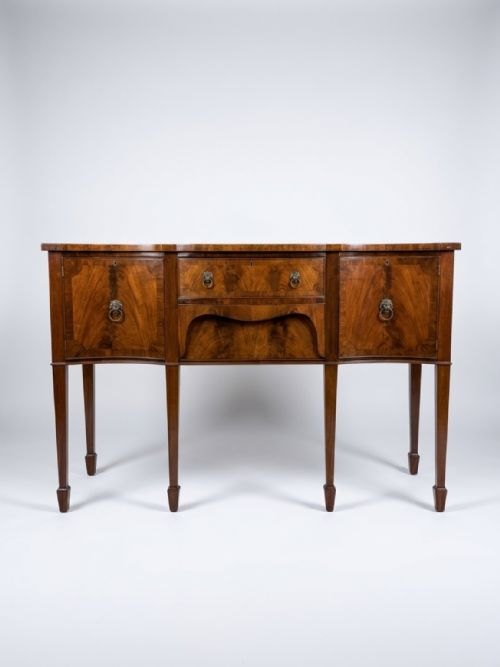
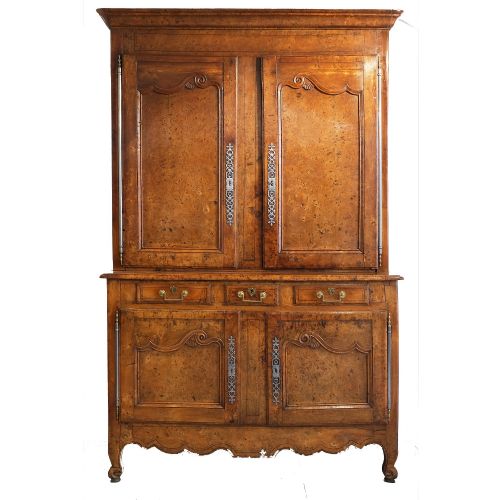
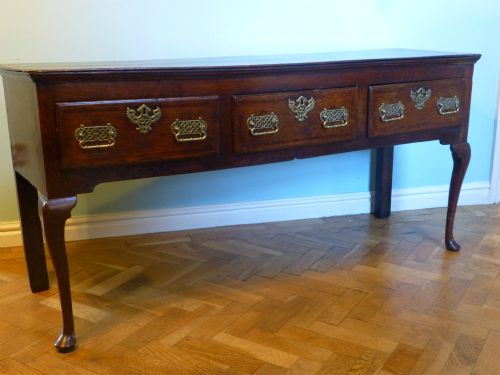
An eighteenth century buffet encompasses large storage timber forms, ranging from French provincial walnut vaisseliers to Georgian mahogany sideboards and Italian commodes. Buyers searching for an eighteenth century buffet will encounter diverse regional designs spanning serpentine sideboards, oak dresser bases, and multi-tiered dumbwaiters.
The pieces listed on this page cross multiple periods, featuring genuine eighteenth century examples alongside later nineteenth and twentieth century interpretations. Walnut, oak, ash, and elm appear frequently, showing the heavy reliance on sturdy native timbers for domestic storage and dining service.
How they were made
Cabinet makers utilised solid hardwoods such as mahogany, oak, walnut, ash, and elm, often applying flame mahogany veneer to prominent drawer fronts and surfaces. Brass hardware, including drop handles and key escutcheons, provides functional contrast to the dark timber grains.
Joinery techniques rely on traditional hand-cut joints, seen in the cabriole legs of oak dresser bases and the precise curves of serpentine sideboards. Painted finishes appear on Venetian pieces, while multi-tiered dumbwaiters employ turned wooden columns and drop-leaf mechanisms.
Eighteenth Century Buffet Retail Price Guide 2026
Typical asking prices for eighteenth century buffet among the pieces listed under this phrase on Sellingantiques today, from the lower quarter to the upper quarter. They describe what is for sale here now, not the wider market.
Tiered dumbwaiters quietly observed centuries of dining gossip while holding extra dinner plates.
What varies in quality
The division between standard and superior pieces rests upon timber selection and the fluidity of carved or shaped lines. Serpentine fronts and matched flame mahogany veneers demand advanced carpentry skills compared to plain flat surfaces.
Proportion and regional execution dictate the character of each piece, from provincial French walnut to refined George III mahogany. Original brass fittings and the crispness of edge moulding further separate basic utility items from ambitious cabinet work.
The Eighteenth Century Buffet Glossary
- Serpentine
- A furniture front curved with a convex centre flanked by concave ends. This shaping requires precise timber cutting and joinery.
- Bowfront
- A convex, outwardly curving front typical of certain Georgian sideboards. It softens the linear profile of a dining room piece.
- Dumbwaiter
- A tiered serving stand with multiple revolving or fixed circular trays on a central pillar. These tables stood beside dining chairs for easy access to dishes.
- Commode
- A low decorative cabinet or chest of drawers, often associated with continental European craftsmanship. They served both ornamental and practical storage roles in grand rooms.
- Vaisselier
- A tall French storage unit combining a lower buffet base with upper open shelving for plates. It represents a primary provincial kitchen and dining form.
Eighteenth Century Buffet: Frequently Asked Questions
Where should I place a buffet?
These large timber items suit dining rooms, hallways, or spacious living areas where wall space allows adequate clearance. Their depth requires careful measurement against surrounding furniture and walkways.
Positioning them away from direct heat sources protects the solid timbers and prevents veneer separation over time.
How do I clean mahogany surfaces?
Dusting regularly with a soft, dry cloth prevents particle buildup on polished mahogany and walnut finishes. Avoid silicone-based sprays that can damage antique polishes.
Applying a traditional beeswax occasionally nourishes the dry wood and maintains a natural, understated lustre.
What is a dumbwaiter used for?
Tiered dumbwaiters held extra plates, glasses, and serving dishes within arm's reach during lengthy meals without requiring constant servant attendance. Their rotating tiers made sharing condiments and tableware simple.
Today they function effectively as standalone display stands for plants, books, or decorative objects.
How do I identify a Georgian sideboard?
Georgian sideboards often display distinct design traits such as inlaid mahogany veneers, tapered spade feet, or dramatic serpentine fronts. Hardware layout and secondary timbers like oak inside drawers help confirm the period.
Regional variations add character, ranging from stark provincial oak bases to refined London cabinet work.