





Eight Day Timepiece
An eight day timepiece offers reliable mechanical timekeeping without the daily demand of winding, housing a movement designed to run for over a week.
Eight Day Timepiece
An eight day timepiece represents a domestic clock movement engineered to run for approximately eight days on a single wind, freeing the owner from daily maintenance. When searching for an eight day timepiece, buyers encounter a diverse range of domestic timekeeping objects spanning multiple centuries.
The selections on this page predominantly feature Victorian, Georgian, and Edwardian examples, alongside pieces from the 1920s. These range from carriage clocks and mantel clocks to circular wall timepieces.
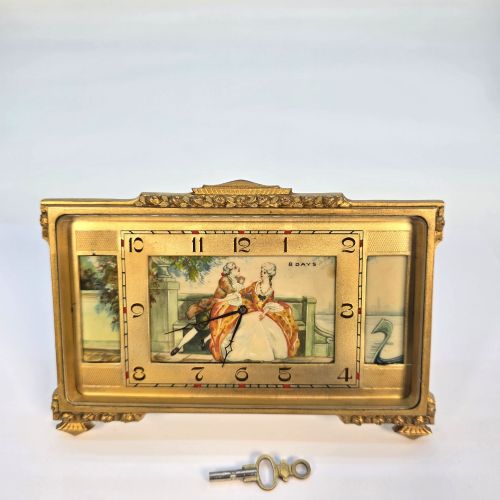
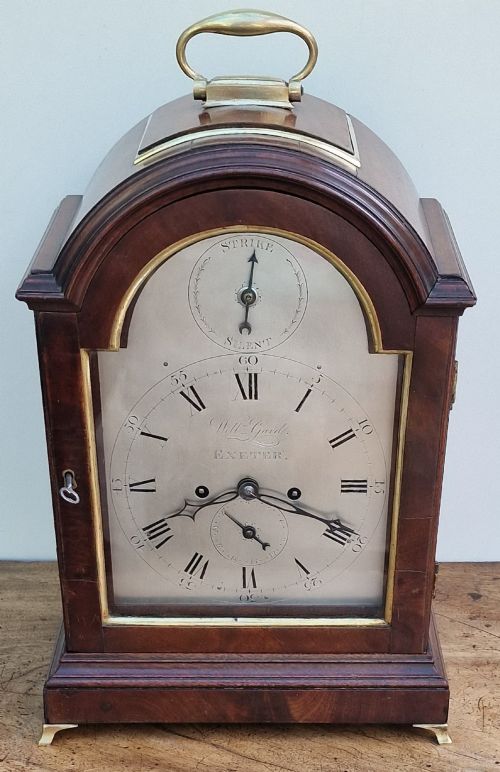
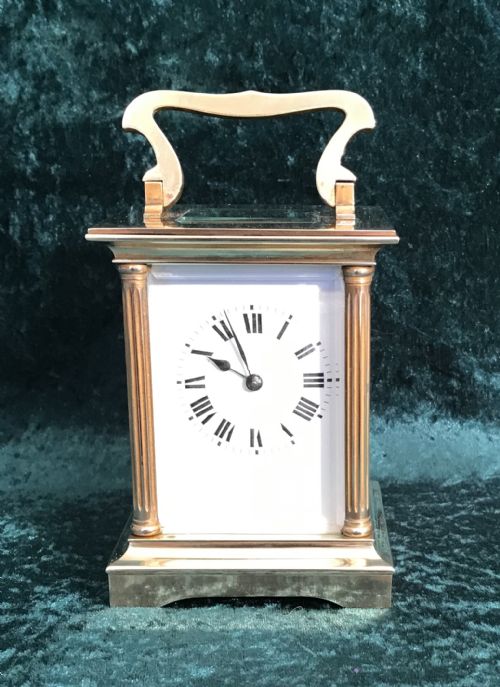
Forms vary considerably, including bracket clocks in mahogany and oak, French marble and ormolu mantel pieces, and portable carriage clocks housed in brass cases. The selection accommodates both desk placement and wall mounting across various period interiors.
How they were made
Cases utilise a variety of traditional materials, pairing structural hardwoods like mahogany and oak with decorative elements in marble, alabaster, brass, ormolu, and silver. Glass panels frequently protect delicate dials and expose the intricate internal mechanisms.
Movements rely on mechanical gear trains driven by weights or mainsprings, occasionally incorporating chain fusee systems for tension regulation. Enamel dials carry the numerals, while specialised workshops integrated British, French, Swiss, and Scottish engineering traditions.
Eight Day Timepiece Retail Price Guide 2026
Typical asking prices for eight day timepiece among the pieces listed under this phrase on Sellingantiques today, from the lower quarter to the upper quarter. They describe what is for sale here now, not the wider market.
The selection includes both British bracket clocks and French mantel pieces alongside Swiss and Scottish examples.
What varies in quality
Quality diverges significantly in the precision of the movement and the integrity of the housing. Finer examples exhibit refined metalwork, crisp dial enamel, and robust case construction using premium timbers or stones like marble and ormolu.
The prestige of the maker and the complexity of the housing dictate the standing of a piece within the range. Pieces retaining original components and travelling cases demonstrate superior preservation compared to heavily altered equivalents.
William Gard·Dent of London
The Eight Day Timepiece Glossary
- Chain fusee
- A conical pulley paired with a chain that equalises the torque of the mainspring as it unwinds, ensuring consistent timekeeping accuracy. This mechanism is frequently found in higher-grade British clocks.
- Bracket clock
- A portable household clock originally designed to sit on a bracket on the wall or a table. These pieces typically feature substantial wooden or architectural cases.
- Carriage clock
- A small, spring-driven clock designed for travelling during the nineteenth century. They often feature brass frames inset with glass panels and a folding handle on top.
- Ormolu
- Gilded bronze or brass applied to decorative mounts on furniture and clock cases. The technique imparts a rich metallic lustre characteristic of French mantel pieces.
- Timepiece
- A clock that indicates the time without striking hours or quarters. These mechanisms focus purely on accurate visual timekeeping.
Eight Day Timepiece: Frequently Asked Questions
How often do I wind an eight day timepiece?
These clocks require winding approximately once every week to maintain continuous operation. The extended power reserve prevents the need for daily attention.
Owners typically select a specific day of the week to wind the movement, ensuring the clock maintains steady rhythm and accuracy.
Where should I place a mantel clock?
Mantel clocks suit stable horizontal surfaces such as sideboards, shelves, and fireplace mantelpieces. The chosen location should remain free from excessive vibration and moisture.
Ensuring the surface is level helps the pendulum or balance wheel operate correctly and keeps the timekeeping consistent.
What is a carriage clock used for?
Carriage clocks were originally manufactured for travellers who required portable timekeeping during transit. Their robust brass and glass construction protected the delicate internal mechanism.
Today, collectors value them as versatile desk or table clocks that can be moved easily between rooms within a home.
How do I identify a Victorian clock?
Victorian clocks often display styles associated with the nineteenth century, ranging from classical revivals to heavy marble and ormolu garnitures. Materials frequently include mahogany, slate, marble, and gilt brass.
Examining the movement style, dial construction, and internal signatures often helps narrow down the period of manufacture alongside any hallmarked components.