



Eight Arm Lighting
Eight arm lighting commands a room, providing generous illumination through eight distinct branches arranged to balance large spaces.
Eight Arm Lighting
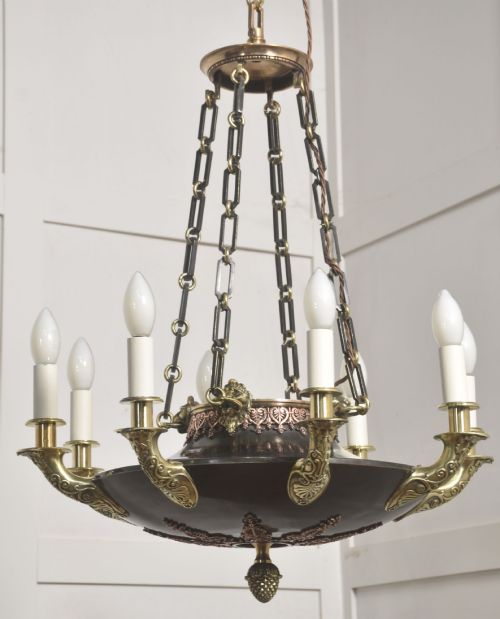
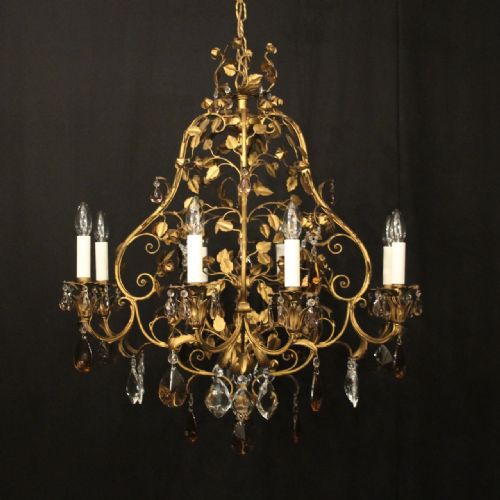
Eight arm lighting primarily takes the form of grand chandeliers suspended from high ceilings to dominate principal rooms. When you explore eight arm lighting here, you encounter fixtures spanning from the nineteenth century through the Edwardian era and into the nineteen-twenties and nineteen-thirties.
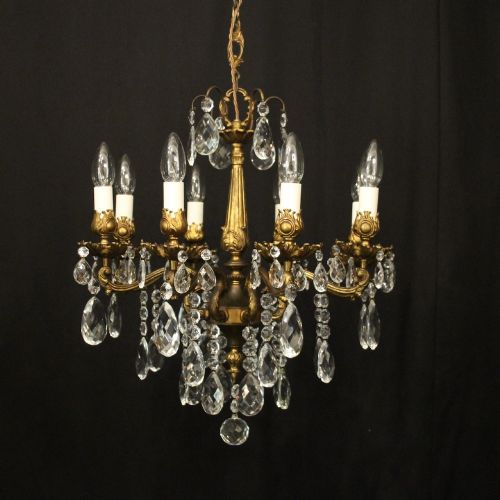
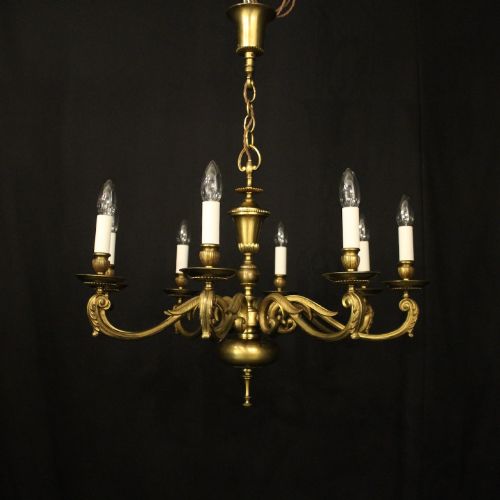
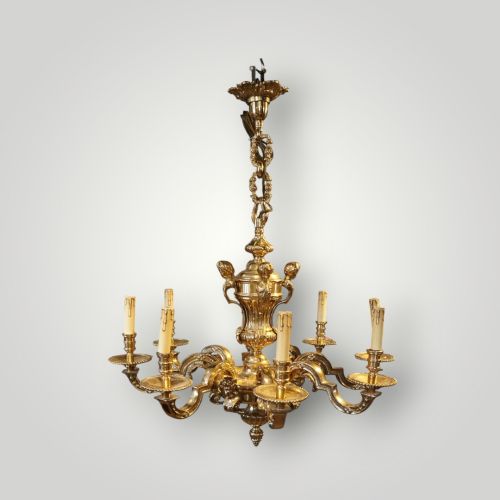
The selection leans heavily toward French origins alongside English and Dutch examples, often adopting styles such as French Rococo, Empire Revival, and Dutch Baroque Revival. These pieces deploy eight distinct light sources, branching out to distribute illumination evenly across domestic interiors.
How They Were Made
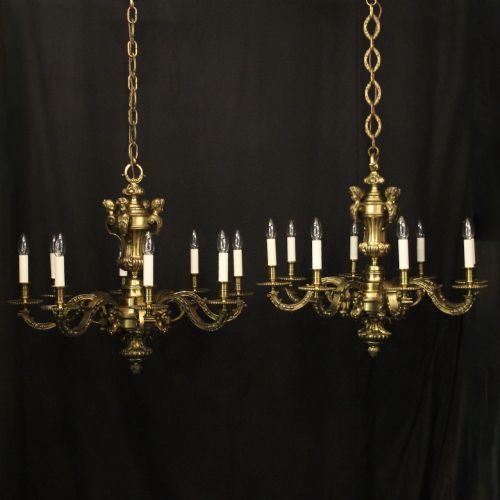
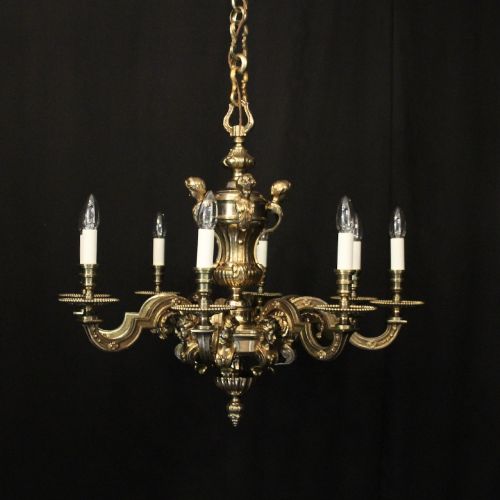
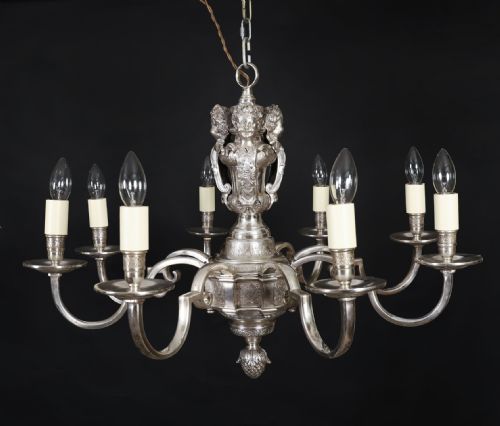
Makers constructed these chandeliers predominantly from brass, bronze, and gilded bronze, casting the metal components to achieve intricate architectural forms. Cast acanthus leaf mounts and lion masks demonstrate the skilled moulding techniques applied to the metal frames during the nineteenth and early twentieth centuries.
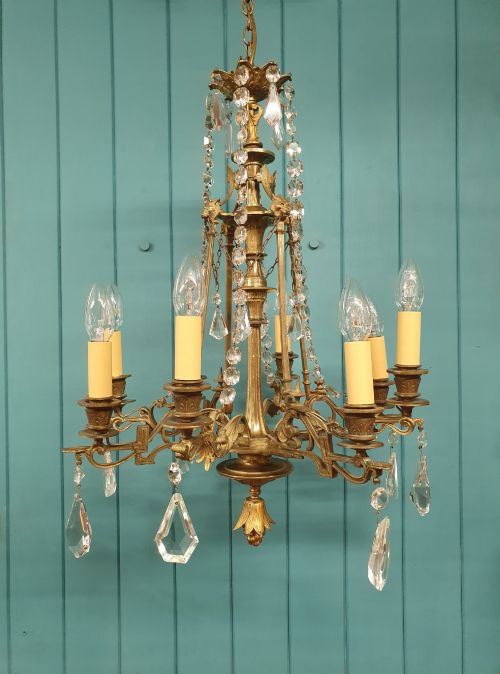
Many examples integrate cut glass and crystal drops, suspended from the arms or cages to refract the light and enhance visual brilliance. Surface treatments vary from silver plating and silver gilding to polished brass and patinated bronze, reflecting the decorative preferences of Edwardian and interwar workshops.
Materials span brass, bronze, gilded bronze, cut glass, crystal, metal, toleware, and silver plating across the nineteenth century, Edwardian era, and nineteen-twenties and thirties.
What Varies in Quality
The refinement of the casting work separates standard production from superior pieces, particularly in the crispness of details like acanthus leaves and facial mounts. Heavier gauge metal and deeper gilding indicate a higher grade of manufacture, ensuring the arms maintain structural integrity under the weight of glass and crystal components.
The integration of decorative elements such as cut glass crystals and specialised cage frameworks alters the overall harmony of the design. Superior examples display careful balancing of the eight branches so that the chandelier hangs true and projects light with equalized symmetry.
The Eight Arm Lighting Glossary
- Chandelier
- A branched hanging light fixture designed to hold multiple candles or electric lamps. These large fittings serve as both primary illumination and central decorative focal points in high-ceilinged rooms.
- Gilded Bronze
- Bronze metal treated with a thin layer of gold leaf or gold paint to give a rich, metallic finish. This material is frequently found on French examples from the nineteenth and early twentieth centuries.
- Toleware
- Painted or enamelled sheet metal used in lighting fixtures to introduce colourful decorative elements alongside crystal or brass components. It appears in specific cage chandelier designs from the interwar period.
- Acanthus Leaf
- A classic ornamental motif modelled on the foliage of the Mediterranean acanthus plant, commonly cast in brass or bronze to decorate the mounts and arms of these fixtures.
- Cut Glass
- Glass that has been shaped and faceted by grinding and polishing to catch and reflect light. It is heavily utilised in Edwardian and earlier crystal chandeliers to maximise illumination brilliance.
Eight Arm Lighting: Frequently Asked Questions
How do I clean an eight arm chandelier?
Maintenance requires careful dusting of the metal arms and individual glass components using soft cloths to preserve the surface finish. Avoid harsh chemical cleaners that might strip gilding or damage patinated bronze.
For pieces with crystal drops, gentle wiping with a mild solution keeps the glass refractive without disturbing the wiring or structural fixings.
What ceiling height do I need for these chandeliers?
These large fixtures demand substantial vertical clearance to hang properly without obstructing movement underneath. Rooms with high ceilings provide the necessary space for the eight branches to project light effectively.
Ceiling roses and suspension chains can be adjusted slightly, but the physical dimensions of nineteenth and early twentieth-century frames require generous clearance.
Are these chandeliers wired for modern electricity?
Most antique fixtures of this scale have been adapted for contemporary electrical standards during their lifespan. Buyers should inspect the internal wiring of each piece to ensure compliance with current safety regulations.
Professional installation by an electrician ensures the heavy brass or bronze frames are safely anchored to ceiling joists.
How do I distinguish French styles from Dutch ones?
French pieces frequently display Rococo or Empire Revival characteristics with gilded bronze, cast acanthus mounts, and ornate crystal arrangements. These designs emphasise flowing curves and classical ornamentation.
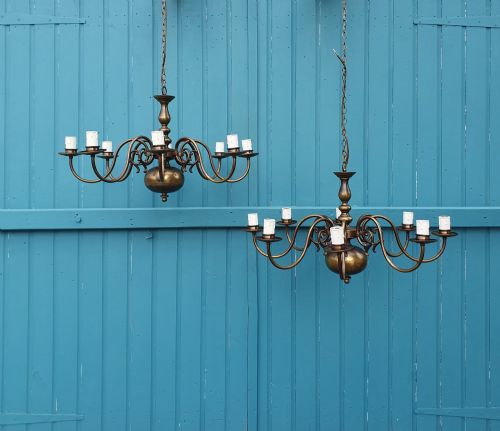
Dutch examples often present a more robust brass construction rooted in Baroque revival traditions, focusing on sturdy scroll arms and simpler, heavier metalwork.