




Edwardian Workbox
An Edwardian workbox brings refined craft to domestic needlework, offering fitted compartments and elegant table forms designed for the parlour.
Edwardian Workbox
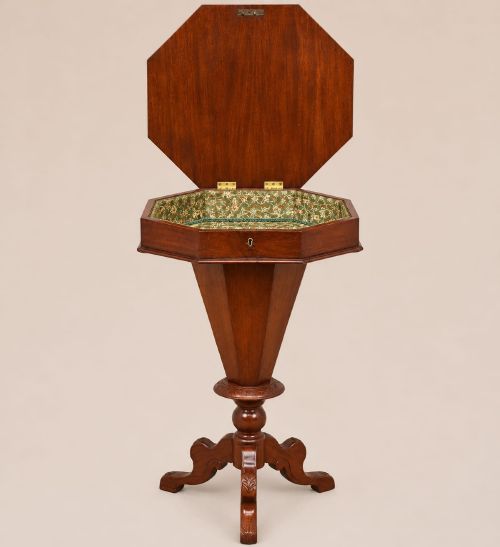
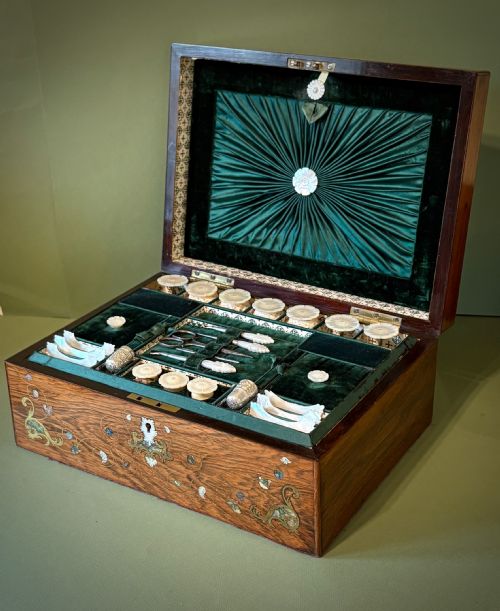
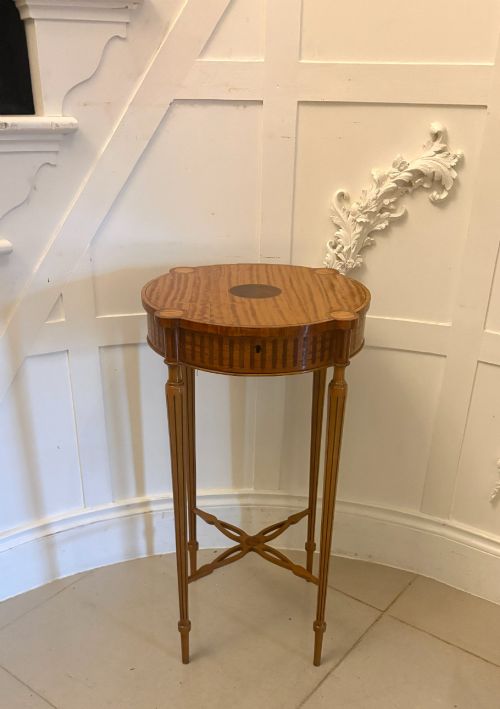
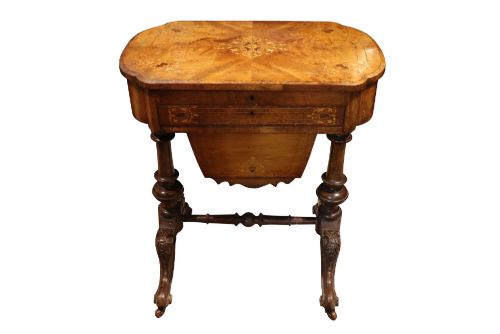
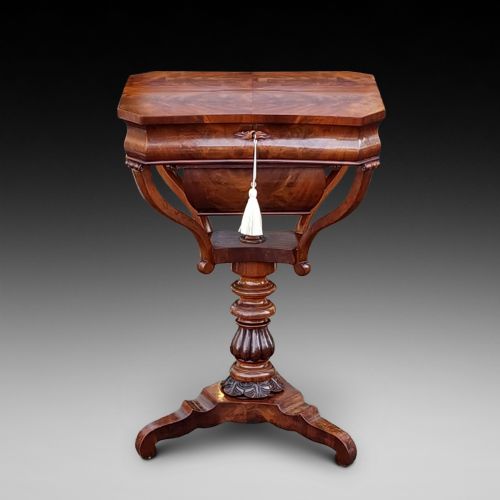
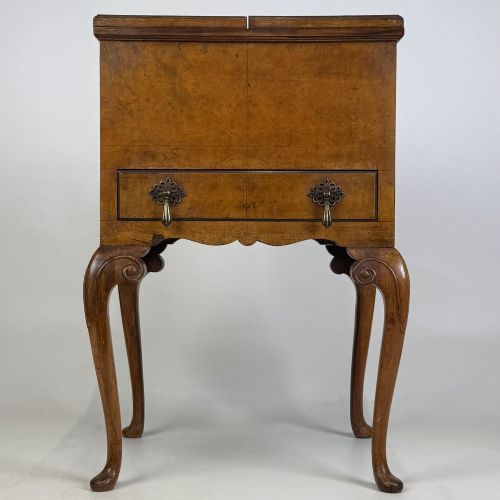
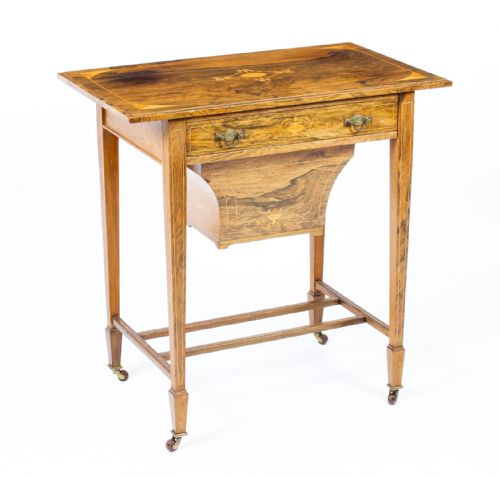
An edwardian workbox serves as a dedicated receptacle for sewing equipment and delicate needlecraft, taking the form of tabletop boxes or small occasional tables fitted with internal trays. The pieces appearing here span Edwardian and Victorian eras, along with earlier Regency examples, presented in mahogany, burr walnut, rosewood, and satinwood.
Buyers encounter both portable boxes resting on feet and standing work tables featuring hinged lids above silk gathering bags or lower shelves. These items combine practical storage for threads and pins with decorative cabinetmaking suited to period interiors.
Assessing quality in construction and detail
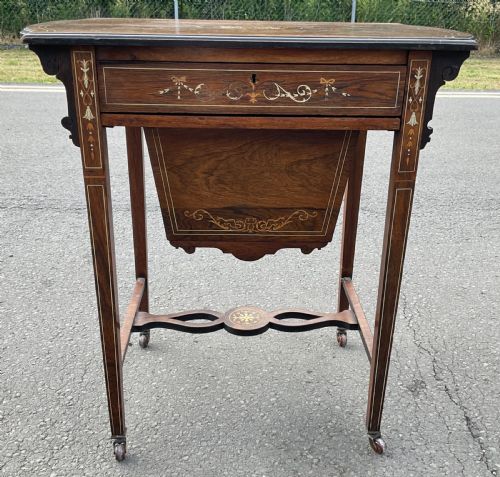
Quality rests upon the selection of timber veneers, where symmetrical burr walnut or figured mahogany indicates superior material choice. Finer examples display precise boxwood stringing and well-executed shell inlay rather than printed decoration.
Internal arrangement dictates the standard of a piece, with fitted trays possessing neat partitions and original silk linings ranking above plain interiors. Sound structural joinery in the legs and frames of standing tables ensures longevity alongside aesthetic appeal.
Edwardian Workbox Retail Price Guide 2026
Typical asking prices for edwardian workbox among the pieces listed under this phrase on Sellingantiques today, from the lower quarter to the upper quarter. They describe what is for sale here now, not the wider market.
Current listings demonstrate a material preference for mahogany, burr walnut, and satinwood across the Edwardian and Victorian periods.
The Edwardian Workbox Glossary
- Work table
- A small standing piece of furniture featuring a fitted interior or suspended fabric bag designed to hold sewing materials.
- Burr walnut
- A highly figured timber veneer taken from the burl growth of the walnut tree, prized for its swirling grain patterns.
- Tunbridge Ware
- Small wooden items decorated with mosaic patterns created from thousands of tiny coloured wood blocks arranged geometrically.
- Satinwood
- A lustrous, hard timber of a golden-yellow colour utilised for high-status cabinetmaking and delicate inlay work.
- Stringing
- Thin inlaid lines of contrasting wood used to outline panels and borders on tabletops and box lids.
Edwardian Workbox: Frequently Asked Questions
What is an edwardian workbox used for?
These pieces were designed to hold needles, threads, thimbles, and fabrics for domestic mending and embroidery.
Today, they function as decorative storage for small accessories or jewellery while retaining their historical character.
How do I clean the wood surface?
Dust the exterior gently with a dry, soft cloth to prevent accumulation of grit in the grain and carved details.
Avoid liquid polishes or water, applying a quality beeswax sparingly only when the timber appears dry.
Where should I place a work table?
Standing versions suit living rooms or studies as occasional tables beside seating, protecting them from direct sunlight.
Portable boxes sit comfortably on desks, chests of drawers, or console tables where their fine veneers remain visible.
How can I tell periods apart?
Edwardian and late pieces frequently feature lighter satinwood, delicate painted motifs, and understated inlaid stringing.
Victorian and earlier examples tend to utilise darker rosewood or heavily figured burr walnut with more robust proportions.