

Edwardian Wooden Game
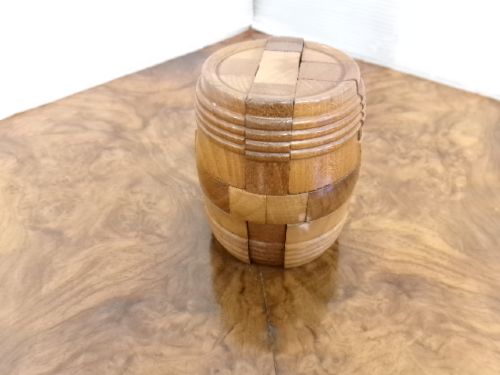
An Edwardian wooden game is a parlour pastime or garden set built from mahogany, boxwood, and oak for indoor and outdoor entertainment.
Edwardian Wooden Game
When searching for an Edwardian wooden game, you encounter tables, compendiums, and boxed sets designed for household leisure during the early twentieth century.
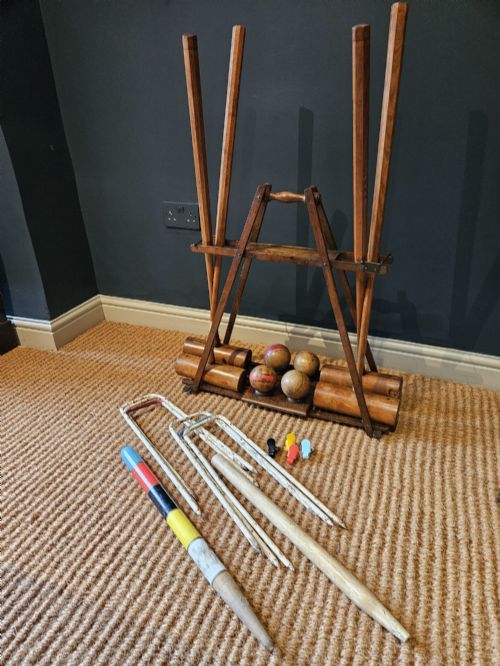
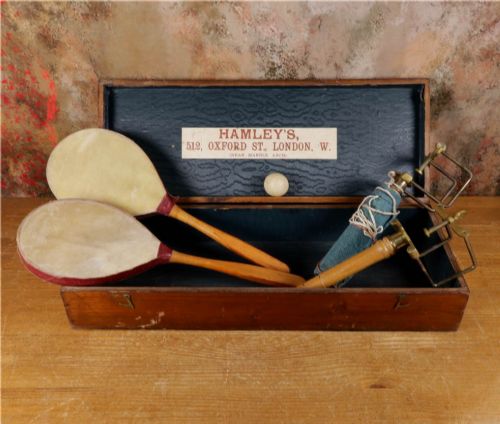
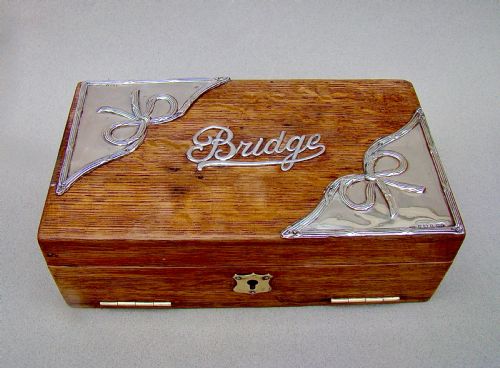
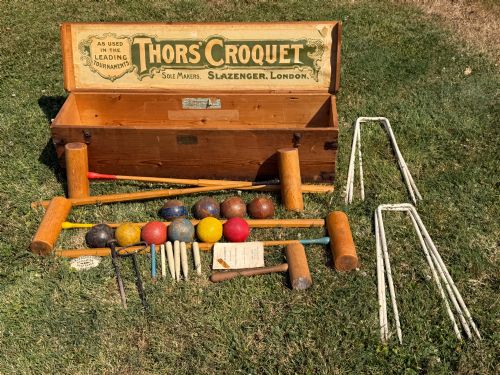
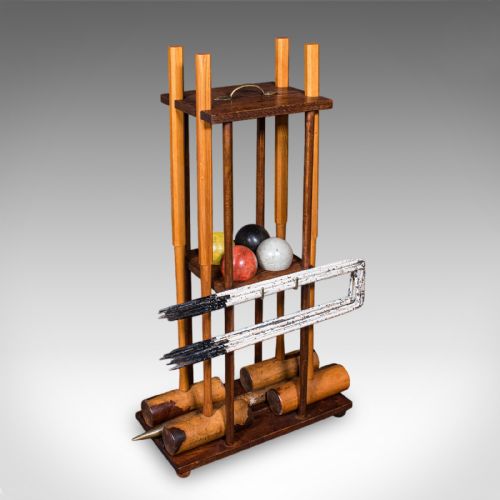
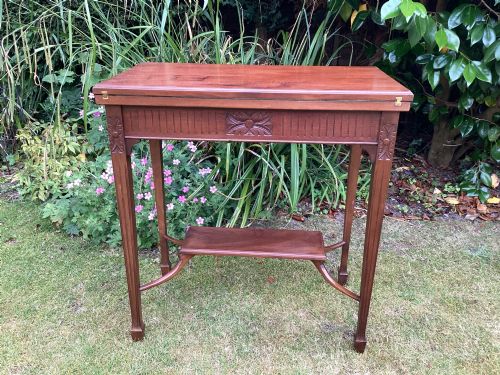
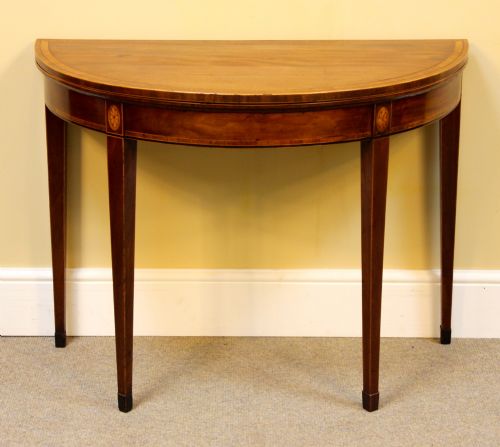
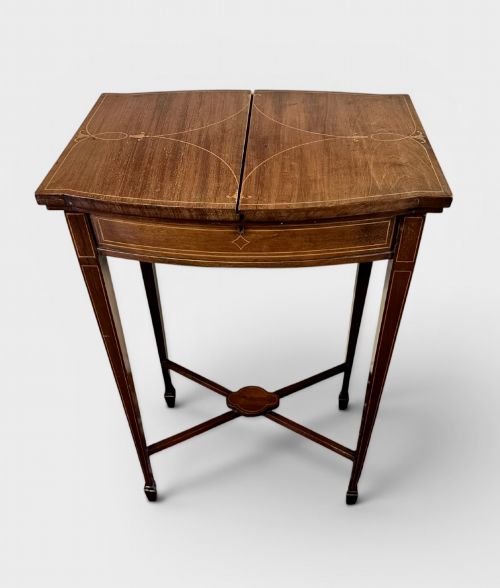
The pieces on this page span table tennis sets, croquet equipment, chess sets, and folding card tables originating from Victorian, Edwardian, and Regency periods.
Mahogany, oak, and boxwood form the primary structures of these pastimes, reflecting the period preference for durable timber in domestic entertainment.
Materials and Construction
Woods such as mahogany, walnut, satinwood, and rosewood provide the structural integrity and polished surfaces for tables and compendiums.
Boxwood and ebony are turned and carved for chess pieces and draughts sets, offering dense contrast for gameplay.
Silver mounts, brass hinges, and ceramic components furnish functional hardware and decorative detail across boxes and scoreboards.
Listings feature woods such as mahogany, oak, rosewood, satinwood, and boxwood applied across tables, boxes, and chess sets.
Assessing Quality
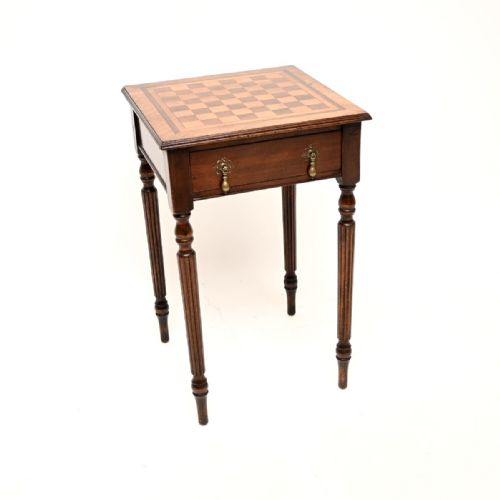
The refinement of timber joinery and the presence of intricate marquetry inlay distinguish standard compendiums from superior examples.
Completeness of original fitted interiors, original boxes, and associated instructions dictates the desirability of a game set.
Substance in turning and carving, particularly in chess sets and turned wooden bowls, separates ordinary production from finer craftsmanship.
Jaques & Hamleys·Slazenger·A.W.Gamage·F.H.Ayres Ltd·Edward Gerrard & Sons·Orme & Sons·Levi & Salaman·Gillows
The Edwardian Wooden Game Glossary
- Compendium
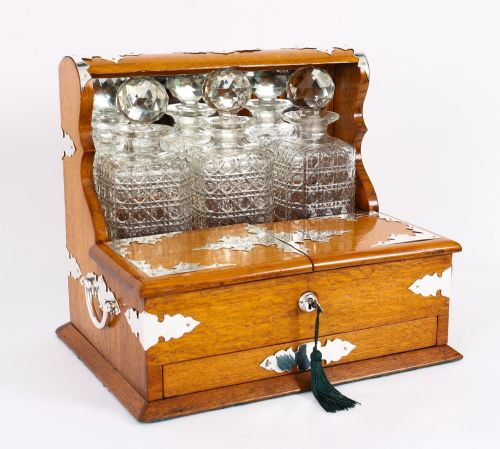
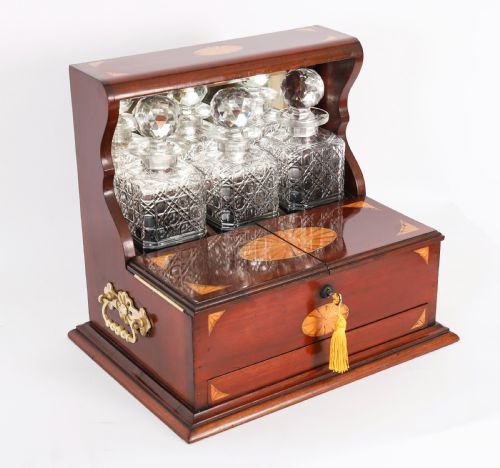
- A fitted box containing multiple distinct games or pastimes within a single cabinet. These units often incorporate decanters or card storage alongside chess and backgammon.
- Staunton
- A standardised design of chess pieces introduced in the mid-nineteenth century. This style utilises heavily weighted pieces with distinct figurative profiles for rapid identification during play.
- Tantalus
- A locking beverage cabinet displaying decanters behind a wooden frame while preventing removal without a key. They frequently integrate into larger games compendiums from the period.
- Bagatelle
- A precursor to modern billiards played by cueing balls up a sloping wooden board into numbered cups or holes. Tables range from portable folding boards to standalone furniture pieces.
- Marquetry
- The art of applying decorative veneer pieces to a wooden structure to form geometric or pictorial patterns. This technique appears on the tops of tables and games boxes.
Edwardian Wooden Game: Frequently Asked Questions
What is inside a games compendium?
A games compendium houses multiple pastimes within a single fitted wooden cabinet, often containing boards, dice, cards, and counters for chess, draughts, and backgammon.
Many examples also integrate storage drawers, cribbage boards, or locking decanter frames beneath the primary playing surfaces.
How do you date an Edwardian game?
Dating relies on stylistic markers, timber choices, maker marks, and patent dates stamped onto the hardware or original packaging.
Edwardian pieces typically date between nineteen hundred and nineteen ten, drawing on late Victorian structural traditions while introducing lighter satinwood and inlaid decoration.
Were these games meant for indoors or outdoors?
The inventory encompasses both parlour pastimes intended for drawing room tables and robust garden equipment built for lawns.
Indoor sets feature polished mahogany, boxwood, and velvet-lined compartments, whereas outdoor sets utilise resilient pine, ash, and painted wood.
How are chess sets from this era identified?
Chess sets from this period frequently follow the Staunton pattern, utilising turned boxwood and ebony with weighted bases for stability.
Original fitted wooden boxes and stamped maker labels help distinguish period sets from later reproductions.