






Edwardian Wooden Candle Stands
Edwardian wooden candle stands bring quiet vertical elegance to a room, offering a slender stage for illumination or display.
Edwardian Wooden Candle Stands
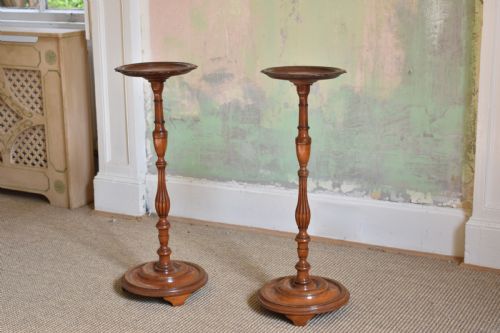
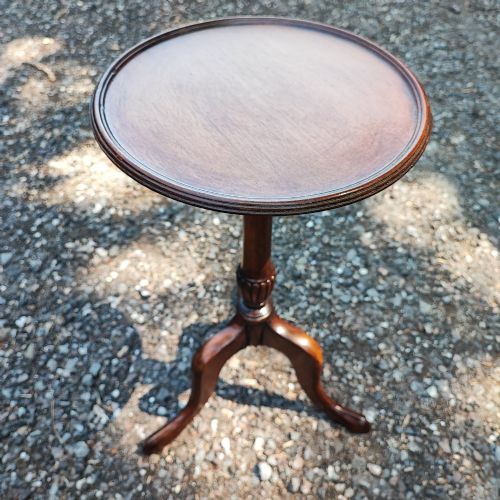
When you search for edwardian wooden candle stands, you encounter a refined selection of slender supports designed primarily for holding lights or small decorative items. These forms cross over into related categories such as torcheres, plant stands, and occasional wine tables.
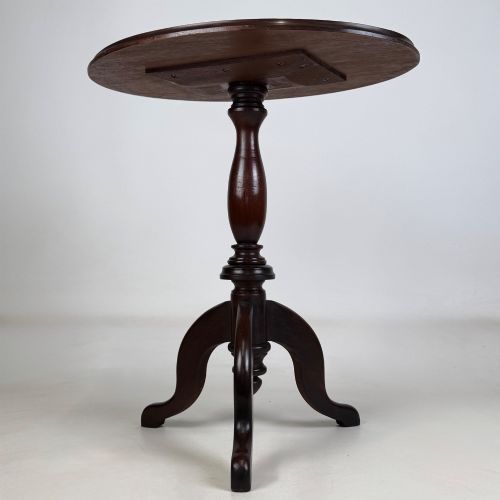
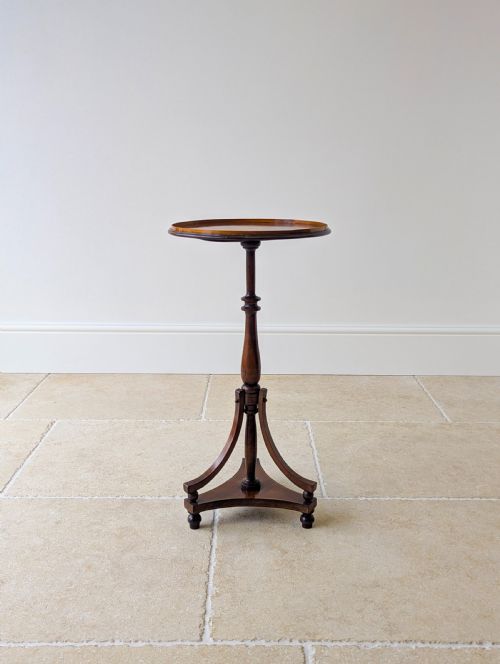
The objects on this page span several stylistic revivals alongside the core Edwardian period, drawing inspiration from Georgian, Sheraton, and Jacobean designs. You will frequently find tall, slender shafts supported by tripod bases, as well as paired candlesticks designed for table surfaces.
How they were made
Cabinetmakers utilised a variety of dense timbers, principally mahogany and oak, alongside walnut, satinwood, and teak for durability and rich grain. Turned wood components, including barley twist shafts and bobbin turnings, demonstrate the dexterity of turners working at the lathe.
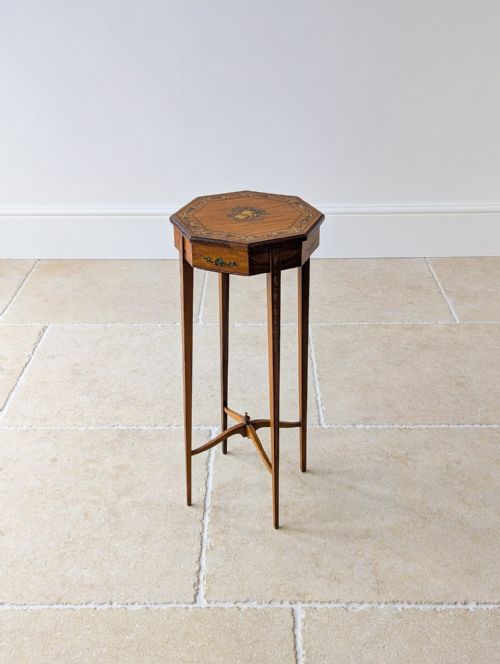
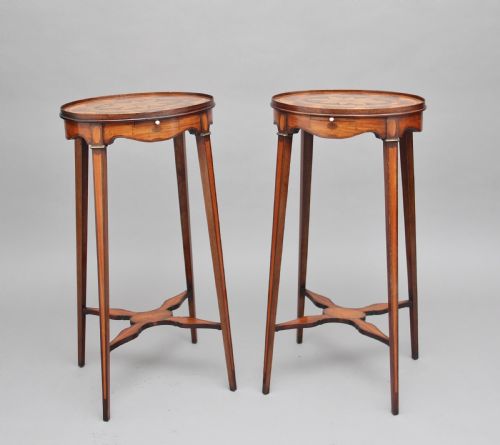
Many examples incorporate decorative details such as marquetry inlay, painted timber surfaces, and contrasting brass tops or candle pans. Tripod tables and torcheres often feature tilt mechanisms or finely carved pedestals that distribute weight evenly across three feet.
One notable pair of teak candlesticks spent their early days aboard the Royal yacht HMS Renown.
What varies in quality
Quality rests upon the crispness of the timber turning and the stability of the tripartite base. Superior examples exhibit tightly fitted joints and well-proportioned heights that prevent the piece from feeling top-heavy.
The refinement of decorative elements, such as fine satinwood inlay or well-cast brass fittings, distinguishes standard utility pieces from finer parlour furnishings.
The Edwardian Wooden Candle Stands Glossary
- Torchere
- A tall, slender stand designed to support a lamp or candle. This form emerged in the seventeenth century and remained popular through the Edwardian era.
- Barley Twist
- A helical turning resembling the twisting shape of barley sugar. It appears frequently on the shafts of oak and mahogany stands from the late nineteenth and early twentieth centuries.
- Tripod Table
- A small table or stand supported by three legs radiating from a central pillar. This construction ensures stability on uneven floors.
- Marquetry Inlay
- The art of applying pieces of veneer to a structure to form decorative patterns. Craftsmen utilised contrasting woods to create floral or geometric motifs on tabletop surfaces.
Edwardian Wooden Candle Stands: Frequently Asked Questions
How do I identify Edwardian furniture?
Edwardian furniture dates from the reign of King Edward VII between 1901 and 1910, though the style extends slightly either side. It is characterised by lighter proportions and a revival of earlier classical motifs.
You will often see Sheraton revival influences, satinwood inlay, and slender turned columns that distance these pieces from heavier Victorian designs.
Were these stands used for candles?
Yes, many tall stands and smaller turned items were specifically built to hold wax candles before electric lighting became universal. The brass pans found on many wooden candlesticks caught melted wax.
Over time, many of these tall stands were adapted to hold electric lamps or floral arrangements while retaining their original structural form.
What woods were commonly used?
Makers of this period relied heavily on mahogany and oak for their strength and attractive grain patterns. Walnut, satinwood, and teak also appear across the surviving pieces.
Inlaid items frequently combined darker mahogany with pale satinwood to create geometric borders or decorative central medallions.