




Edwardian Wood Thermometer
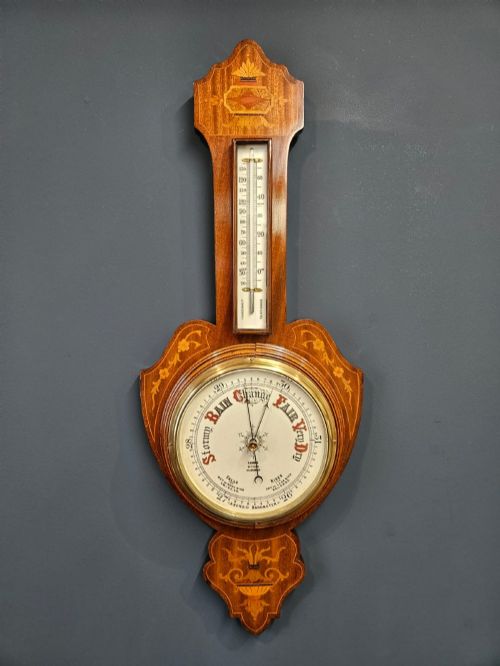
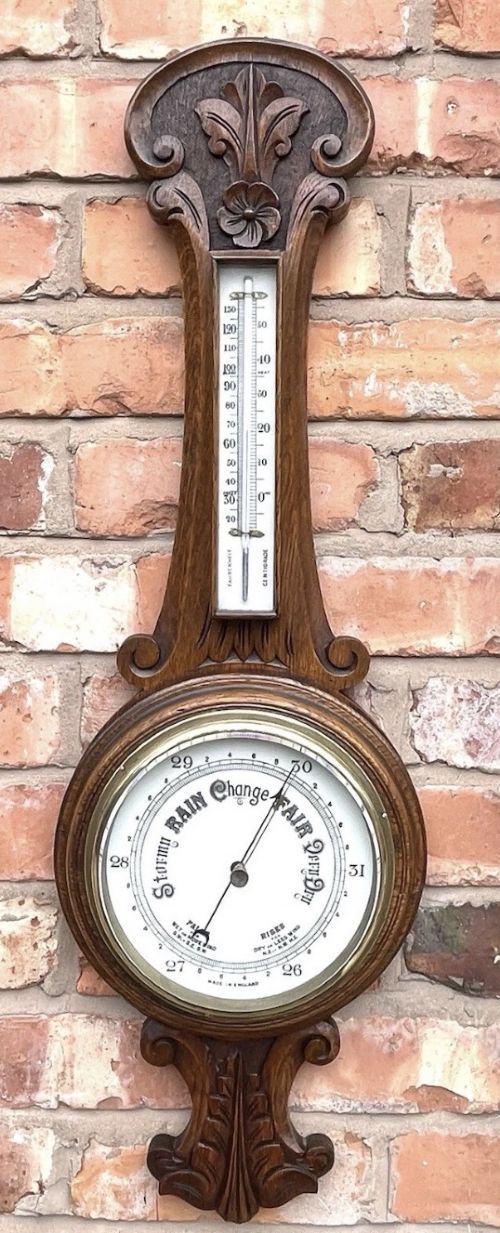
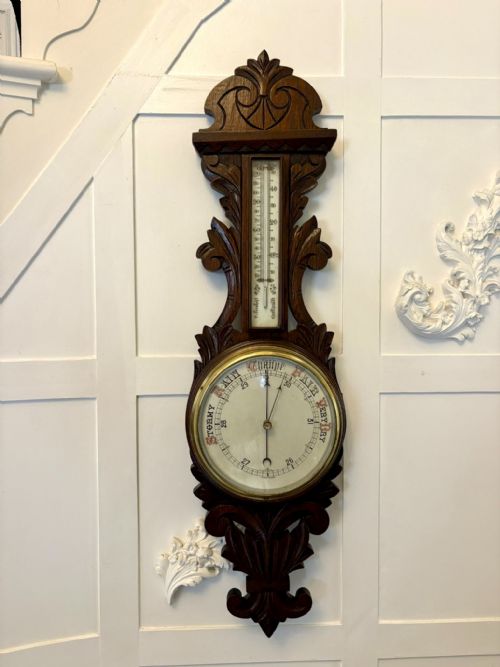
These edwardian wood thermometer pieces are domestic weather indicators housed in polished timber cases that bring period utility to a hallway.
Edwardian Wood Thermometer
An edwardian wood thermometer usually arrives combined within banjo barometers, wall clocks, and mantel pieces rather than as a standalone instrument. You meet these pieces most frequently in carved oak and inlaid mahogany housing dating from the early twentieth century.
The domestic weather station format dominates the selection, mounting a mercury or aneroid tube alongside a dial face and a Fahrenheit scale on a wooden board. Makers house these mechanisms in wall-hanging banjo shapes or desk-standing mantel formats.
How they were made
Cabinetmakers select dense hardwoods including oak, mahogany, walnut, and rosewood to construct the mounting plates and banjo bodies. They apply boxwood inlay and marquetry patterns to decorate the timber surfaces on finer neo-classical and edwardian examples.
Workshops mount glass thermometer tubes alongside brass bezels and carved wooden crests to complete the domestic weather instrument. Carved oak versions feature hand-chiseled foliage and scrolls across the pediment and trunk.
Edwardian Wood Thermometer Retail Price Guide 2026
Typical asking prices for edwardian wood thermometer among the pieces listed under this phrase on Sellingantiques today, from the lower quarter to the upper quarter. They describe what is for sale here now, not the wider market.
Listings feature oak, mahogany, walnut, rosewood, and satinwood alongside boxwood inlay across Victorian, Edwardian, and Neo-Classical styles.
What varies in quality
The crispness of the wood carving and the precision of the boxwood inlay define the upper tier of these domestic instruments. Plain timber boards with stamped decoration sit at the simpler end of the scale compared to fully carved oak and figured mahogany bodies.
The integration of multiple functions - such as combining a clock, barometer, and thermometer in one case - distinguishes more ambitious workshop production. Original glass tubes and undamaged wood finish elevate the standing of any piece.
Negretti & Zambra
The Edwardian Wood Thermometer Glossary
- Aneroid barometer
- An instrument that measures atmospheric pressure using a flexible metal box without liquid. It frequently shares a wood panel with a thermometer.
- Banjo barometer
- A wall-hanging weather glass housed in a shaped wooden case resembling a banjo. The design expands at the base to accommodate the dial face.
- Marquetry
- Decorative woodwork where thin pieces of veneer are fitted into a panel to form geometric or floral designs. You find this technique on neo-classical and edwardian cases.
- Boxwood inlay
- Contrasting pale wood lines inserted into darker timber surfaces such as mahogany or rosewood. This detail marks out finer cabinetwork.
- Mercurial barometer
- A traditional weather glass that measures atmospheric pressure through a column of mercury. These sit within vertical wooden stick or banjo cases.
Edwardian Wood Thermometer: Frequently Asked Questions
How do I read an edwardian wood thermometer?
Read the temperature against the Fahrenheit scale marked on the ivory, brass, or paper slip alongside the glass tube. The mercury or spirit column rises and falls with the ambient room or hallway temperature.
Ensure the instrument hangs away from direct sunlight or heat sources to get an accurate reading of ambient air conditions.
How do I clean the wood case?
Dust the carved oak or polished mahogany surface gently with a dry, soft cloth to prevent buildup in the crevices. Avoid using modern aerosol polishes or liquid cleaners that can damage old French polish or wax finishes.
Feed the dry timber occasionally with a traditional beeswax paste applied sparingly and buffed out with care.
Where should I hang a banjo barometer?
Hang the instrument on an interior wall away from direct drafts, radiators, and fireplaces to protect the wood and movement. Secure it firmly to a wall plug or sturdy hook using the hanging bracket on the reverse.
Hallways and entrance spaces provide the stable ambient conditions these wooden barometer cases require.