

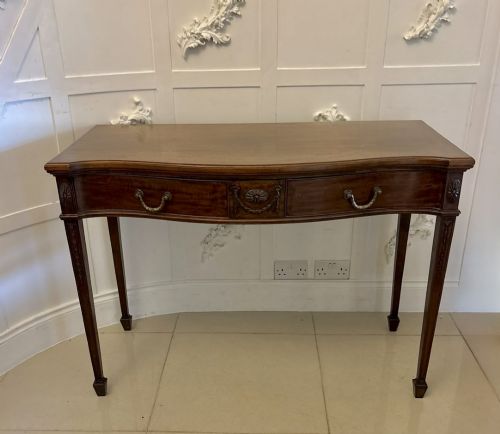
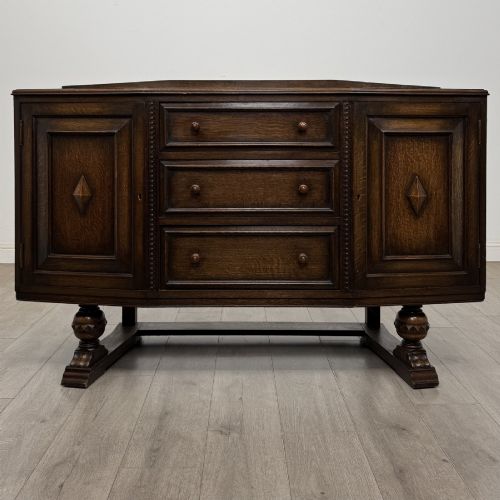
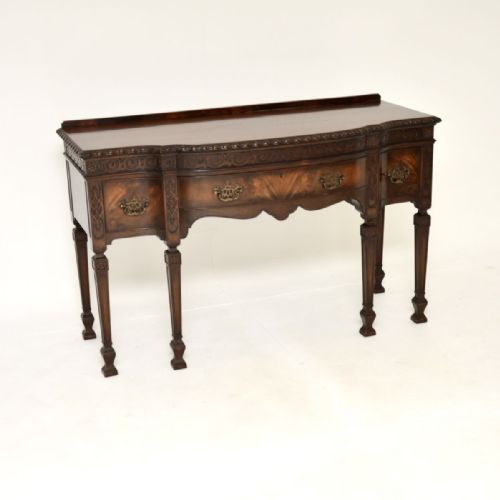
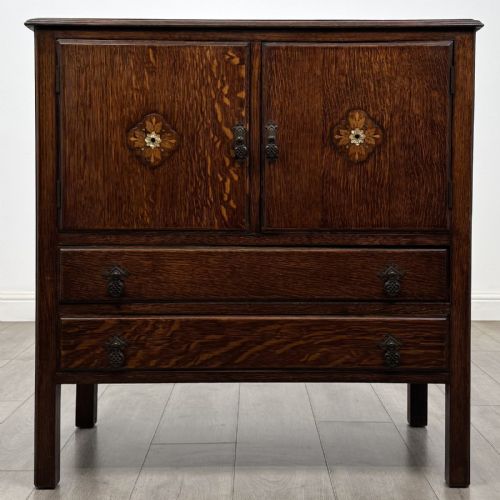

Edwardian Wood Sideboard
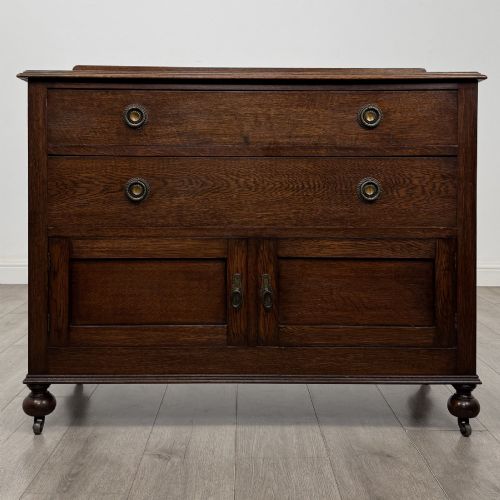
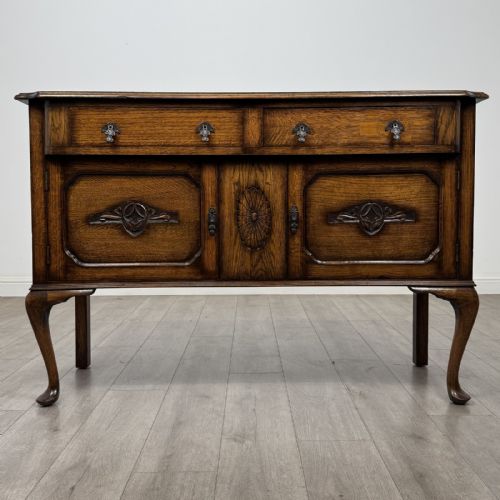
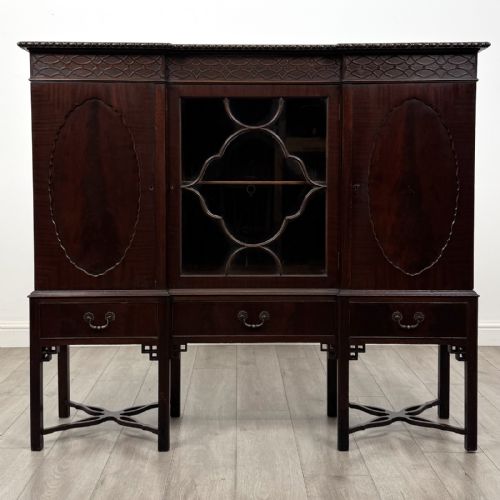
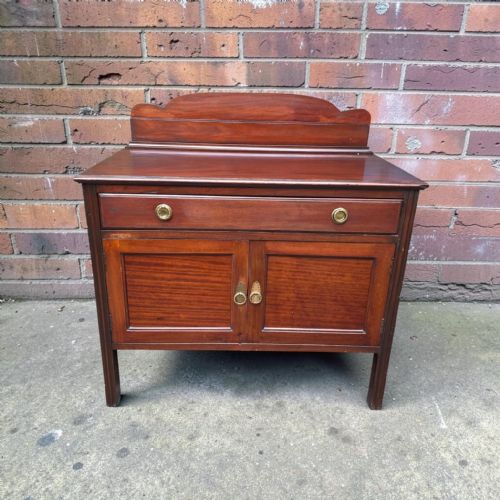
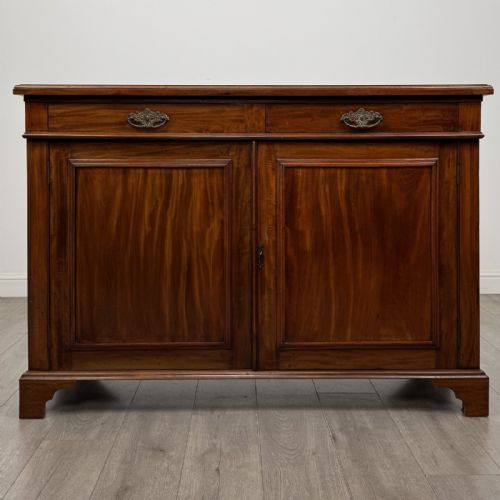
An edwardian wood sideboard anchors a dining room with generous storage and period proportion, offering a practical surface for serving and display.
Edwardian Wood Sideboard
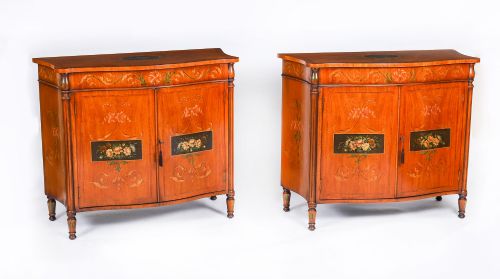
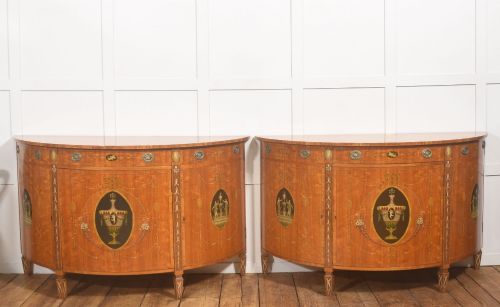
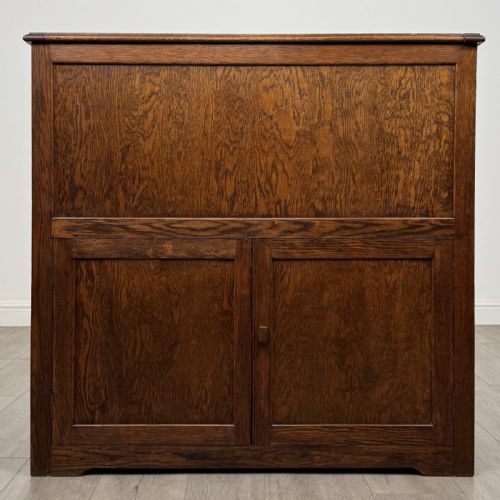
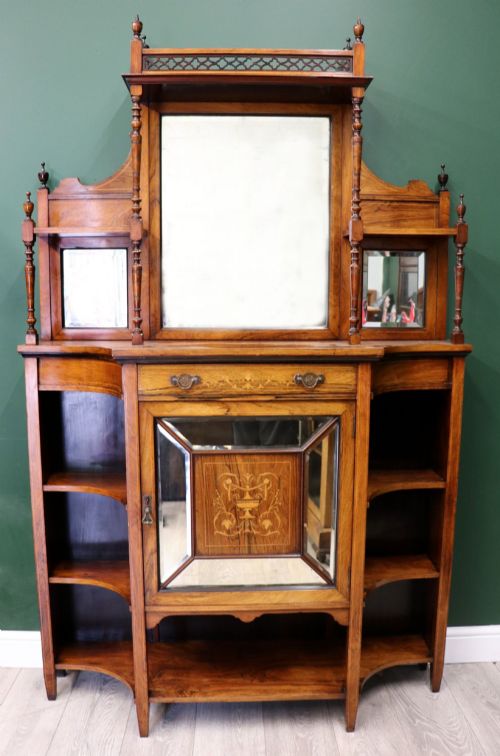
When searching for an edwardian wood sideboard, buyers encounter a variety of forms including bow front buffets, mirrored back cabinets, and Arts & Crafts designs. These pieces originate primarily from the Edwardian era and the late nineteenth century, spanning styles from Sheraton Revival to Jacobean Revival.
The selections on this page feature solid timbers and veneers arranged into cupboards, drawers, and display compartments. Sideboards and side cabinets dominate the inventory, accompanied by related dining furniture such as dressers and buffets.
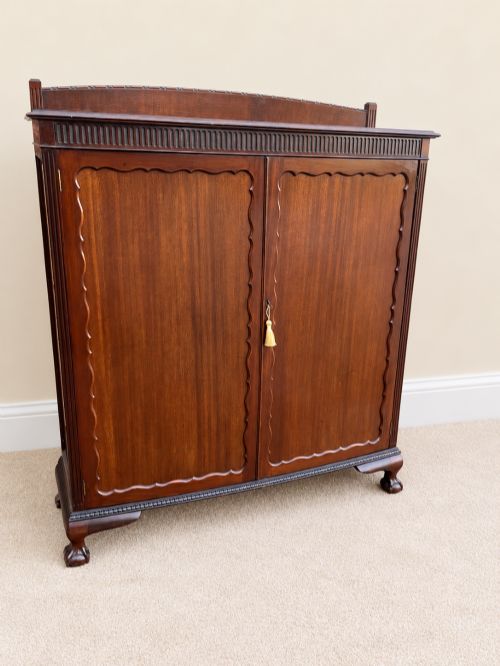
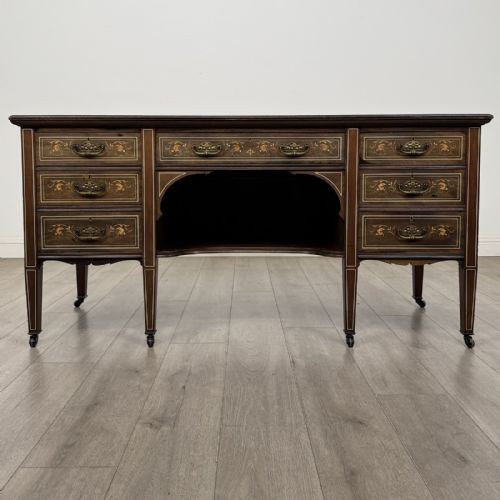
Originating from a period of refined cabinet making, an edwardian wood sideboard often incorporates inlaid boxwood, satinwood crossbanding, and carved details. Pieces range from straightforward oak cupboards to mahogany breakfront server cabinets with claw and ball feet.
Materials and construction techniques
Cabinet makers utilised primary timbers such as mahogany, oak, and walnut, often selecting flame mahogany veneer for decorative drawer fronts and cabinet doors. Satinwood and boxwood inlay provide contrasting borders and geometric patterns across the wood surfaces.
Structural elements incorporate brass handles, mirror glass inserts, and turned or barley twist legs depending on the stylistic influence. Carved panels and geometric mouldings define the Arts & Crafts and Jacobean Revival variants.
Edwardian Wood Sideboard Retail Price Guide 2026
Typical asking prices for edwardian wood sideboard among the pieces listed under this phrase on Sellingantiques today, from the lower quarter to the upper quarter. They describe what is for sale here now, not the wider market.
Certain oak sideboards feature built-in bottle racks and pigeon holes, proving that Edwardian hosts took their cellar organisation remarkably seriously.
Distinctions in construction and finish
The tier of a piece rests on the precision of its marquetry, the selection of timber figures such as flame mahogany, and the integrity of original brass hardware. Superior examples display careful timber matching across drawer fronts and doors.
Structural joinery, the clarity of bevelled mirror glass, and crispness in hand-carved details separate standard utility cupboards from exceptional demonstration pieces of cabinet work.
Leonard Wyburd for Liberty & Co.·Whytock & Reid·Hewetsons London
The Edwardian Wood Sideboard Glossary
- Crossbanding
- A narrow strip of veneer applied to the border of a panel, running perpendicular to the grain of the central timber.
- Marquetry
- Decorative patterns formed by fitting together thin slices of wood veneer and other materials onto a structural surface.
- Bow front
- A convex curved cabinet front that projects outward in a smooth rounded arc.
- Breakfront
- A cabinet design where the central section projects forward from the flanking outer sections.
- Chiffonier
- A compact sideboard or low cupboard featuring a shelf or mirror structure positioned above the main surface.
Edwardian Wood Sideboard: Frequently Asked Questions
Where should I place an edwardian wood sideboard?
These dining room cabinets suit placement against a principal wall in a dining space or hallway where surface length and interior storage are required.
Ensure clearance for opening cupboard doors and drawers, keeping the timber away from direct heat sources to protect the polished finish.
How do I care for the wood surface?
Dust the mahogany, oak, or walnut regularly with a soft, dry cloth and apply a traditional beeswax polish sparingly to maintain the sheen.
Avoid placing damp items directly onto the wood surface and use protective mats beneath serving dishes.
What is the difference between Edwardian and Victorian styles?
Edwardian designs tend to favour lighter satinwood inlays, Sheraton Revival elegance, and airier proportions compared to heavier Victorian counterparts.
Victorian pieces often display darker woods, robust carving, and formal architectural details like heavy bracket feet or mirror backs.
Can I use a sideboard in a hallway?
Sideboards provide deep drawers and lower cupboards that function effectively for storing household linens, paperwork, or tableware outside the dining room.
Compact bow front and side cabinet variations fit narrower circulation spaces while offering a display surface for lamps or decorative objects.