



Edwardian Wood Canterbury
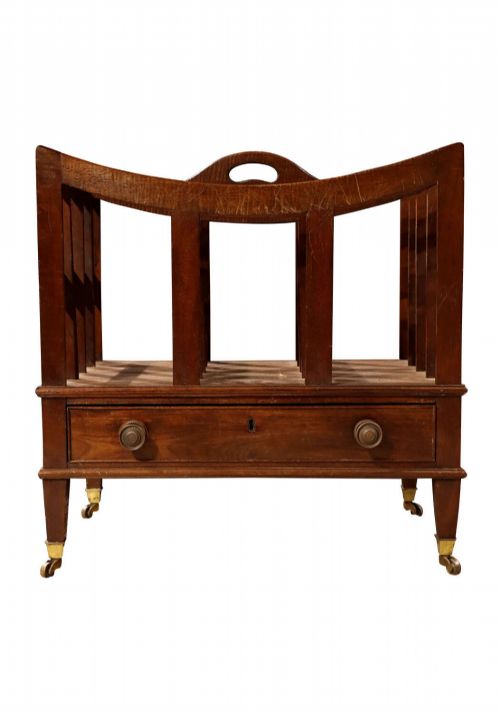
An Edwardian wood canterbury is a practical piece designed to hold sheet music or periodicals, bringing genuine period utility to a sitting room.
Edwardian Wood Canterbury
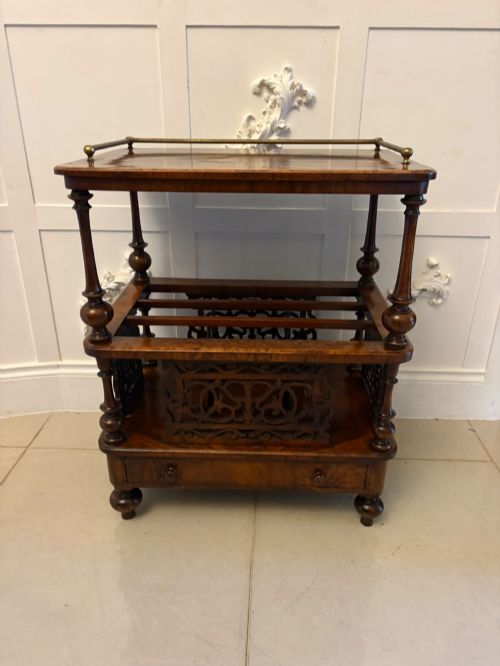
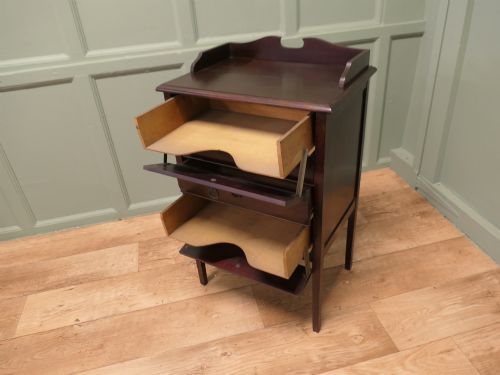
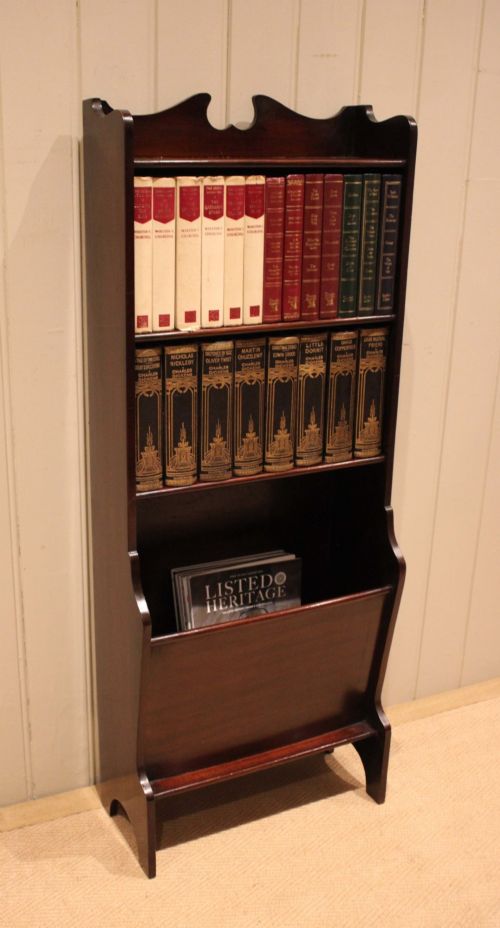
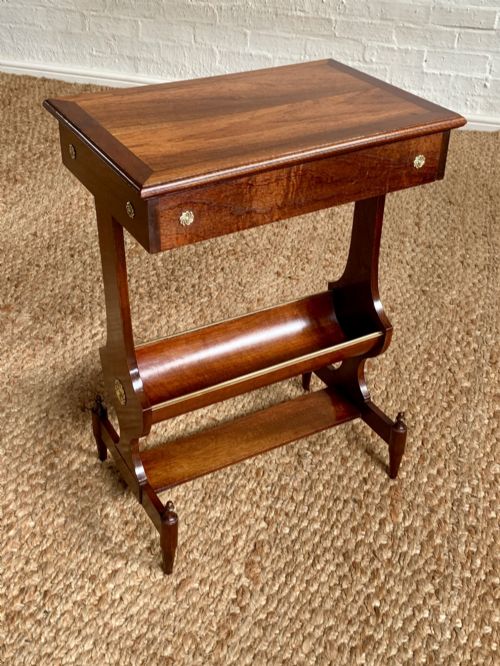
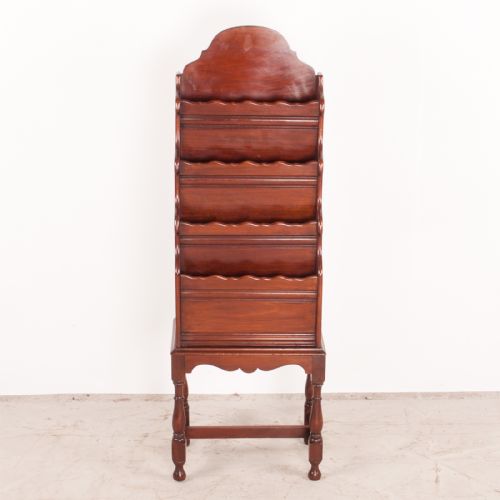
The term Edwardian wood canterbury covers a distinct group of low standing furniture items that combine divided compartments for papers with small drawers and display surfaces.
Most examples found in this selection date from the Edwardian period or the late nineteenth century, appearing as freestanding mahogany or rosewood racks by the fireside.
Beyond standard newspaper storage, many double as music cabinets or occasional side tables featuring fitted drawers and brass castors for movement.
How they were made
Cabinet makers constructed these pieces primarily using solid mahogany or rosewood, occasionally employing burr walnut, satinwood, or oak for specific panels.
Sustained stability relied on traditional joinery techniques, while decorative appeal came from marquetry inlay, pierced woodwork, and brass fittings.
Edwardian Wood Canterbury Retail Price Guide 2026
Typical asking prices for edwardian wood canterbury among the pieces listed under this phrase on Sellingantiques today, from the lower quarter to the upper quarter. They describe what is for sale here now, not the wider market.
Some larger canterburys roll around on tiny brass castors so you can chase the newspapers across the rug.
What varies in quality
Superior quality rests in the crispness of any carved or pierced details and the precision of contrasting wood inlays.
Substantial timber selection for the dividing slats and sturdy under-framing distinguish robust examples from lighter, decorative pieces.
The Edwardian Wood Canterbury Glossary
- Canterbury
- A low freestanding rack with vertical divisions, originally designed to hold sheet music or folios.
- Marquetry
- Decorative patterns formed by inserting thin veneers of different coloured woods into a solid ground.
- Rosewood
- A dense, dark timber featuring prominent grain markings, frequently utilised for fine nineteenth century cabinet work.
- Satinwood
- A pale, lustrous exotic timber employed for contrasting stringing and detailed inlay motifs.
Edwardian Wood Canterbury: Frequently Asked Questions
What was a canterbury used for?
These items originated to store unbound sheets of music near a piano or music stand in the drawing room.
Over time, owners repurposed them to hold daily newspapers, journals, and books within easy reach of a seating area.
How do I distinguish Edwardian from Victorian pieces?
Edwardian examples tend to display lighter framing, more restrained inlay work, and brighter mahogany surfaces.
Victorian versions often feature darker rosewood, heavier proportions, and more robust turned supports.
Where should I place a canterbury at home?
They fit naturally beside a sofa, armchair, or desk where their compartment dividers can organise current reading material.
Models that include a drawer or flat top also function effectively as compact side tables.
Do these pieces require special care?
Standard polish maintenance and stable room humidity protect the polished wood surfaces and delicate veneer work.
Keeping them away from direct heat sources prevents the timber joints and inlays from drying out.