



Edwardian Wood Bin
These pieces of edwardian wood bin furniture bring solid timber and brass mounting to the hearthside.
Edwardian Wood Bin
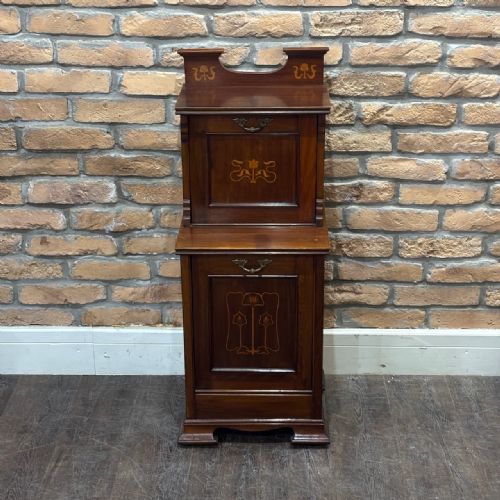
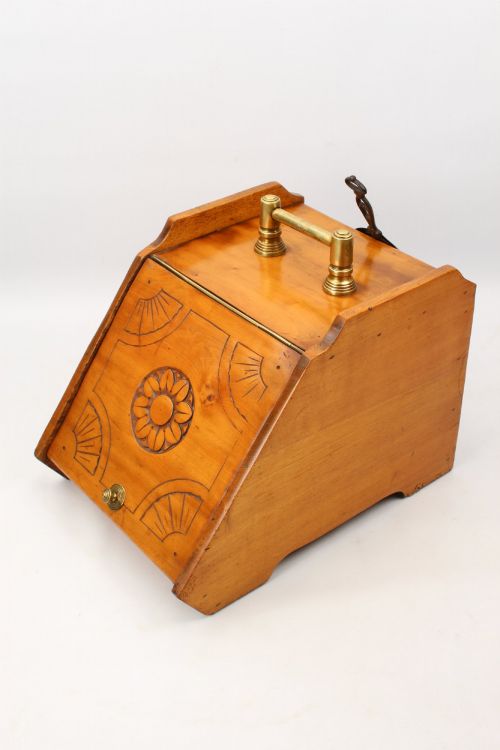
When you search for an edwardian wood bin, you are looking at practical fireside containers designed to hold coal, logs or peat beside the hearth. The examples on this page span the Edwardian period and the nineteenth century, taking forms such as purdoniums, coal boxes, log carriers and scuttles.
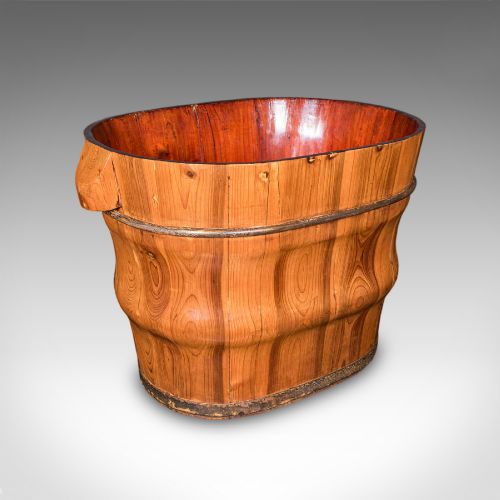
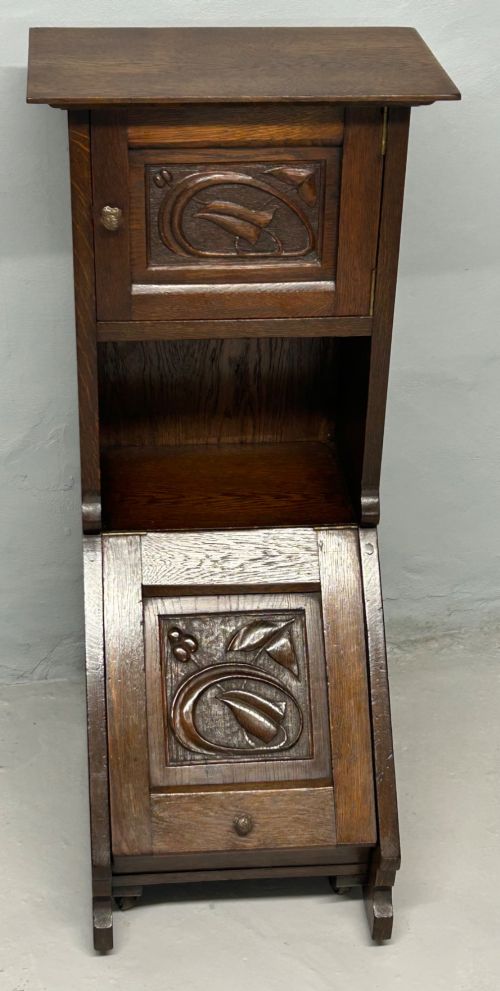
You are most likely to meet oak and mahogany pieces from the Edwardian era, alongside earlier Victorian variants in rosewood and walnut. Some take the form of a cabinet with a fall front and shovel, while others are coopered buckets or carved boxes.
Materials and construction
These items are built from solid timbers including oak, mahogany, rosewood and walnut, often enhanced with marquetry inlay or carved decoration. Cabinet forms incorporate metal hinges and handles, frequently in brass, to endure daily use by the fireplace.
Coopering techniques shape staves of wood into round buckets with metal bands, while purdoniums utilise hinged interiors and metal linings to manage fuel cleanly.
Edwardian Wood Bin Retail Price Guide 2026
Typical asking prices for edwardian wood bin among the pieces listed under this phrase on Sellingantiques today, from the lower quarter to the upper quarter. They describe what is for sale here now, not the wider market.
One listed log carrier bears the mark of Liberty London, proving that even a humble fuel bucket could arrive from Regent Street.
Judging quality in fuel containers
Quality rests in the selection of figured timbers, the crispness of any carved ornamentation and the integrity of the internal metal lining. Superior pieces display thoughtful joinery and retained shovels or liners that match the original design.
The refinement of brass mounts and the precision of marquetry inlay separate standard utility items from decorative fireside furniture intended for the principal rooms of a house.
LIBERTY LONDON
The Edwardian Wood Bin Glossary
- Purdonium
- A household cabinet designed specifically for storing coal near a fireplace, typically featuring a sloping front door and an internal metal scoop. It conceals fuel storage behind domestic furniture styling.
- Coopered
- Constructed from wooden staves joined edge to edge and bound with metal hoops, much like a barrel. This method forms cylindrical buckets suited for heavy loads of logs or peat.
- Marquetry
- The art of applying pieces of veneer to a structure to form decorative patterns or pictures. It appears on finer rosewood and mahogany boxes from the Victorian and Edwardian periods.
- Fireside
- Pertaining to furniture and accessories designed for use immediately around the domestic hearth. These pieces combine utility with decorative presence in the main rooms.
Edwardian Wood Bin: Frequently Asked Questions
How were these wooden bins used?
They sat beside open hearths in sitting rooms and parlours to store fuel close at hand. Servants loaded them from larger cellar stocks before lighting the daily fires.
Some variants were specifically shaped for logs or peat, reflecting the regional fuel sources of the period.
How do I distinguish Edwardian from Victorian pieces?
Edwardian items often favour lighter oak or mahogany with clean lines, reflecting the turn of the century aesthetic. Victorian pieces tend to use darker timbers like rosewood and walnut, frequently with heavier carvings or elaborate marquetry.
Construction details and hardware styles also help assign pieces to their respective periods.
Are original shovels usually included?
Many surviving coal boxes and purdoniums retain their original metal shovels, which fit into specialised compartments inside the cabinet or on the back. Finding a piece with its matching shovel adds to its completeness.
When a shovel is present, it is usually brass or iron to coordinate with the external mounts.