

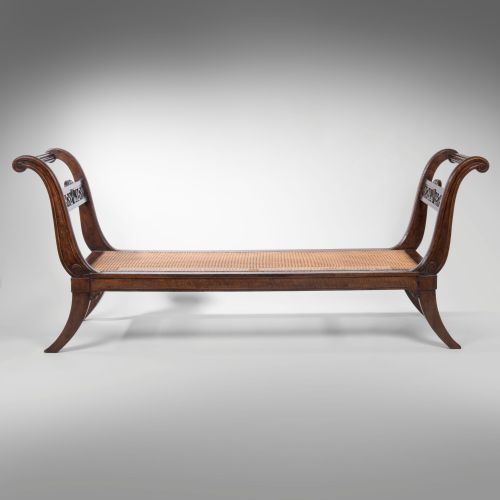


Edwardian Window Stool
An Edwardian window stool is a low, upholstered seat designed for the light of a bay.
Edwardian Window Stool
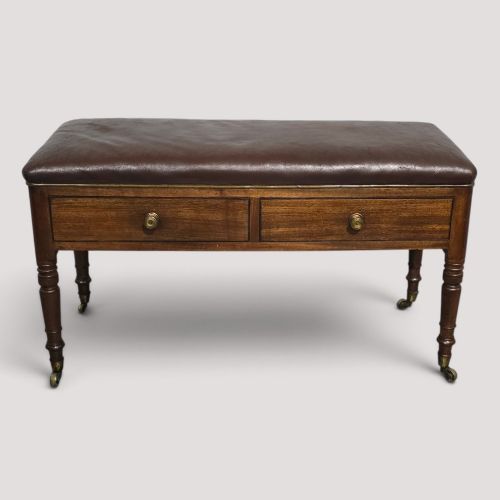
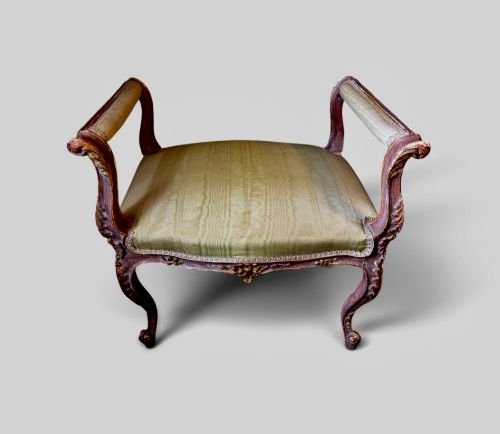
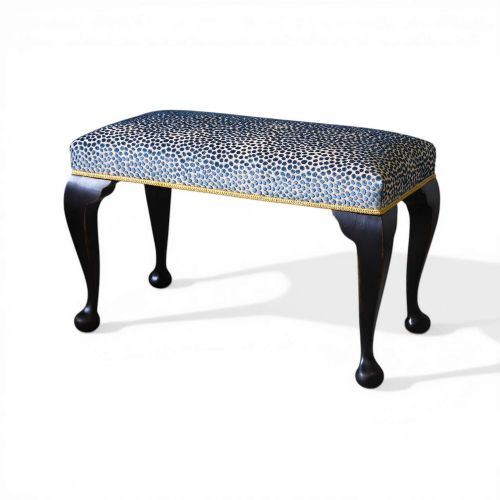
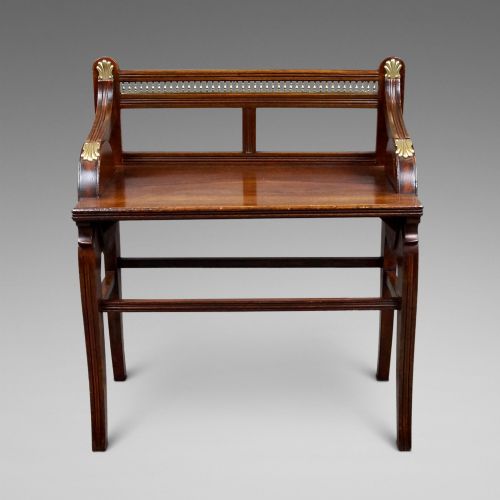
An edwardian window stool is a low, elongated seat designed to sit beneath a sill without blocking the view or the light. The pieces on this page span from the late nineteenth century into the twentieth, taking the form of window seats, duet piano stools, and long footstools.
Mahogany and walnut form the core of the timber frames, frequently inlaid, polished, or ebonised. Upholstery ranges from simple leather and plain textiles to rich damask and velvet, often shaped to fit long bays or narrow halls.
How they were made
Cabinetmakers built the frames primarily from dense hardwoods like mahogany and walnut, alongside occasional satinwood and oak. Turned legs, cabriole supports, and X-frames required precise joinery to bear the weight of multiple sitters.
Brass mounts, fine inlay work, and hand-carved detailing finished the structural timbers. Seat frames received traditional webbing, stuffing, and tightly tacked fabric, leather, or tapestry upholstery.
Some versatile specimens served a double life, doubling quietly as piano benches by night and window perches by day.
What varies in quality
The distinction lies in the crispness of the timber carving and the integrity of the frame construction. Better examples display careful grain selection, subtle inlay, and sturdy, unyielding joints that withstand daily use.
Proportion and execution drive value. A refined silhouette with balanced turned legs or a harmonious X-frame separates a standard workshop piece from a superior production.
James Shoolbred And Co
The Edwardian Window Stool Glossary
- Duet stool
- An extended seat designed for two people to sit together, frequently used at a piano or beside a window. These pieces provide extra length while maintaining a low profile.
- X-frame
- A structural form where intersecting diagonal legs support the seat. This ancient design appears in revived Neoclassical and Regency styles.
- Ebonised
- Timber treated with a chemical stain or pigment to imitate heavy, black ebony. This finish was popular for achieving sharp, contrasting lines.
- Inlay
- A decorative technique where contrasting strips of wood or shell are fitted flush into the primary timber surface. Edwardian pieces often utilise delicate stringing.
- Damask
- A reversible, figured fabric woven on a jacquard loom with patterns visible on both sides. It provides a formal, traditional upholstery surface.
Edwardian Window Stool: Frequently Asked Questions
What is an edwardian window stool?
An edwardian window stool is a long, low seat built to fit beneath low household windows. They provide a comfortable resting spot without obstructing incoming daylight.
These pieces often double as piano benches or hall seats. Their compact height and elongated frames make them versatile additions to various rooms.
How do I spot an edwardian piece?
Look for light mahogany timbers, delicate string inlay, and refined Edwardian proportions. The joinery is neat, and the upholstery often uses traditional textiles.
Many pieces reflect earlier revival styles while retaining the lighter aesthetic typical of the early twentieth century. Check the underside of the frame for maker stamps or retail labels.
Are duet stools different from standard stools?
Duet stools are significantly longer than standard single stools. They were originally made to accommodate two musicians sharing a piano bench.
This extra length makes them ideal window seats. They bridge the gap between a single chair and a full bench.