



Edwardian Weather Clock
These edwardian weather clock pieces combine time and meteorology in one handsome housing, offering both functional utility and period charm for your desk or mantelpiece.
Edwardian Weather Clock
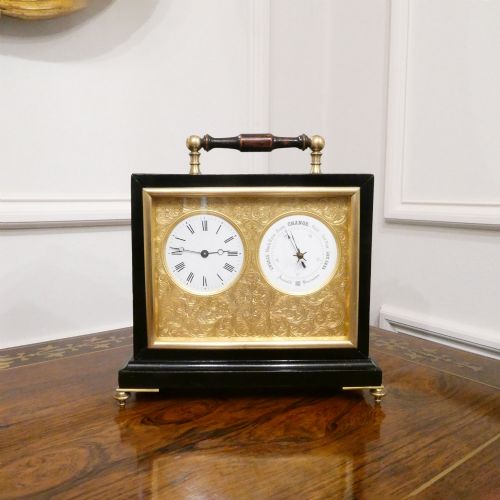
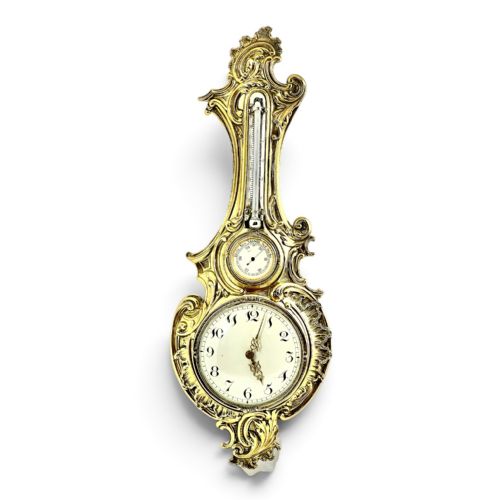
When you search for an edwardian weather clock, you encounter combined instruments that house a clock alongside a barometer and often a thermometer in a single case. These multi-functional pieces span the Edwardian period, the late Victorian era, and the early twentieth century.
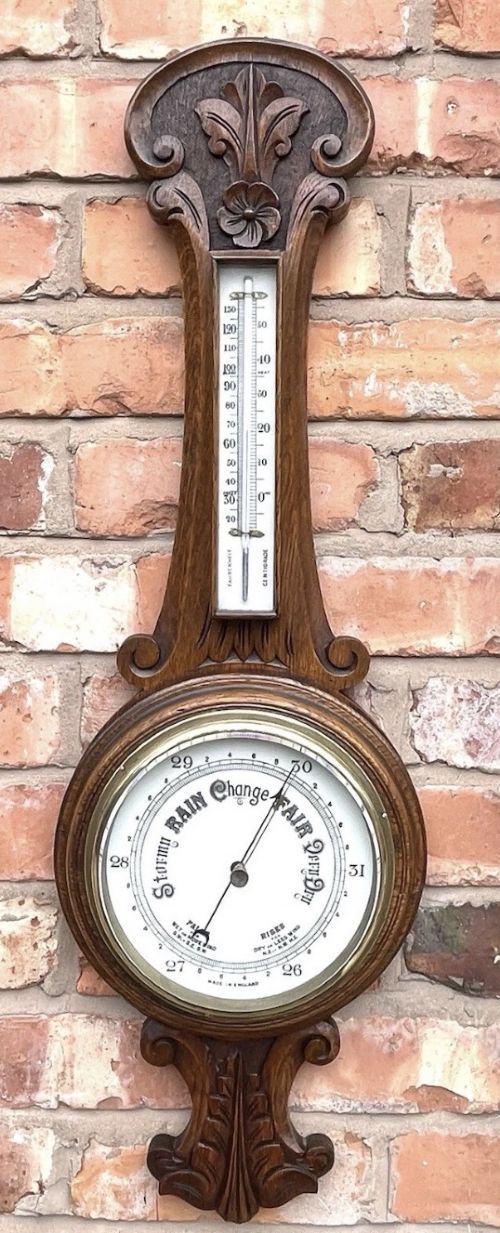
You meet them most frequently as oak or mahogany desk pieces, mantel models, and banjo wall stations. The design brings together different dials to record time and atmospheric changes side by side.
The materials and styles reflect the cabinet-making standards of 1900 and the surrounding decades. Walnut, ebonised wood, and boxwood inlay appear frequently alongside carved oak and mahogany.
How they were made
Cabinet makers utilised solid woods like oak and mahogany to house delicate mechanical movements and barometer tubes. Cases often feature carved details, architectural elements, and boxwood inlay.
Dials were commonly fashioned from enamel or brass with clear glass covers to protect the gauge needles and clock hands. Metal components, including silver gilt fittings, added durability and visual contrast to the wood.
Edwardian Weather Clock Retail Price Guide 2026
Typical asking prices for edwardian weather clock among the pieces listed under this phrase on Sellingantiques today, from the lower quarter to the upper quarter. They describe what is for sale here now, not the wider market.
Some models squeeze three instruments into a space smaller than a hardback book, proving the Victorians loved a gadget just as much as we do.
What varies in quality
The standard of timber selection and the crispness of any carved decoration set finer examples apart from simpler utility pieces. Marquetry inlay work and architectural case design indicate higher craftsmanship.
The integration of multiple instruments within a unified case requires precise fitting. Well-executed sets balance the visual weight of the clock face with the barometer and thermometer dials harmoniously.
The Edwardian Weather Clock Glossary
- Barometer
- An instrument measuring atmospheric pressure to forecast weather changes. It serves as the central meteorological gauge in these combined desk and wall pieces.
- Aneroid barometer
- A barometer that measures pressure without using liquid mercury, relying on a flexible metal box instead. This mechanism allowed makers to build compact instruments suitable for domestic furniture.
- Marquetry
- Decorative woodwork where thin pieces of veneer are fitted together to form geometric or floral patterns. Boxwood inlay often highlights the mahogany surfaces on Edwardian models.
- Silver gilt
- Silver that has been coated with a thin layer of gold. This finish appears on select Victorian and Edwardian weather station components.
- Ebonised wood
- Timber treated to resemble ebony, providing a dark and uniform finish. It creates a striking contrast against brass bezels and white enamel dials.
Edwardian Weather Clock: Frequently Asked Questions
What is an edwardian weather clock?
An edwardian weather clock is a combined instrument that brings together a timepiece, a barometer, and frequently a thermometer within a single housing. These objects allowed households to check the time and atmospheric conditions simultaneously.
They appear in various formats, including desk sets, mantel models, and wall-hung banjo stations. The shared housing provides a neat desktop or wall-mounted solution for domestic forecasting.
How do I read the barometer?
The barometer dial indicates changes in atmospheric pressure through a moving needle that points to words like stormy, rain, change, fair, and very dry. Tapping the glass gently before reading helps settle the needle to show the current pressure.
Rising pressure generally indicates improving weather, while falling pressure suggests approaching rain or wind. Comparing the movable indicator hand with the active needle reveals whether pressure has increased or decreased since your last check.
Where were these instruments placed?
These combined instruments were designed for prominent display in domestic interiors, typically resting on library desks, mantelpieces, or hanging upon hallway walls. Their dual purpose made them practical for daily reference in principal rooms.
Because they combined furniture craft with scientific utility, they suited studies, drawing rooms, and entrance halls where guests and residents could consult them.
How do I care for the wood and glass?
Wood cases benefit from occasional light dusting with a dry, soft cloth to preserve the finish of oak, mahogany, or walnut. Avoid using harsh chemical polishes that can build up on carved details or inlay.
Glass covers over the dials require careful cleaning with a mild glass cleaner applied to a cloth rather than sprayed directly onto the instrument. This prevents moisture from seeping behind the bezel into the delicate paper or enamel dial faces.