






Edwardian Wall Thermometer
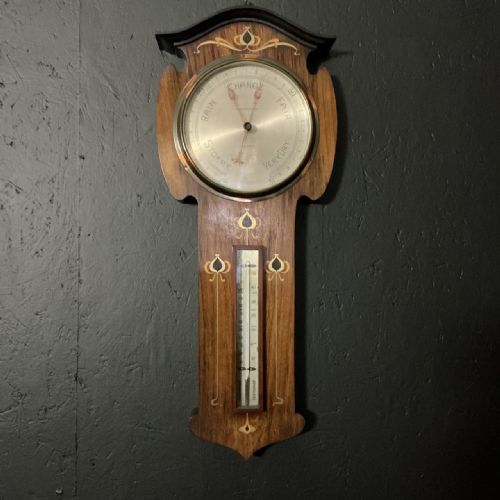
An Edwardian wall thermometer brings practical domestic science into the hall, offering reliable temperature reading framed in handsome oak or mahogany.
Edwardian Wall Thermometer
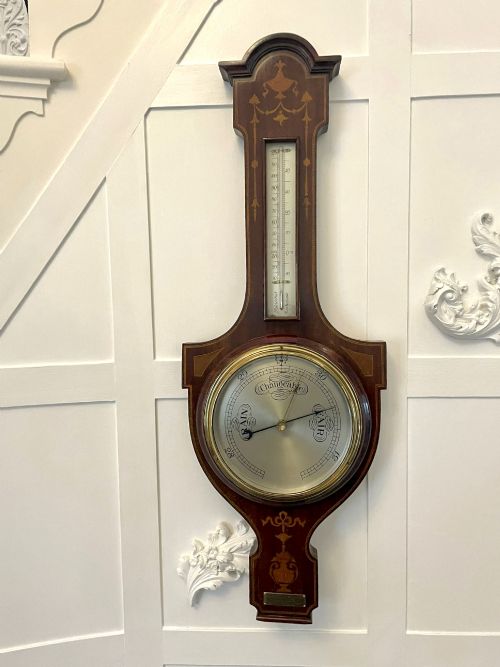
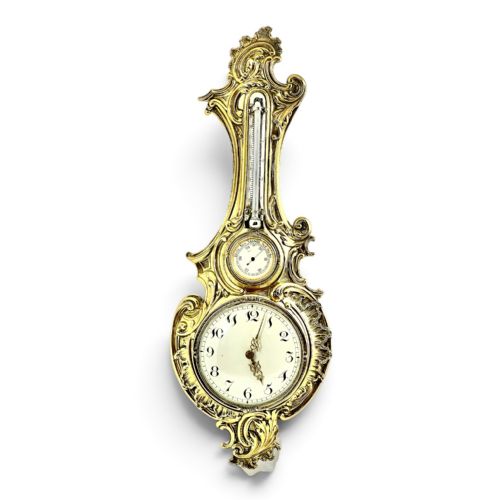
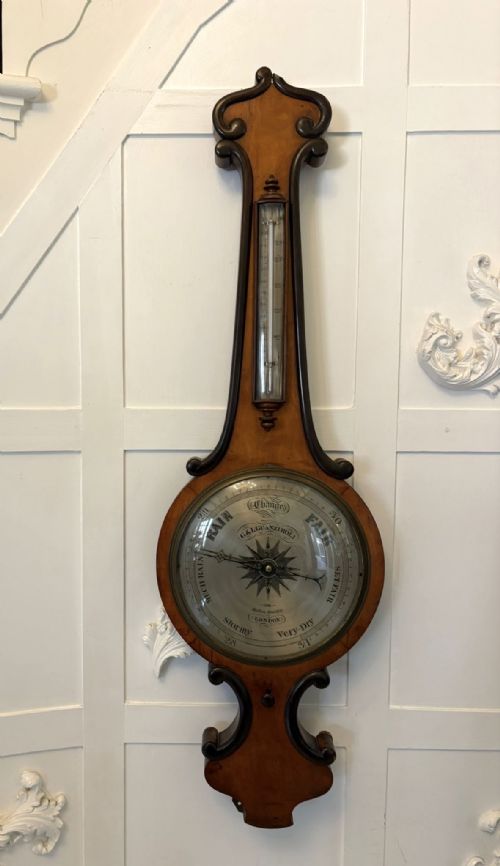
When you search for an Edwardian wall thermometer, you will frequently encounter pieces that combine temperature reading with aneroid barometers and clocks. These versatile instruments served as central household hubs for monitoring weather and time in the early twentieth century.
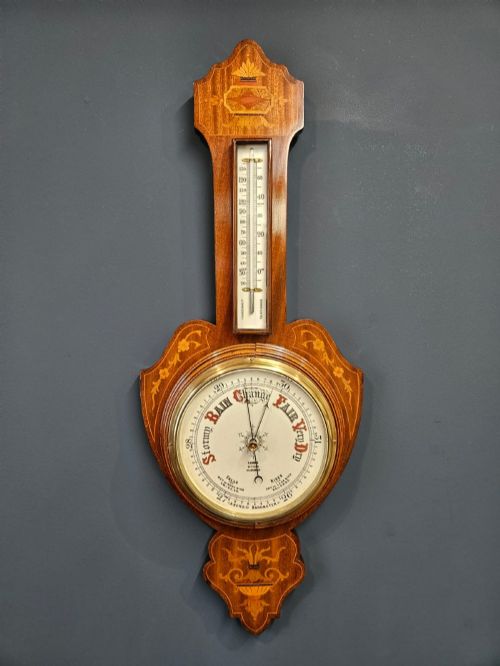
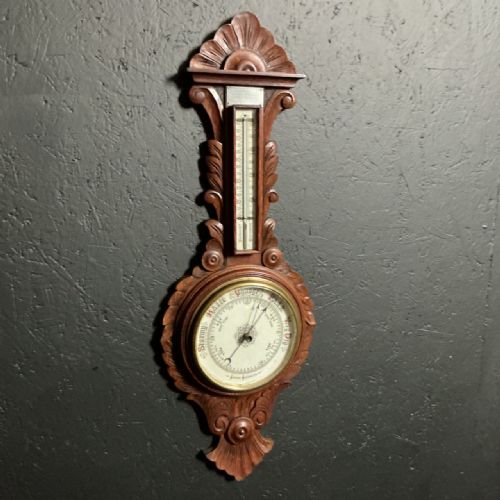
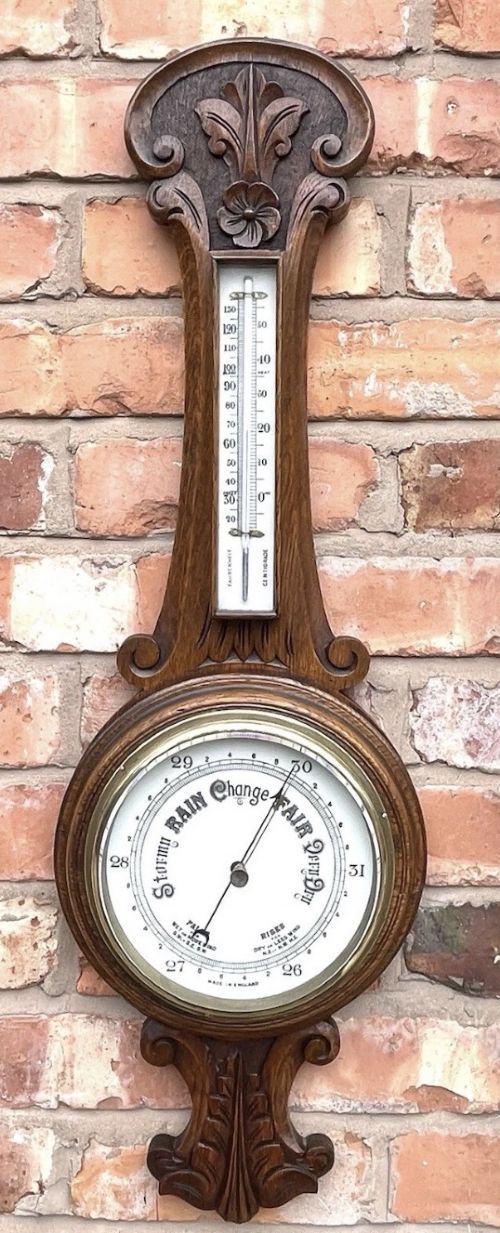
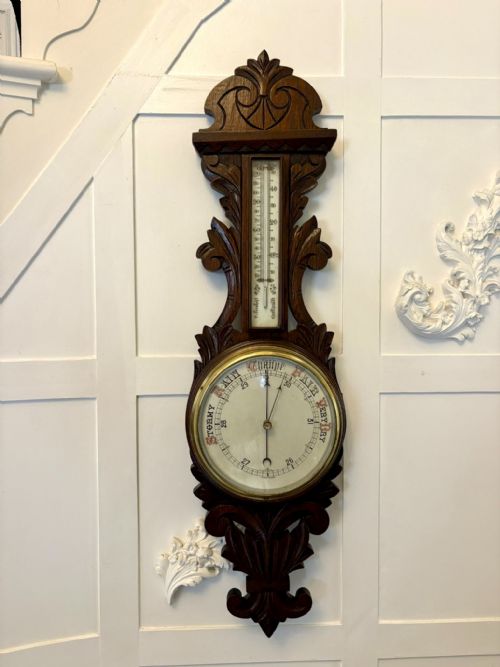
The version you are most likely to meet on this page is mounted on carved oak or inlaid mahogany, reflecting the domestic tastes of the Edwardian period and the late Victorian era.
Many examples incorporate scales directly onto glass faces mounted within wooden banjo frames, hanging securely from hallway walls.
Materials and construction methods
Cabinet makers utilised dense hardwoods such as oak, walnut and mahogany to form the structural bodies of these wall pieces, often applying delicate wood inlay and satinwood stringing for visual contrast.
Glass tubes containing mercury or spirit solutions were carefully calibrated and attached to printed porcelain or brass register plates to measure temperature changes.
Carvers shaped the solid timber frames by hand, producing leaf motifs, scrolling details and architectural pediments that housed the delicate internal barometer movements.
Edwardian Wall Thermometer Retail Price Guide 2026
Typical asking prices for edwardian wall thermometer among the pieces listed under this phrase on Sellingantiques today, from the lower quarter to the upper quarter. They describe what is for sale here now, not the wider market.
Some massive oak banjo barometers come carved with lively birds perched among foliage to keep watch over the weather.
Factors that distinguish finer examples
The distinction between standard domestic instruments and finer pieces lies in the crispness of the wood carving and the richness of the timber grain, particularly in burr walnut and figured mahogany.
Precision in the engraved register plates, well-executed marquetry work, and the inclusion of signed brass dials by established makers elevate a wall piece above routine production.
Intact glass tubes, original mercury columns and well-preserved porcelain scales demonstrate superior preservation and careful handling over the decades.
Dollond London·G and L Guanziroli London·Negretti and Zambra
The Edwardian Wall Thermometer Glossary
- Aneroid barometer
- An instrument that measures atmospheric pressure using a flexible metal box without liquid. This mechanism allowed makers to build compact wall hanging banjo shapes.
- Banjo barometer
- A domestic weather glass housed within a distinctive tapered wooden frame resembling a banjo. This form dominated hallway instrumentation through the Victorian and Edwardian eras.
- Marquetry
- Decorative woodwork where thin slices of various coloured woods are fitted together to form pictorial patterns. Makers applied this technique to enrich flat mahogany and walnut surfaces.
- Mercury thermometer
- A temperature measuring device utilising mercury sealed inside a graduated glass tube. These sensitive tubes require careful mounting against stable wooden backboards.
- Silver gilt
- Metal coated with a thin layer of silver and gold to produce a lustrous finish. This treatment appears on select high-end dial plates and bezel mounts.
Edwardian Wall Thermometer: Frequently Asked Questions
Are these mercury thermometers safe to keep at home?
The sealed glass tubes contain the original mercury safely behind protective glass bezels during normal domestic display.
Avoid placing them in high-traffic hallways where accidental impacts might crack the glass housing and expose the contents.
How do I tell an Edwardian piece from a Victorian one?
Edwardian instruments generally display lighter oak timbers, simpler Arts and Crafts influences or restrained inlay work.
Victorian counterparts tend to feature heavier carved ornamentation, darker walnut frames, and more ornate Rococo Revival motifs.
Did these instruments include clocks as well?
Makers frequently combined barometers and thermometers with mechanical clock faces into unified wall stations for the hallway.
These combination pieces allowed households to check time, temperature and barometric pressure from a single central fixture.