



Edwardian Torchere
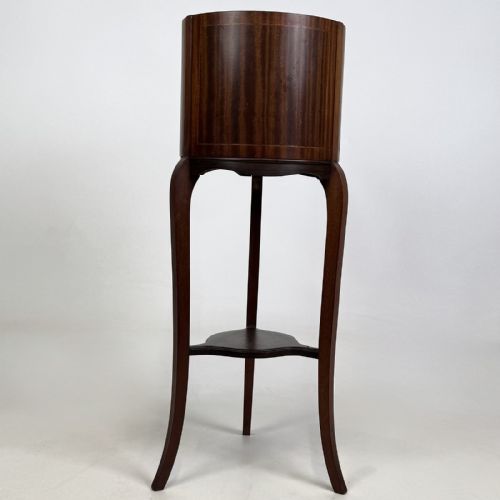
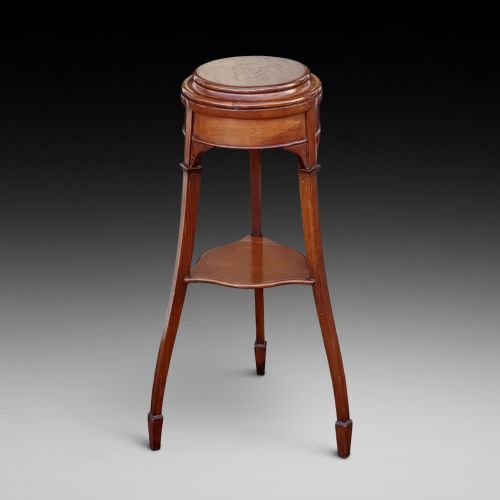
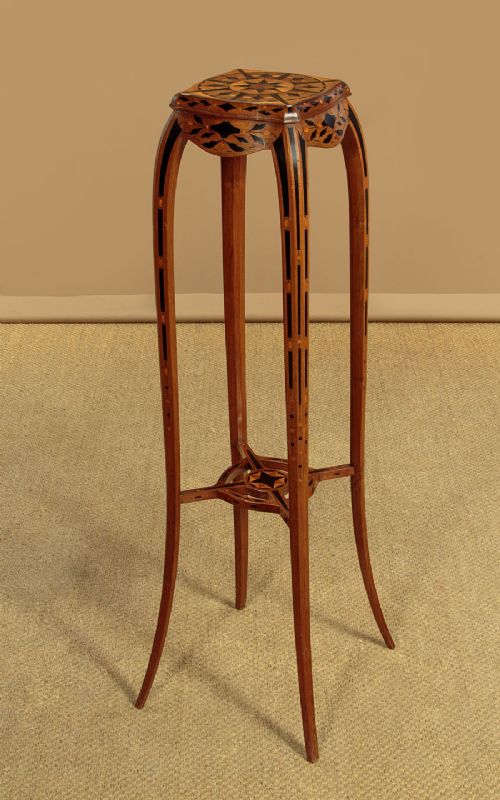
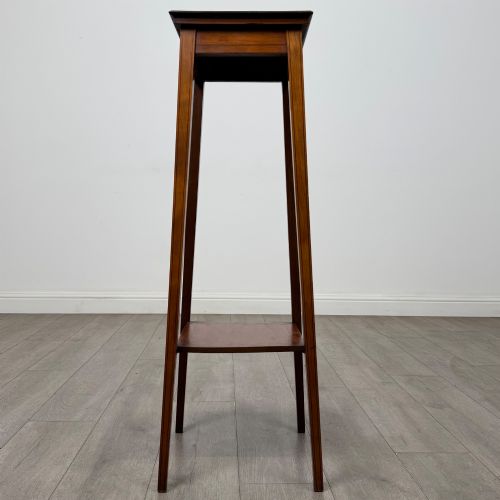
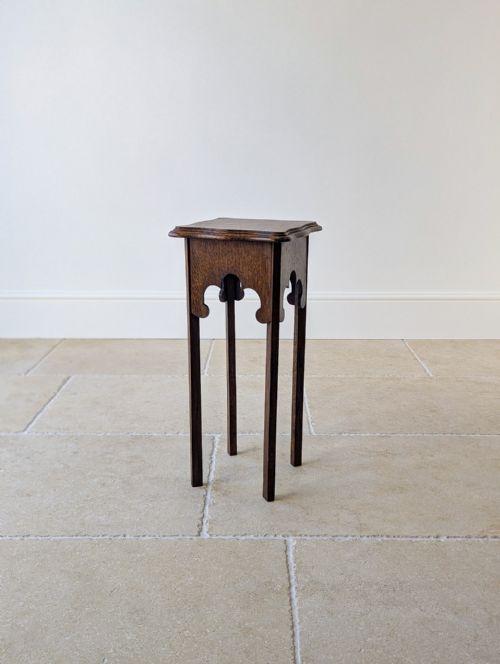
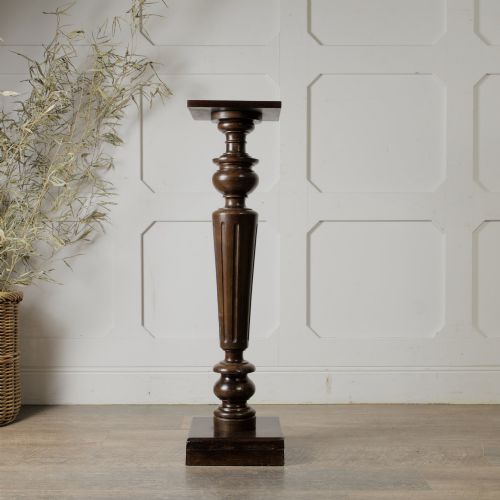
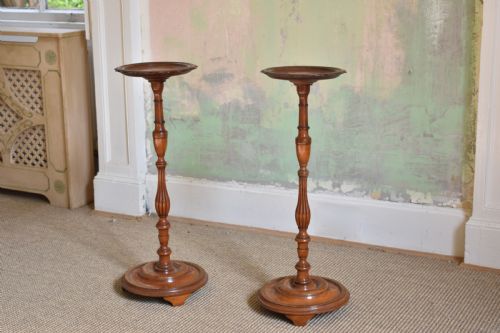
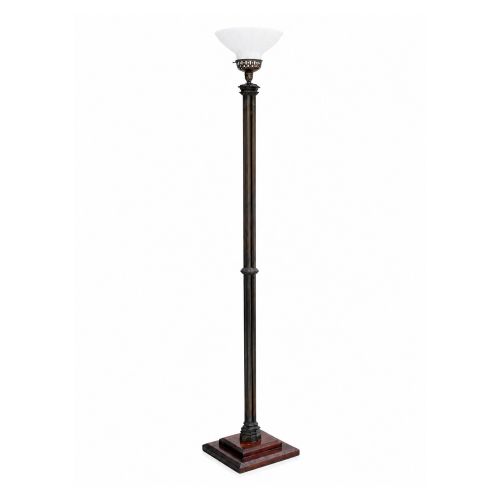
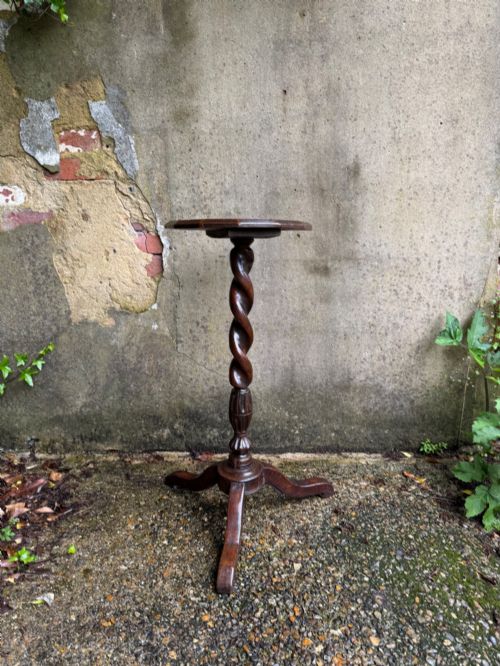
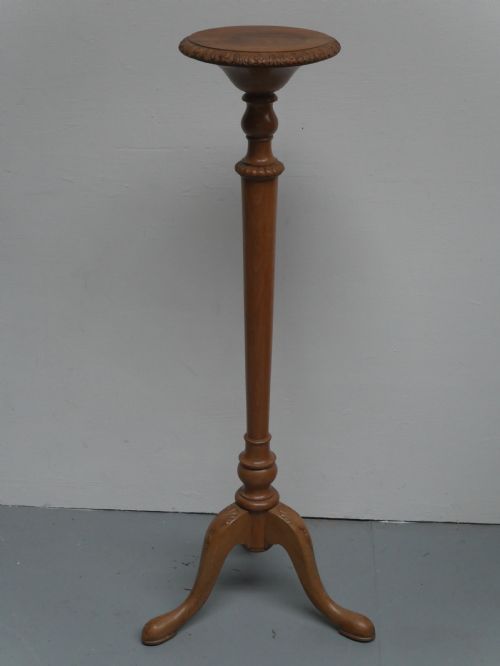
An edwardian torchere brings height and architectural grace to a corner, functioning as a slender display stand for plants, urns or lamps.
Edwardian Torchere
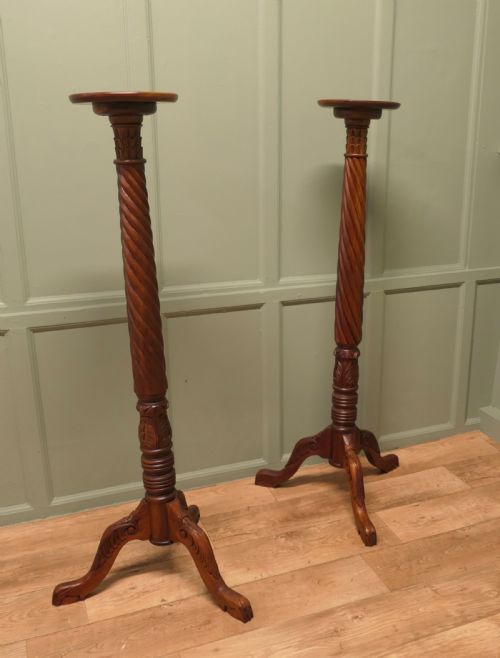
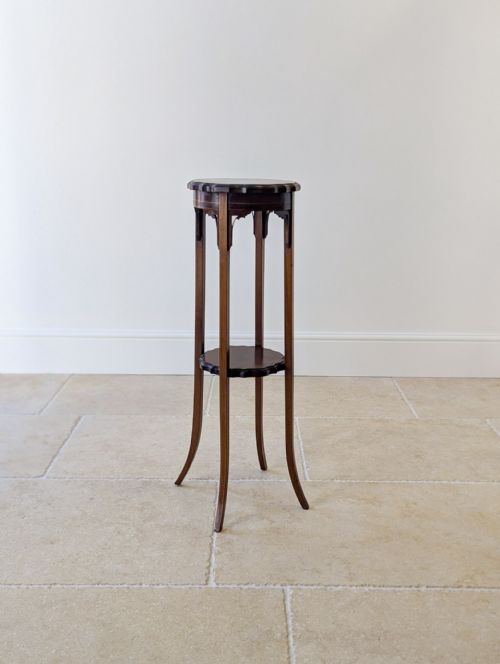
An edwardian torchere is a tall, slender freestanding pillar or stand designed specifically to elevate objects rather than hold working surfaces. The form shares close lineage with plant stands, pedestals, and jardiniere holders, appearing frequently under intersecting historical descriptions.
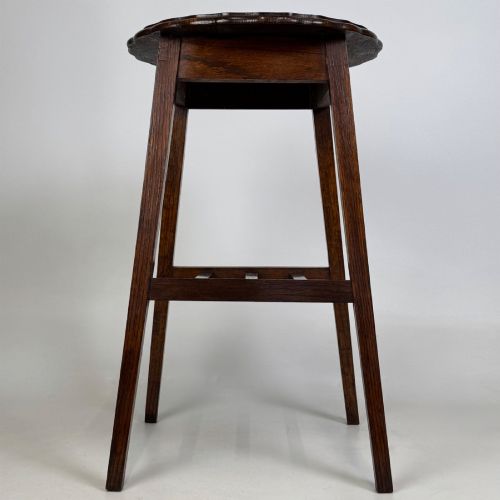
The examples found here range from strict Edwardian and late Victorian pieces back to earlier nineteenth-century iterations and revival styles like Gothic, Adam, and Neoclassical. Mahogany remains the dominant timber, often accompanied by walnut, oak, satinwood, and occasional marble or brass detailing.
Buyers encounter these supports serving as lamp stands, plinths for sculpture, or elevated garden plant holders. Their compact footprints allow them to occupy tight corners and narrow hallway spaces where conventional tables fail to fit.
Materials and Construction
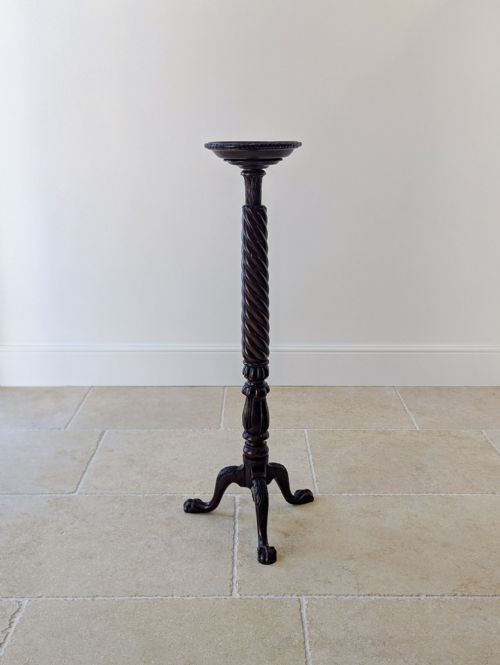
Cabinetmakers constructed these tall stands primarily from dense hardwoods like mahogany and oak, turning timber on lathes to create elongated shafts and spiral pillars. Satinwood appears alongside decorative stringing and marquetry inlay to introduce lighter contrasting tones into the surface grain.
More ornate or revival pieces incorporate carved wooden foliage, brass mounts, or inset marble tops to provide weight at the crown and base. Structural stability required heavy, balanced bases or tripod feet to prevent tall, narrow columns from tipping under the weight of an urn or lamp.
Edwardian Torchere Retail Price Guide 2026
Typical asking prices for edwardian torchere among the pieces listed under this phrase on Sellingantiques today, from the lower quarter to the upper quarter. They describe what is for sale here now, not the wider market.
Some towering seven-foot bronze figures once illuminated grand halls before finding new life as dramatic household lamp stands.
Judging Quality and Execution
Secondary woods, joinery beneath the platform top, and the crispness of brass or ormolu mounts separate standard utility stands from finer decorative examples. Faded or damaged marquetry and loose spindle joints indicate excessive wear or poor initial assembly.
F. De Luca
The Edwardian Torchere Glossary
- Torchere
- A tall ornamental stand originally designed to carry a light or candle, now frequently utilised for plants and lamps. The term covers slender pedestals across multiple revival periods.
- Jardiniere
- An ornamental pot or stand for holding plants and flowers. These often share identical proportions with tall torchere stands.
- Inlay
- A decorative technique where contrasting woods or materials are set into the surface of a primary timber. Satinwood and ebony frequently appear this way on Edwardian pieces.
- Plinth
- A heavy rectangular or cylindrical base supporting a column, statue, or torchere. It provides essential stability for tall, narrow structures.
Edwardian Torchere: Frequently Asked Questions
What is the difference between a torchere and a plant stand?
A torchere historically held a light source while a plant stand supported greenery, but centuries of overlapping use mean the terms describe nearly identical tall, slender furniture.
Today both serve the same decorative function in interior styling, frequently appearing interchangeably across listings.
Can an edwardian torchere hold a modern heavy lamp?
Many tall stands safely accommodate modern lighting provided the base is sufficiently heavy and wide to counter the weight above.
Satinwood and lighter inlaid examples suit delicate decorative objects, whereas solid mahogany and oak columns offer superior stability.
How do I distinguish an Edwardian piece from a Victorian one?
Edwardian stands tend to display lighter satinwood inlays, cleaner lines, and brighter Sheraton or Georgian revival influences.
Victorian pieces often feature darker mahogany, heavier carved spiral pillars, and more robust Gothic or classical ornamentation.
Where should I place a tall torchere in a room?
These pieces excel in empty corners, beside fireplaces, or framing doorways where vertical lines draw the eye upward.
Their minimal floor footprint makes them ideal for adding height and architectural interest to dead space without blocking walkways.