

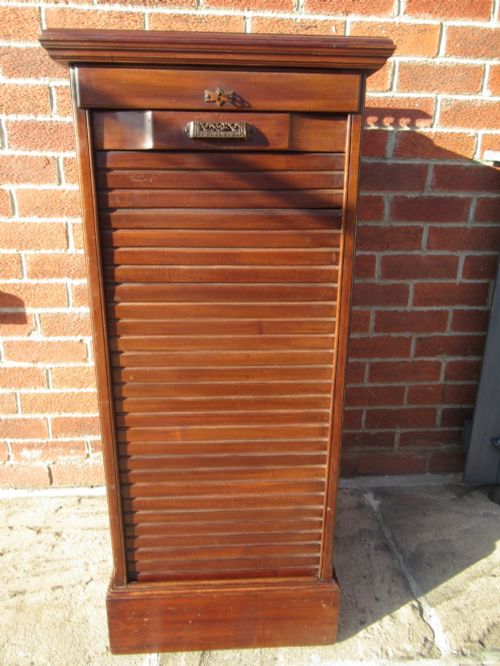
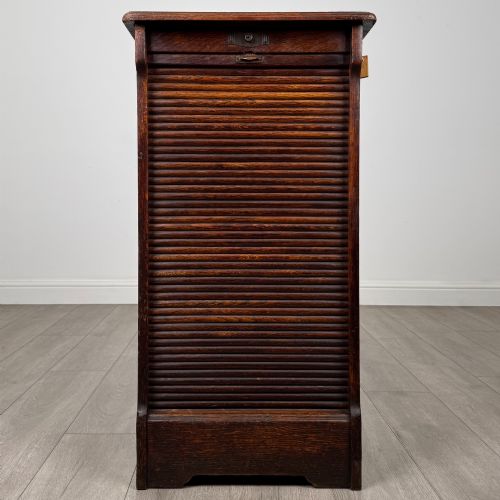
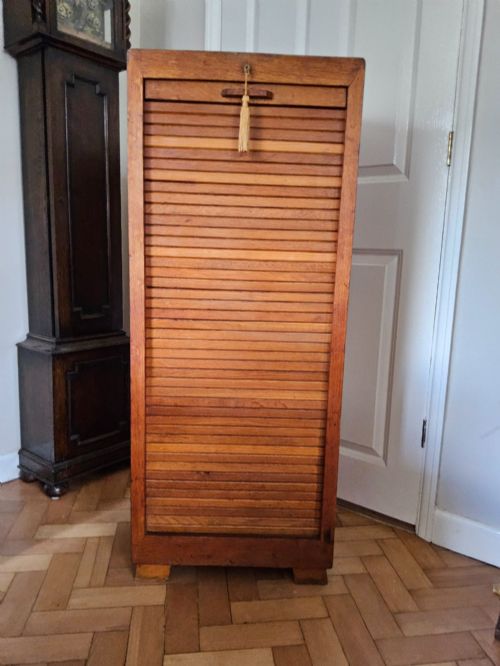
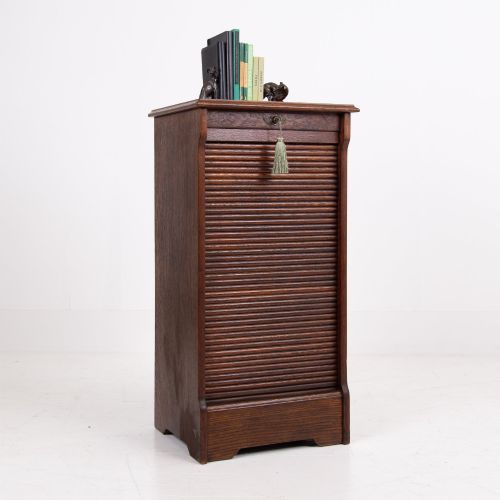



Edwardian Tambour Cabinet
An edwardian tambour cabinet brings clever slatted sliding doors to desks and offices, offering neat storage for papers and books.
Edwardian Tambour Cabinet
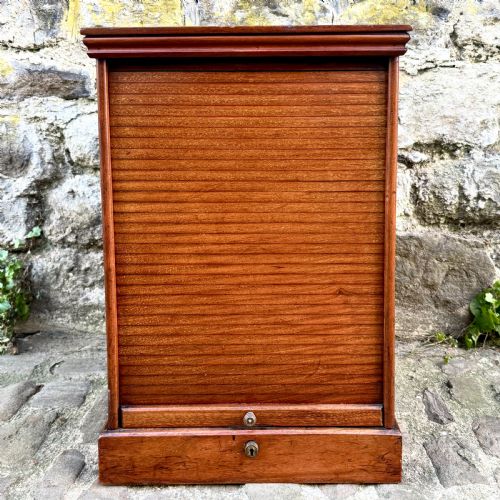
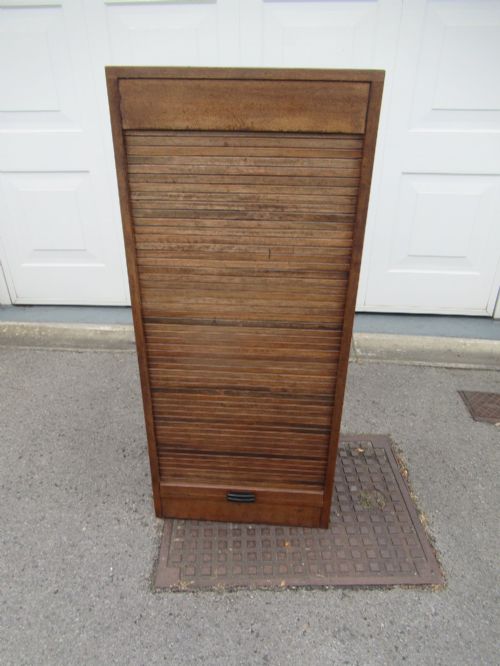
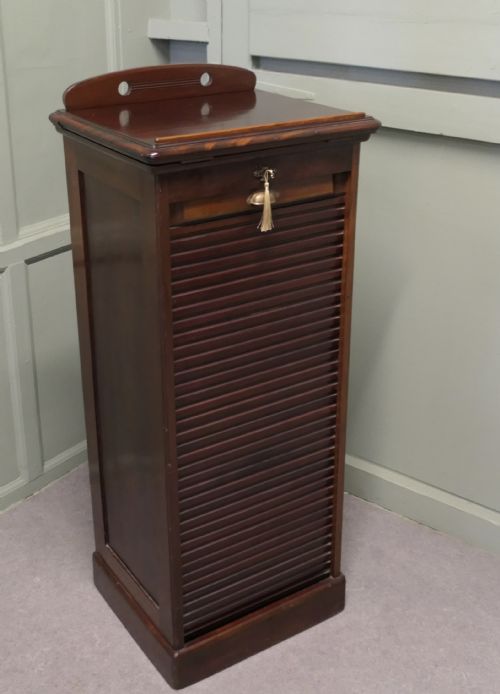
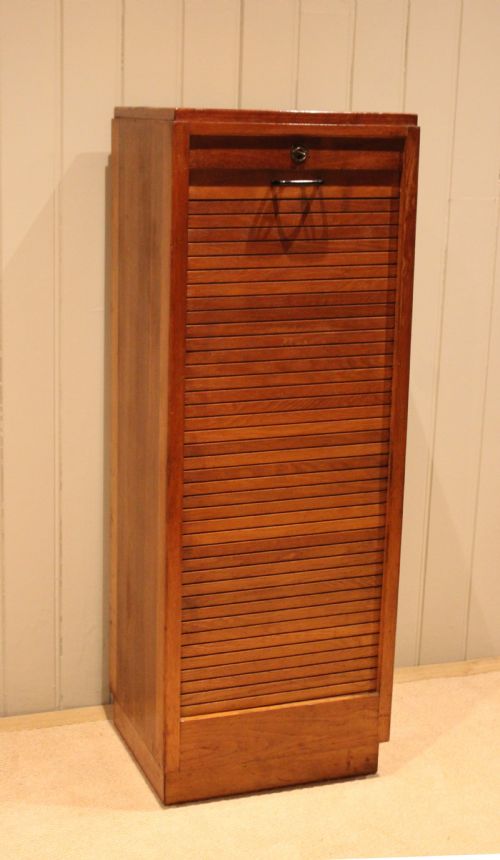
An edwardian tambour cabinet is primarily an office or desk accessory built with flexible wooden slats that slide smoothly along tracks to conceal the interior. These pieces date predominantly from the Edwardian era and early twentieth century, though variations stretch from the late nineteenth century through to nineteen forty.
The most common formats you will encounter on this page are filing cabinets, desks, and stationery cupboards. They range from compact tabletop stationery boxes to large solid oak roll-top desks and double-fronted office cabinets.
While many adhere to straightforward Edwardian or early twentieth-century utilitarian designs, you will also spot examples influenced by Arts and Crafts, Regency, and Georgian Revival styles, alongside occasional French Revival pieces.
What varies in quality
The primary distinction in quality lies in the precision of the tambour mechanism and the timber selection. Superior pieces feature tightly fitted slats that glide effortlessly along their tracks without sagging or catching.
Finer examples utilise solid hardwoods like quarter-sawn oak or figured mahogany throughout, rather than relying on thin veneers over lesser woods. The intricacy of the interior joinery and the presence of original brass hardware further elevate a piece.
Edwardian Tambour Cabinet Retail Price Guide 2026
Typical asking prices for edwardian tambour cabinet among the pieces listed under this phrase on Sellingantiques today, from the lower quarter to the upper quarter. They describe what is for sale here now, not the wider market.
Listings feature oak and mahogany predominantly, complemented by lesser-seen walnut, rosewood, pine, and brass hardware.
James Shoolbred Co
The Edwardian Tambour Cabinet Glossary
- Tambour
- A flexible door constructed from narrow strips of wood affixed to canvas or fabric backing. This allows the door to slide around a curved track to open and close cabinets or desks.
- Roll-top
- A desk or cabinet featuring a large tambour shutter that pulls down from the top to conceal the writing surface and pigeonholes. It became a staple of early twentieth-century office furniture.
- Quarter-sawn oak
- Timber cut radially to the growth rings, producing a distinctive decorative figure often described as medullary rays. Cabinetmakers valued this cut for its stability and appearance.
- Escutcheon
- A protective plate surrounding a keyhole, usually made of brass. On these cabinets, it guards the wood around the lock from wear.
Edwardian Tambour Cabinet: Frequently Asked Questions
How do tambour doors work?
Tambour doors consist of thin wooden laths glued side by side onto a strong canvas backing. This flexible mat slides along internal routed grooves, allowing the door to follow a curve.
When you push the handle, the door disappears into the body of the cabinet, keeping the mechanism hidden and saving exterior space.
What were these cabinets used for?
These cabinets served primarily in offices, studies, and reception areas for organising stationery, ledgers, and correspondence. The lockable rolling shutter kept sensitive business papers secure.
Today, they adapt easily to modern home offices for storing laptops, paperwork, and everyday clutter.
How do I care for the sliding mechanism?
Keep the wooden tracks clean and free from dust build-up to ensure the slats glide smoothly. Avoid using heavy liquid furniture polishes inside the grooves, as wax or oil can attract dirt and cause the mechanism to stick.
A dry cloth and occasional light maintenance of the canvas backing will keep the door moving properly.
Are all these pieces from the Edwardian period?
While Edwardian pieces form a large part of the selection, the listings span several decades from the late nineteenth century to the mid-twentieth century. You will find Victorian, Regency revival, and nineteen thirties examples alongside the core Edwardian inventory.
Design details and materials often help indicate the specific era of manufacture.