



Edwardian Tall Clock
An edwardian tall clock brings serious architectural presence to a room, housing intricate chime movements inside polished wooden floor cases.
Edwardian Tall Clock
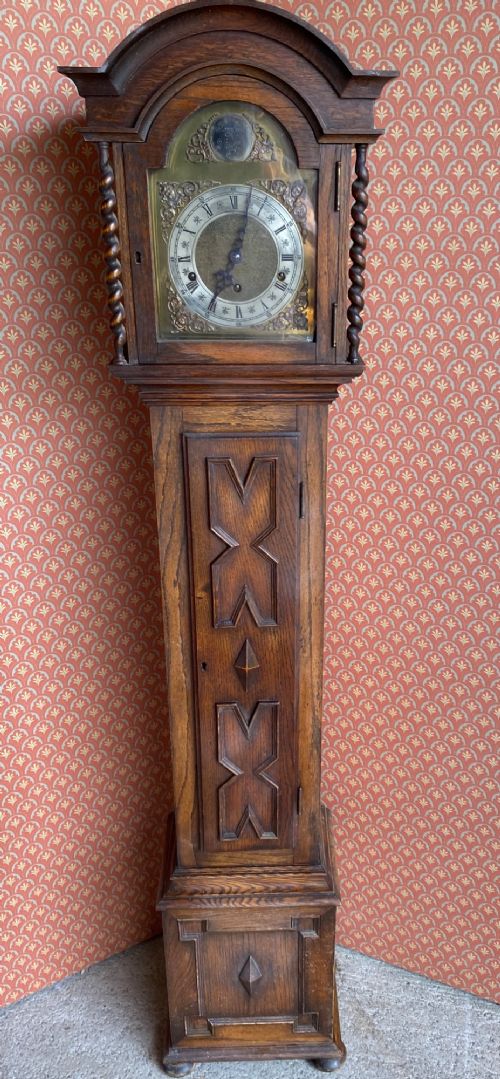
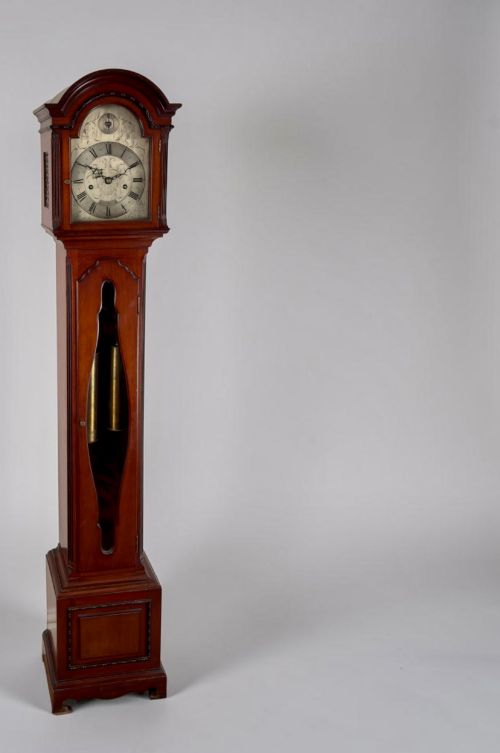
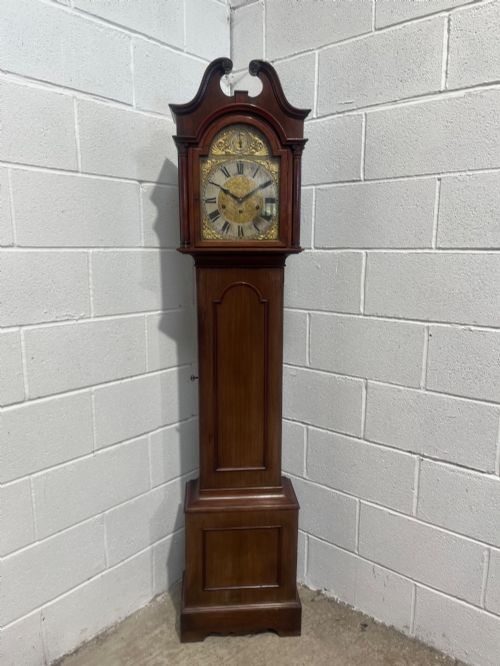
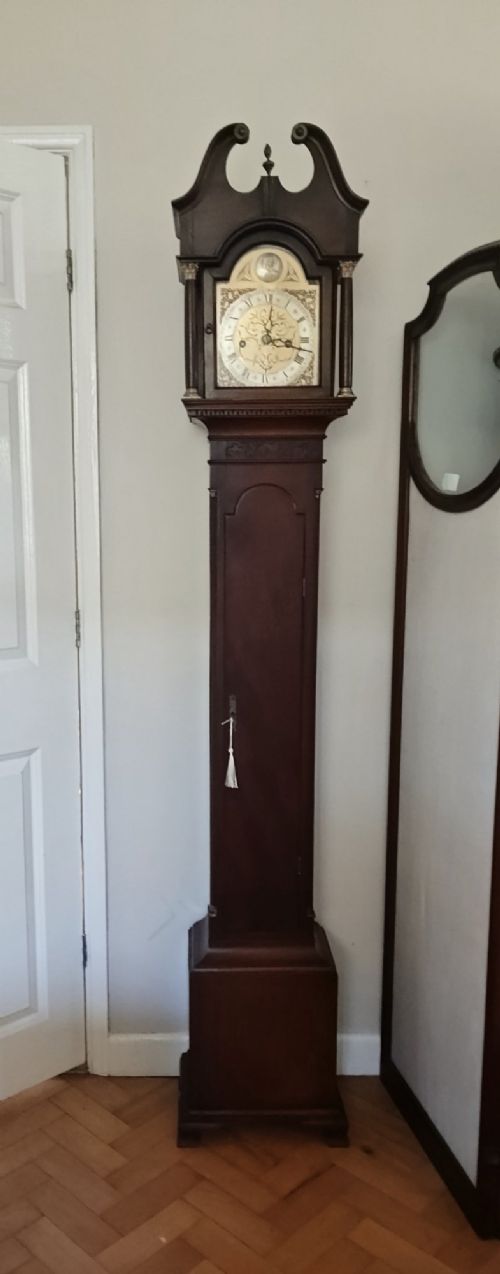
When you search for an edwardian tall clock, you encounter upright timepieces that stand directly on the floor, ranging from full-sized grandfathers to scaled-down grandmother clocks and regulators. These vertical pieces serve as both functional chronometers and monumental items of furniture, dominating hallways and living spaces with their height.
The versions you meet most frequently on this page date from the Edwardian era and the surrounding decades, constructed primarily in mahogany and oak. Makers of the period drew heavily on historical aesthetics, producing traditional floor clocks alongside revivalist interpretations.
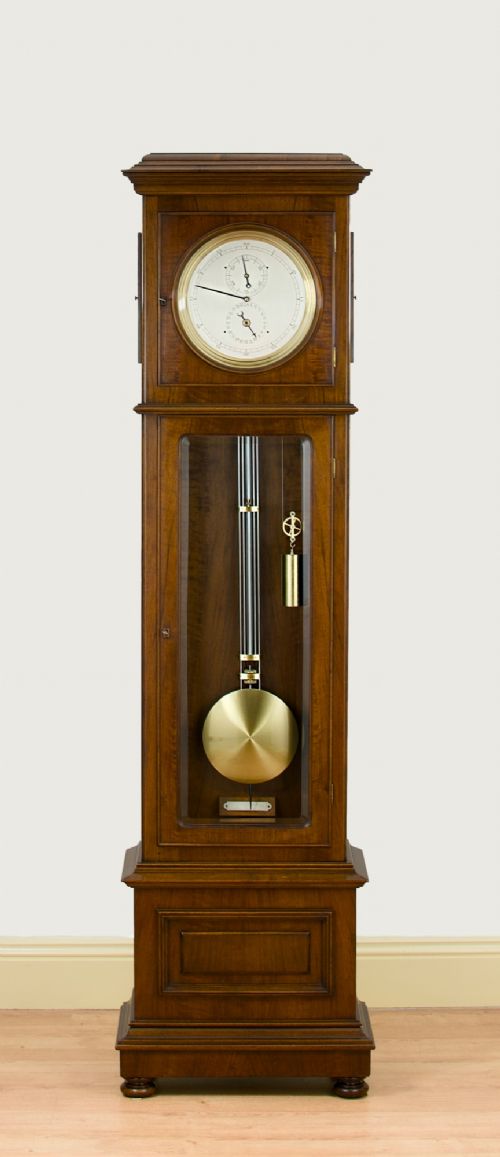
Beyond standard longcase designs, the selection includes related vertical forms such as narrow regulators and petite grandmother clocks built for smaller domestic interiors. Each example relies on a tall timber housing to protect the weights, pendulums and precision dial work within.
What varies in quality
The calibre of the movement largely defines the upper tier of these timepieces, distinguishing simple time-only mechanisms from complex three-train musical movements that play multiple tunes and quarter chimes. Finer examples feature precision regulation and signed dials from notable makers.
Cabinet work creates the other major distinction, where crisp hand-carving, well-matched mahogany veneers and intricate marquetry elevate a standard case into a substantial piece of decorative art. The weight of the timber and the structural rigidity of the longcase dictate its long-term durability.
Edwardian Tall Clock Retail Price Guide 2026
Typical asking prices for edwardian tall clock among the pieces listed under this phrase on Sellingantiques today, from the lower quarter to the upper quarter. They describe what is for sale here now, not the wider market.
The selection spans compact grandmother clocks and slender regulators up to full-scale musical longcase clocks from the Edwardian period.
Gillett & Johnston of Croydon·Lenzkirch·Edward Shepley·Mappin & Webb London·Lister & Sons·Dent of London·Maple & Co of London
The Edwardian Tall Clock Glossary
- Grandmother clock
- A scaled-down version of the traditional longcase clock, standing shorter and narrower while retaining a weight-driven movement. This smaller form suits domestic spaces that cannot accommodate a full-height grandfather clock.
- Longcase clock
- An upright floor-standing clock enclosed in a tall wooden case that protects the pendulum and weights. It is frequently referred to interchangeably as a grandfather clock.
- Regulator
- A precision pendulum clock designed for exceptional timekeeping accuracy, often featuring a simplified dial layout and a long glass door to observe the swing.
- Train
- The series of gears within a clock movement dedicated to a specific function such as timekeeping, striking or playing music. A three-train movement handles time, hour strikes and chime melodies.
- Marquetry
- Decorative veneer work formed by fitting together small pieces of different coloured wood to create pictorial or geometric patterns on the clock case.
Edwardian Tall Clock: Frequently Asked Questions
Where should a tall clock go?
Place your tall clock against a solid interior wall away from direct sunlight and strong draughts that might affect the wood and movement.
Hallways, landings and spacious living rooms provide the vertical clearance and stable floor surfaces these tall floor cases require.
How do weight-driven clocks work?
Weights suspended on cords or chains slowly descend inside the tall wooden case, providing the constant mechanical power needed to drive the gear train.
Gravity pulls the weights downward over days or weeks, requiring the owner to wind the mechanism periodically using a specialised key or crank.
What is a chiming movement?
A chiming movement utilises additional gear trains and hammers to strike bells or gongs on the quarter-hour and hour.
Edwardian models often feature options to select specific melodies, such as Westminster chimes, or to silence the musical sequence entirely.
How do I identify an Edwardian tall clock?
Examine the timber finish, dial style and overall proportions to identify characteristics typical of the early twentieth century.
Edwardian examples frequently blend traditional mahogany or oak construction with revivalist decorative motifs, distinct from earlier Georgian or Victorian models.