

Edwardian Swivel Clasp Chain
An edwardian swivel clasp chain brings together substantial gold or silver links and a functional fastener designed to secure a pocket watch or charms.
Edwardian Swivel Clasp Chain
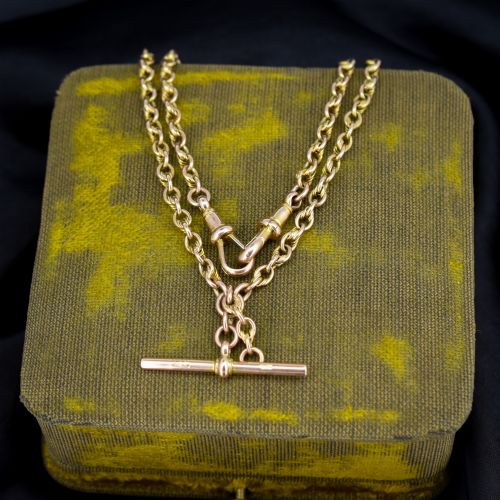
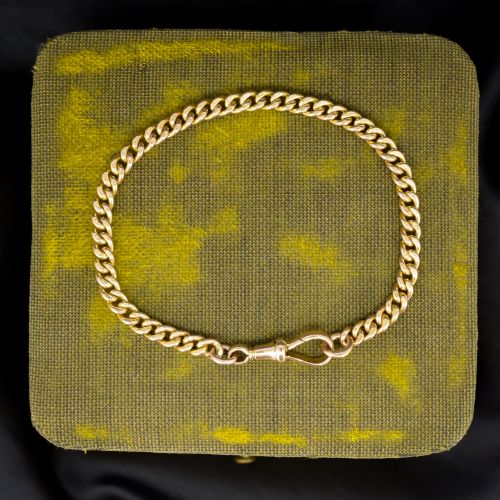
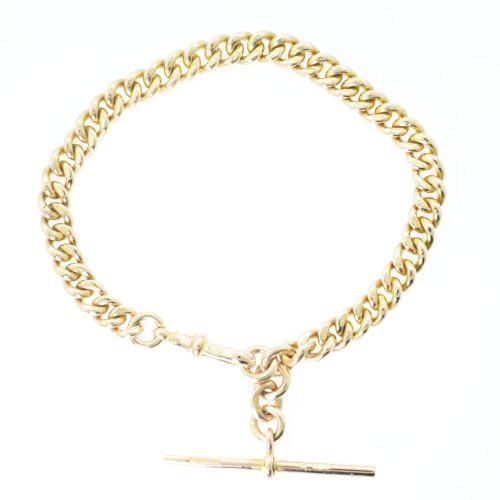
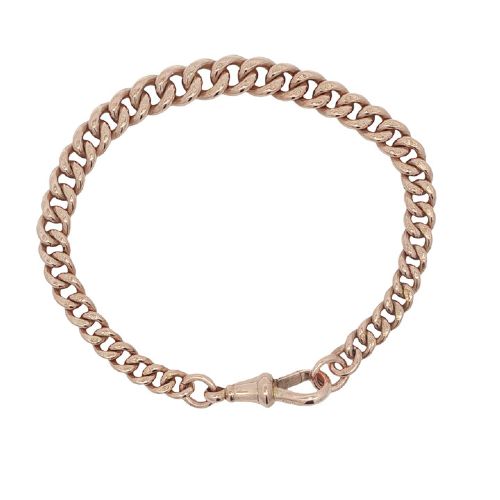
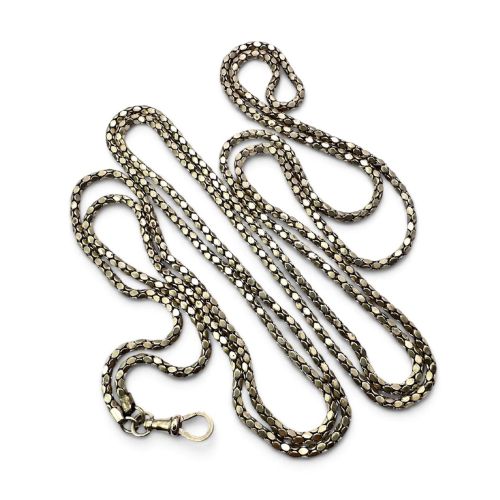
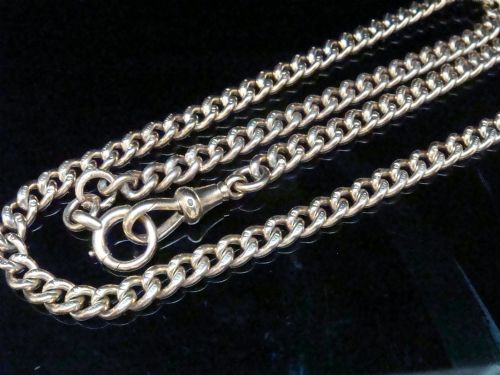
When you search for an edwardian swivel clasp chain, you encounter pieces originally designed to secure pocket watches or to serve as longuard chains and charm bracelets. These items appear in formats ranging from shorter wrist bracelets to long necklaces.
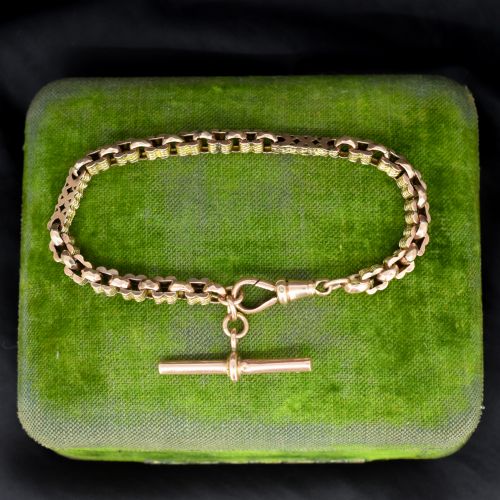
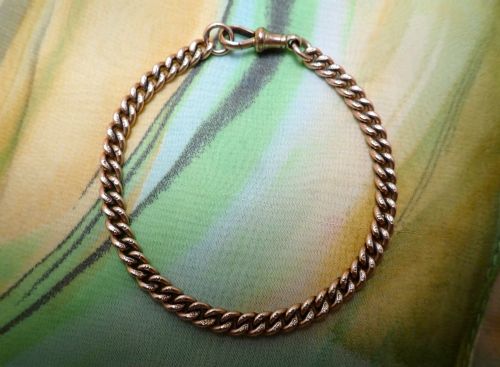
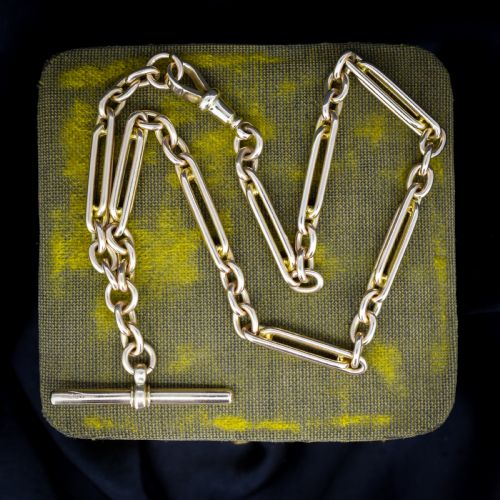
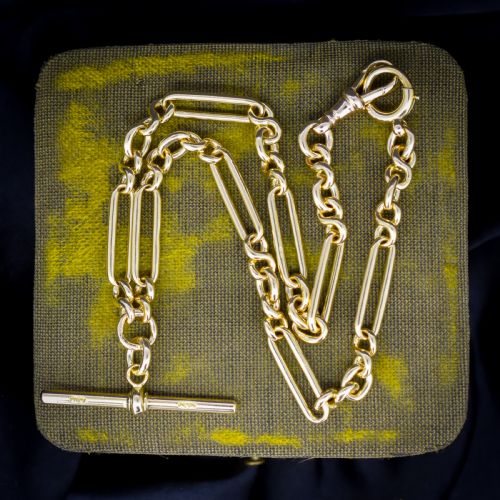
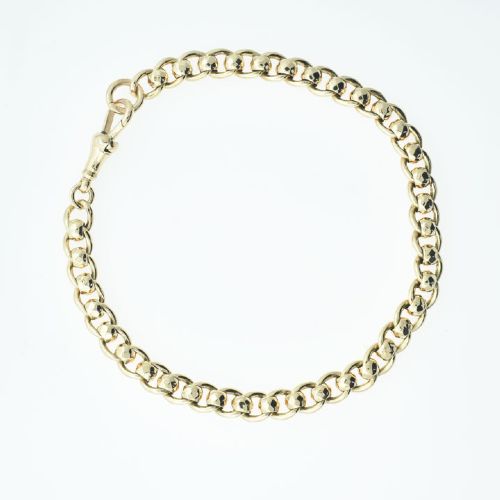
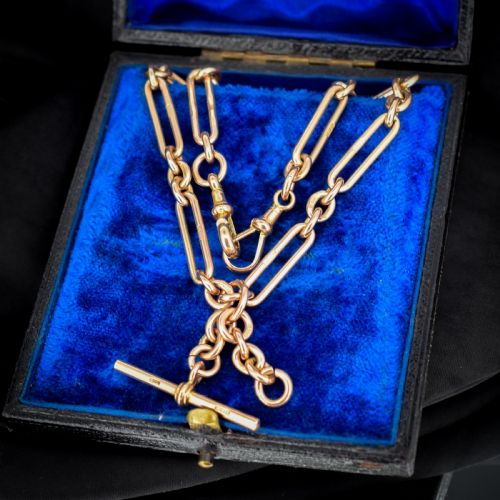
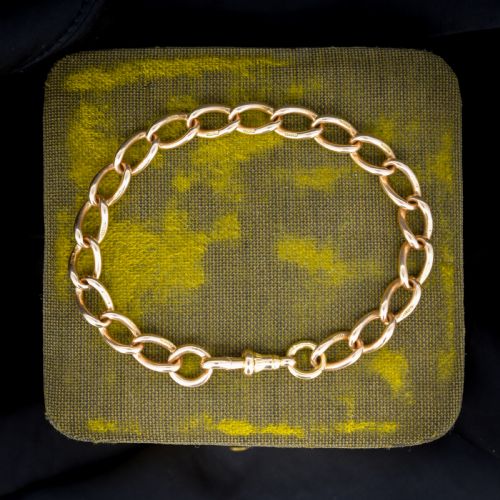
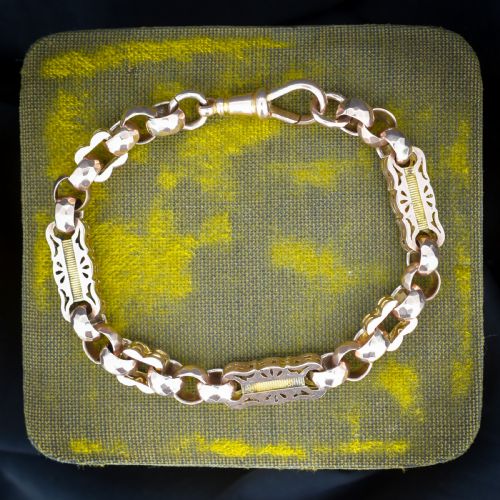
The pieces on this page emerge from the late nineteenth century through to the 1920s, spanning the Victorian, Edwardian, and subsequent eras. They manifest as watch chains, curb links, trombone links, and rollerball designs.
Most examples utilise yellow or rose gold, alongside silver and rolled gold variants. They frequently incorporate associated elements such as T-bars, dog clips, and bolt rings.
How they were made
Makers constructed these chains using gold of various carats, including 9ct, 15ct, and 18ct, alongside sterling silver and rolled gold. Goldsmiths shaped metal into distinct link patterns such as trombone, curb, belcher, and fancy star-and-bar formations.
Many items feature hand assembly where individual links carry hallmarks, while dog clips and swivel clasps were integrated to provide secure fastening mechanisms for pocket watches and pendants.
What varies in quality
Quality in these chains rests upon the weight of the metal and the integrity of the individual links. Substantial grams and fully hallmarked links indicate superior construction compared to lighter, hollow alternatives.
The complexity of the link design and the original condition of the swivel mechanism or dog clip determine the overall standard of the piece. Strong, crisp links and working clasps separate standard items from finer examples.
The Edwardian Swivel Clasp Chain Glossary
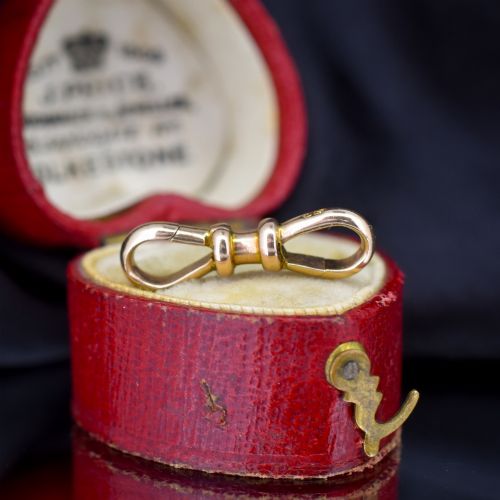
- Swivel clasp
- A mechanical fastener featuring a rotating loop that prevents the attached chain from twisting. This component allowed pocket watches to move freely without kinking the metal links.
- Albert chain
- A type of watch chain named after Prince Albert, worn across a waistcoat or adapted as a bracelet. It typically includes a T-bar at one end and a swivel clasp at the other.
- Trombone link
- A geometric watch chain link shaped like a rectangular tube with rounded corners, resembling the brass instrument. It offers a structured and robust appearance.
- Dog clip
- A spring-loaded fastener resembling a miniature snap hook, commonly used on watch chains and charm bracelets. It secures pendants, fobs, and charms safely to the main chain.
- Rollerball
- A rounded, cylindrical link style found on specific nineteenth and early twentieth-century bracelets. These smooth components provide a fluid texture against the wrist.
Edwardian Swivel Clasp Chain: Frequently Asked Questions
How do you wear an edwardian swivel clasp chain?
These pieces function as both necklaces and wrap-around bracelets depending on their overall length. You can attach charms or pendants directly to the swivel clasp.
Heavier examples designed originally for pocket watches sit comfortably around the wrist when doubled or tripled over.
What is the difference between an albert chain and a longuard chain?
Albert chains are generally shorter and feature a T-bar intended to anchor through a buttonhole alongside a watch. They often convert easily into substantial bracelets.
Longuard chains are significantly longer necklaces designed to slip over the head without needing a clasp to open.
How can you tell the gold carat of these chains?
British pieces from this era frequently carry hallmarks stamped directly onto the individual links or near the clasp. These marks indicate the purity of the metal such as nine carat or fifteen carat gold.
Unmarked pieces rely on professional testing to determine the precise gold content accurately.
What are trombone links?
Trombone links are elongated, rectangular metal loops interspersed with smaller connecting rings. This pattern creates a distinctive geometric rhythm along the length of the chain.
Craftsmen utilised this style heavily for watch chains during the late Victorian and Edwardian periods.