
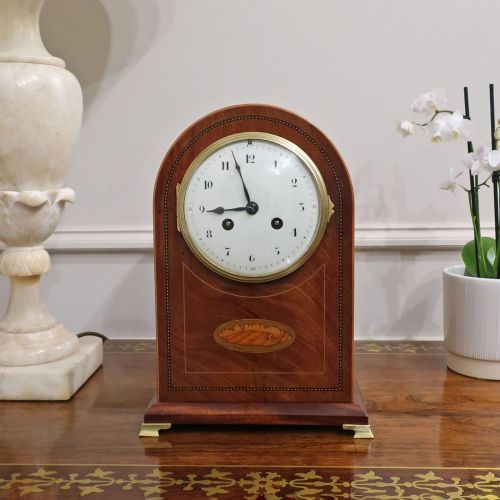
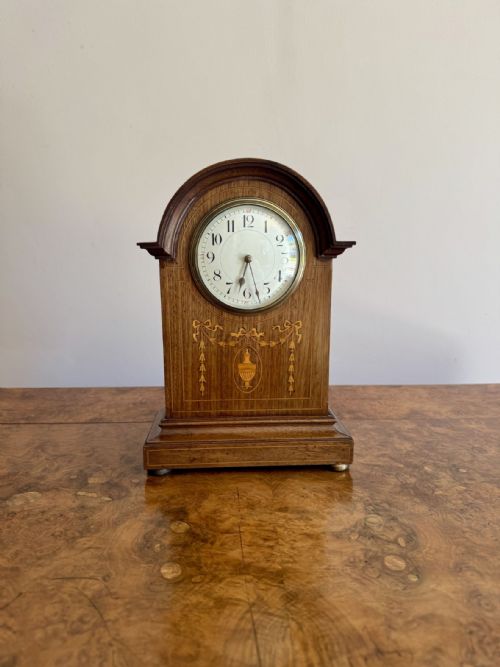


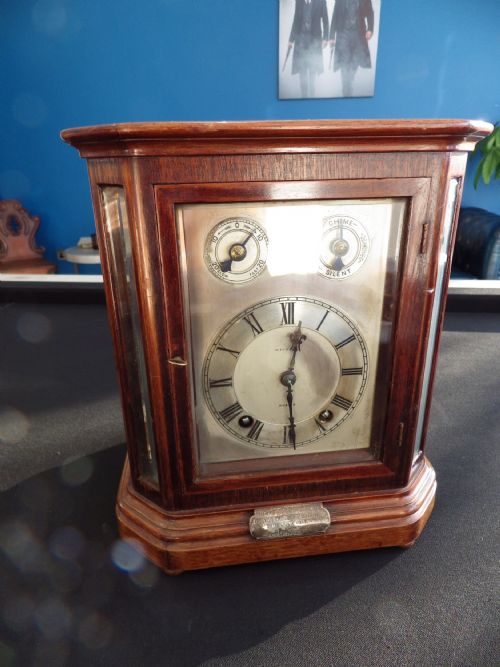


Edwardian Style Table Clock
An edwardian style table clock brings period character to a room, combining practical timekeeping with decorative woodwork or gilt metal.
Edwardian Style Table Clock
When you search for an edwardian style table clock, you encounter timepieces produced across various periods including the Edwardian era, Victorian times, and the early twentieth century. These objects function as mantel clocks, desk clocks, and bracket clocks designed for domestic interiors.
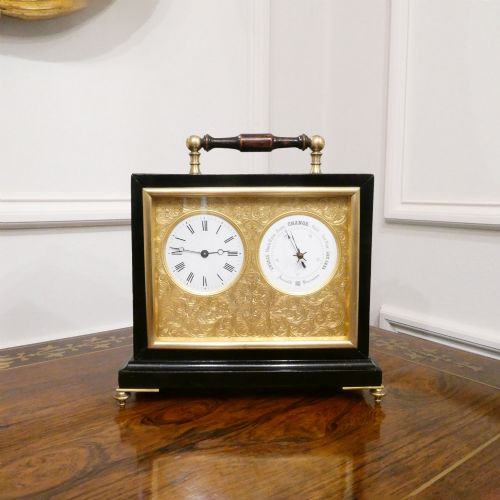
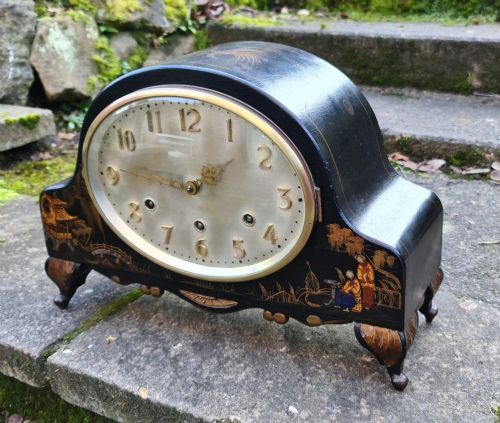
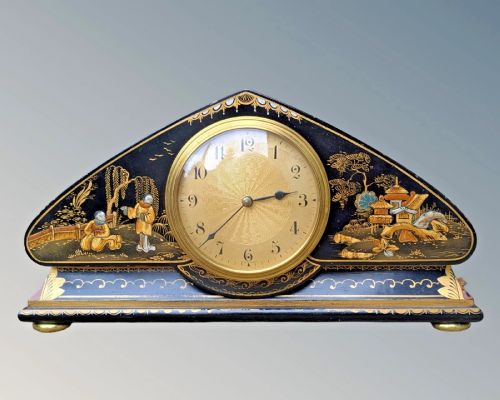
The pieces appearing on this page span several stylistic influences, featuring Edwardian craftsmanship alongside Chinoiserie lacquer, Rococo Revival forms, and Neoclassical details. Many items incorporate French or English movements housed within compact wooden or metal cases.
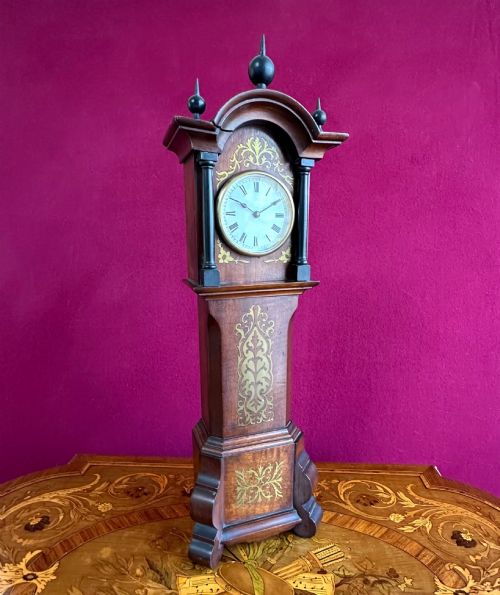
Mantel clocks and miniature longcase or bracket clocks form the core of what is available, offering traditional dials with enamel or silvered numerals. Their scale allows them to sit comfortably upon shelves, mantelpieces, and desks.
Distinctions in craftsmanship and finish
Quality rests upon the crispness of the case carving, the depth of the mahogany inlay, and the refinement of the painted or gilded decoration. Heavy cast bronze and solid silver elements demonstrate a higher standard of manufacture than lighter pressed brass alternatives.
The integration of mechanical movements, whether single fusee, quarter striking, or Ting Tang mechanisms, dictates the technical sophistication of the piece. Well-preserved enamel dials and clear silvered chapter rings complete a cohesive object.
Listings feature woods including mahogany, satinwood, oak, burr walnut, and ebonised wood alongside brass, gilt bronze, and glass.
J C Vickery·Baldwin of Loughborough·Asprey Of London
The Edwardian Style Table Clock Glossary
- Fusee
- A conical pulley used in clock movements to maintain an even pull as the mainspring unwinds. This mechanism helps ensure accurate timekeeping across the duration of the wind.
- Chinoiserie
- A European decorative style reflecting Chinese artistic influences, frequently seen in lacquered clock cases adorned with painted figures and landscapes. It enjoyed particular popularity in various revival periods.
- Bracket Clock
- A portable clock originally designed to sit upon a wall bracket or table surface. These examples often feature arched wooden cases and sophisticated striking trains.
- Carriage Clock
- A small, portable spring-driven clock featuring a glass-sided brass case and a folding handle on top. They were originally designed for travellers during the nineteenth and early twentieth centuries.
- Strut Clock
- A small timepiece supported by an easel-like prop on the back of the case. They are typically intended for desk or table placement.
Edwardian Style Table Clock: Frequently Asked Questions
What is a mantel clock?
A mantel clock is a decorative timekeeper designed to stand securely upon the shelf above a fireplace or on a sideboard.
These pieces use compact cases made from wood, brass, or porcelain so they fit within domestic living spaces.
How do I identify an Edwardian clock?
Edwardian clocks often feature lighter timbers like satinwood inlay on mahogany grounds, reflecting the refined tastes of the early twentieth century.
They frequently employ traditional Arabic or Roman numerals on clean white enamel or silvered dials.
Where should I place a table clock?
Table clocks suit desks, entrance hall tables, and bookshelves where their mechanical movement and decorative case can be appreciated close up.
Ensure the surface is level so the pendulum or balance wheel operates without obstruction.
What is a bracket clock?
A bracket clock is a traditional table-standing timepiece featuring a carrying handle or an architectural wooden case design.
Many incorporate striking or chiming trains that mark the passage of the hours.