


Edwardian Street Lanterns
Edwardian street lanterns are robust exterior light fittings built to weather the elements, offering striking industrial character for modern gardens and drives.
Edwardian Street Lanterns
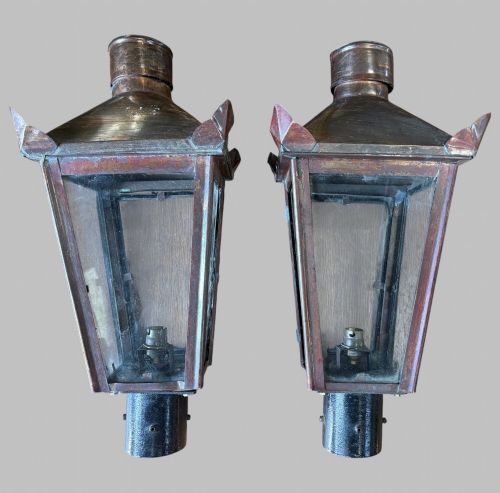
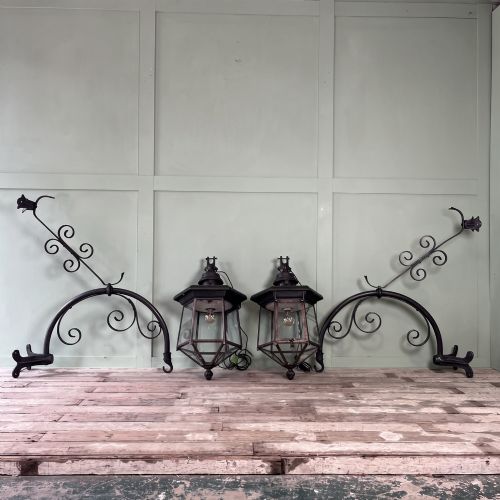
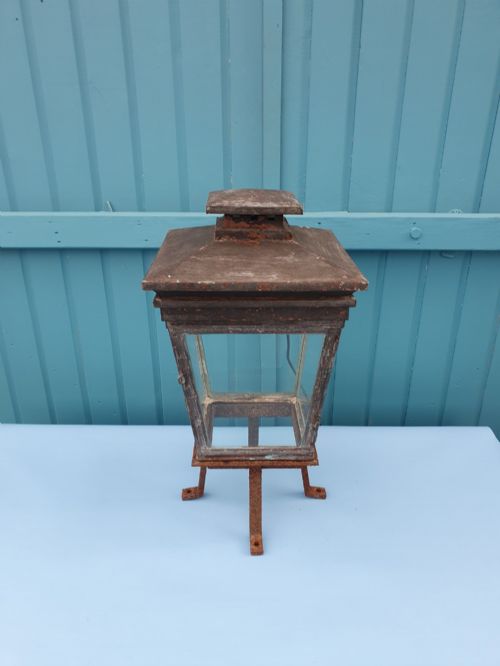
Buyers will most commonly encounter copper street lights and post lanterns dating from the late nineteenth century through to the early twentieth century. Forms range from circular wall-mounted designs to massive industrial units and tall lamp posts intended for prominent exterior placement.
The objects span periods from the Victorian era into the 1930s, reflecting utilitarian municipal design adapted for domestic and architectural use today. Many examples retain original brackets, mounting bases, or specialised glass panels such as prismatic formations.
How they were made
Makers constructed these lanterns using heavy sheet copper, cast iron, and wrought iron to withstand harsh outdoor conditions over decades of municipal service. Metal components were joined to form rigid frames capable of housing gas burners or early electrical fittings.
Glazing typically involved thick clear or specialised prismatic glass panels secured within metal framing to diffuse light effectively across streets and building exteriors. Structural elements often included cast iron bases and matching wall brackets engineered for permanent outdoor installation.
Current listings span the Victorian era through the 1930s, featuring heavy copper, cast iron, and specialised prismatic glass across various wall and post formats.
What varies in quality
Quality in these street lanterns rests upon the substantial weight of the copper sheeting and the structural integrity of the iron brackets and lamp posts. Heavier gauges of metal and intact original mounting hardware distinguish the most robust survivals from lighter alternatives.
The presence of specialised components, such as named maker stampings, original prismatic glass, or complete matched pairs, elevates the architectural significance of a piece. Finer examples retain their original patination and municipal fittings without excessive modern intervention.
REVO Leicester·A FOSTER AND PULLEN BRADFORD
The Edwardian Street Lanterns Glossary
- Prismatic glass
- Moulded glass panels featuring geometric ridges designed to refract and maximise light distribution from early street lamps. This material was widely adopted in industrial and municipal lighting to improve illumination.
- Post lantern
- A light fixture specifically engineered to mount atop a vertical column, pier, or dedicated lamp post. These units provided elevated illumination for pathways, entrances, and urban thoroughfares.
- Gas conversion
- The technical adaptation of an antique lighting fixture from a gas supply to modern electrical wiring. This process allows historic lanterns to function safely in contemporary domestic settings.
- Wrought iron
- A tough, fibrous iron alloy hammered and bent into structural brackets and supports. It offers high resistance to fatigue and weathering on outdoor installations.
Edwardian Street Lanterns: Frequently Asked Questions
How were Edwardian street lanterns originally powered?
These lanterns relied on municipal gas networks, burning coal gas through internal burners before many were later adapted for electricity. The original supply pipes often entered through the base or mounting bracket.
Today, surviving examples have almost universally undergone conversion to house modern electrical components while preserving their historic exterior appearance.
Can these large lanterns be mounted outdoors now?
Constructed from durable copper and iron, these fixtures are naturally suited for exterior placement on garden walls, piers, or dedicated posts. Their heavy materials are designed to withstand weathering.
Installation requires checking the load-bearing capacity of the mounting surface and ensuring that any electrical wiring meets current safety standards for outdoor use.
How do I distinguish Victorian from Edwardian lanterns?
Victorian street lighting tends to feature heavier cast iron decoration and traditional ornate bracketry, reflecting nineteenth-century civic design preferences. Edwardian and early twentieth-century examples often display cleaner industrial lines.
Because many designs spanned multiple decades, stylistic crossover is common between the late nineteenth century and the period leading up to the First World War.
What is prismatic glass and why is it important?
Prismatic glass consists of thick panels moulded with internal ridges to bend and distribute light efficiently across wide areas. It was an important technical advancement in street illumination.
Finding intact prismatic glass on an antique lantern adds considerable historical interest and demonstrates how the fixture maximised early gas or electric output.