


Edwardian Sterling Silver Napkin Rings
Edwardian sterling silver napkin rings bring tactile elegance to the dining table, offering solid weight and period craftsmanship.
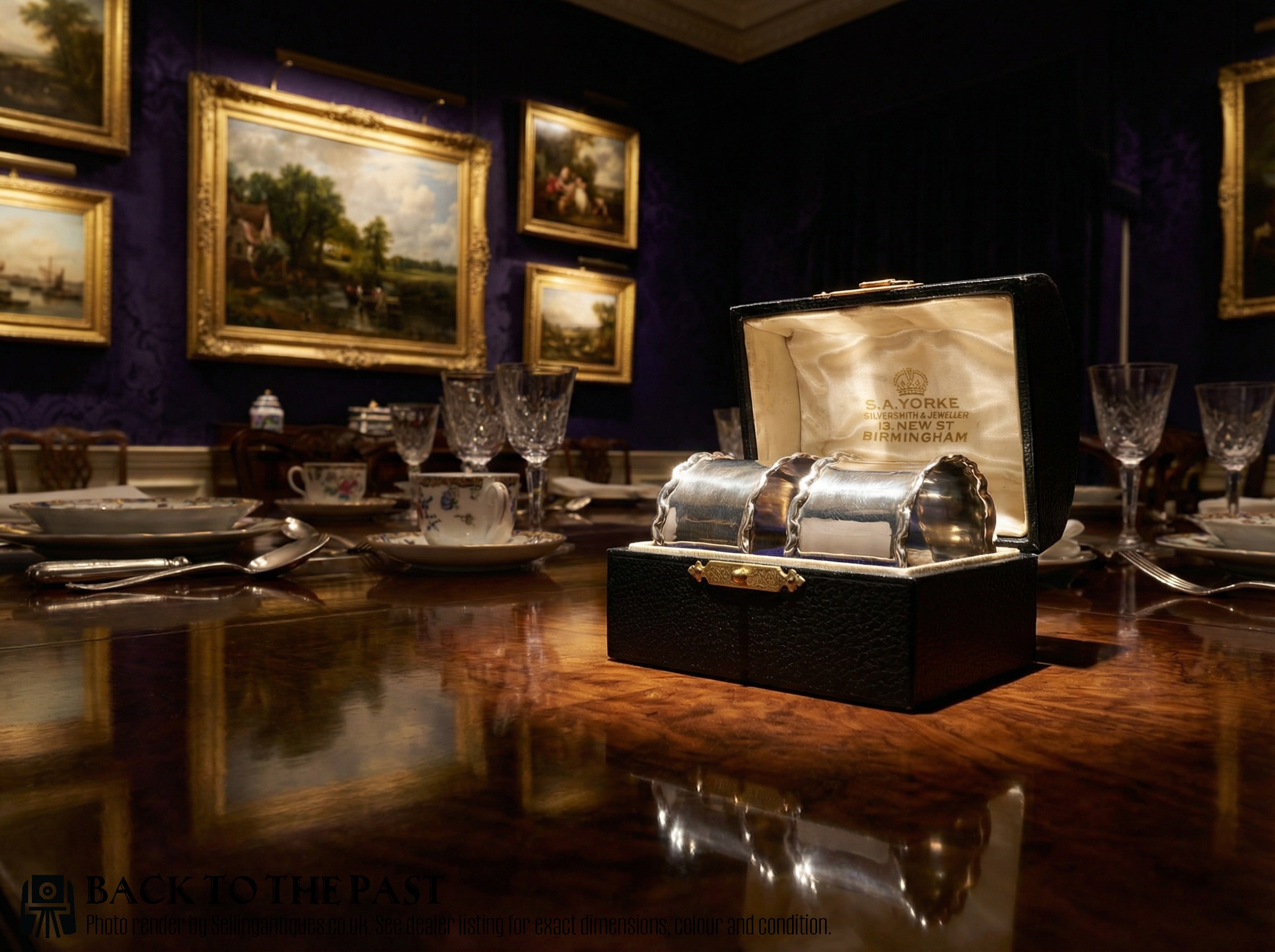
Edwardian Sterling Silver Napkin Rings
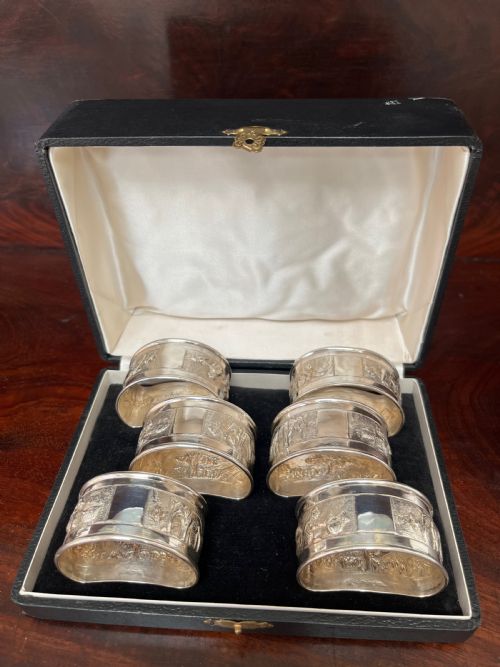
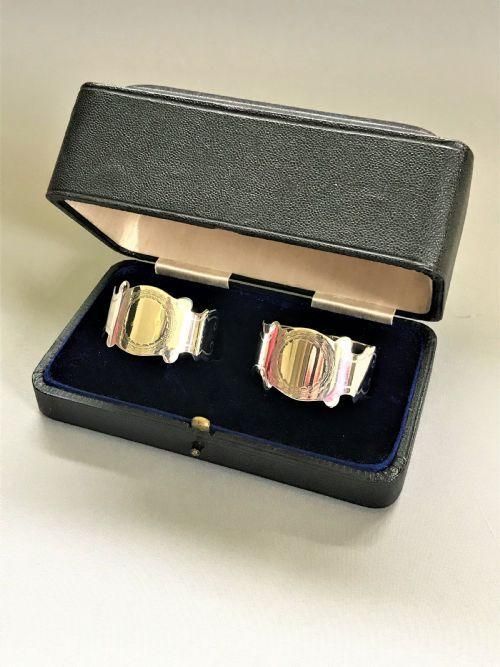
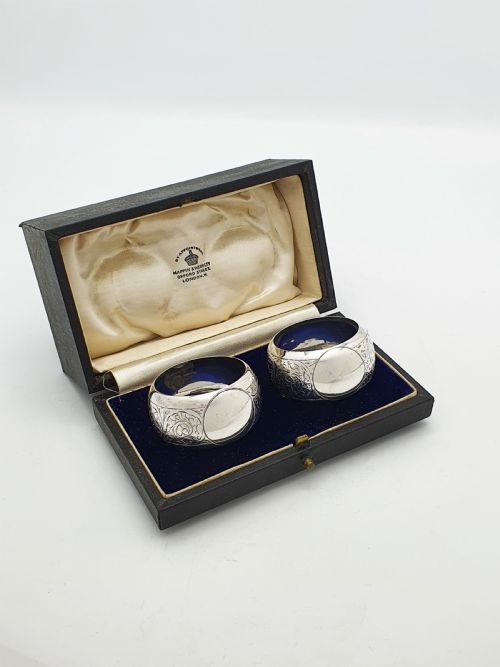
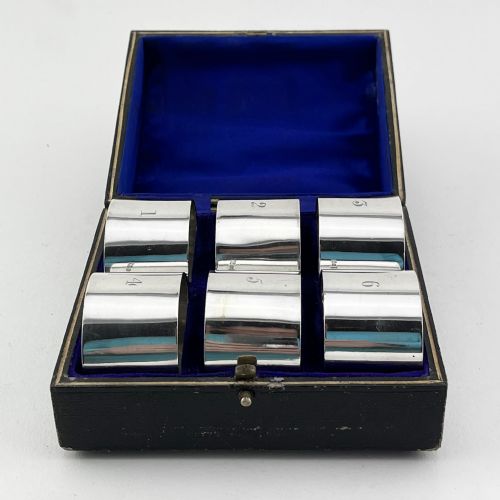
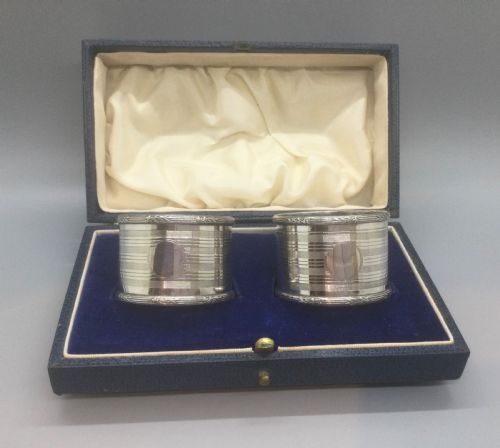
Edwardian sterling silver napkin rings are small circular bands utilised at the dining table to identify individual table linen. Most examples seen on this page arrive as single pieces, matched pairs, or cased sets of four and six, dating predominantly from the early twentieth century.
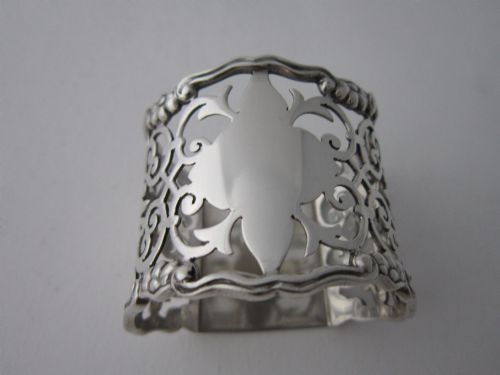
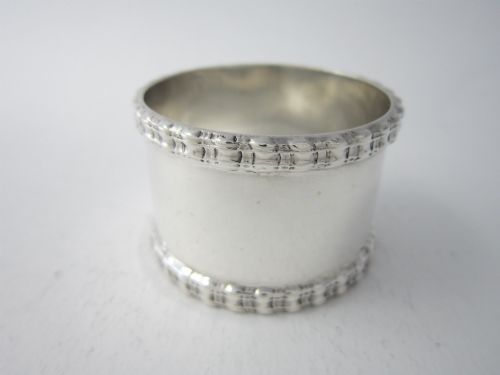
The form ranges from plain polished silver cylinders to pierced designs and figural motifs such as thistles or animals. Many survive alongside their original fitted cases lined with silk, velvet, or leatherette, preserving the domestic presentation of the era.
How They Were Made
These pieces are fashioned from sterling silver, often shaped from sheet metal and joined with a discreet seam before receiving decorative treatment. Workshops utilised piercing, embossing, and applied wirework to create tactile surface patterns.
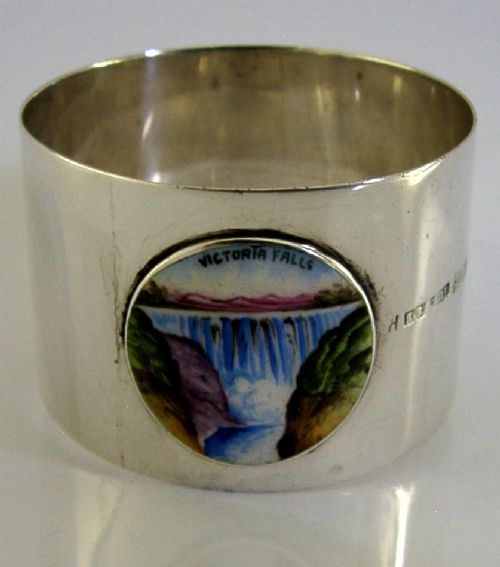
Makers integrated vitreous enamel in specific Arts and Crafts examples, fusing glass powder onto the silver base under heat. Fitted presentation boxes were constructed using timber or cardboard carcasses wrapped in leatherette and lined with silk or velvet.
What Varies in Quality
Quality separates through the gauge of the silver and the crispness of the hand-finishing on decorative details. Heavier specimens retain their structural integrity better over decades of handling and polishing.
The standard of the presentation housing influences the overall collectible interest, with silk or velvet lined fitted cases adding considerable substance to surviving sets. Maker marks from prominent workshops also elevate the standing of individual rings.
C.T. Burrows & Sons·Tiffany & Co·Liberty & Co·Mappin & Webb·Guild of Handicraft·T. Bishton
The Edwardian Sterling Silver Napkin Rings Glossary
- Sterling silver
- An alloy comprising ninety-two point five percent silver and seven point five percent other metals, typically copper, chosen for durability in tableware. British pieces carry a lion passant hallmark denoting this standard.
- Hallmark
- A system of official marks stamped onto precious metal items to guarantee purity, assay office, and year of manufacture. These stamps allow precise dating of Edwardian pieces.
- Pierced work
- A decorative technique where sections of the silver are cut away to form openwork patterns such as trellis or scroll motifs. This lightens the appearance of the band while maintaining structural strength.
- Cased set
- A matched group of napkin rings housed in a dedicated fitted box, often lined with silk or velvet. Such packaging protected the items from tarnish and damage when not in use.
Edwardian Sterling Silver Napkin Rings: Frequently Asked Questions
How are these napkin rings typically sold?
They appear as individual pieces, matched pairs, or complete cased sets containing four or six matching rings.
Many multi-piece sets retain their original fitted presentation boxes lined with silk or velvet from the period.
What periods do these silver rings date from?
The majority originate from the Edwardian era and the subsequent George V reign, spanning the early decades of the twentieth century.
Date letters within the hallmarks on the silver allow the exact year of manufacture to be identified.
Can these silver napkin rings be used daily?
Sterling silver is durable enough for regular dining use provided it is cleaned with soft cloths and appropriate silver polish.
Storing them in their original cases when not set on the table helps protect the metal from excessive tarnish.
What decorative styles appear on these rings?
Designs range from plain polished bands to pierced scrollwork, figural animal motifs, and distinctive Arts and Crafts interpretations.
Enamel accents and Gothic revival influences also occur in specific workshop productions from the era.