






Edwardian Stationery Accessories
Edwardian stationery accessories bring order and a tactile elegance to a desk through polished metals, rich timbers and considered compartments.
Edwardian Stationery Accessories
Edwardian stationery accessories encompass a practical assortment of desk items designed to hold letters, stamps, telegrams and writing implements in neat array. Desk tidies, inkstands, letter clips and boxes form the core of what surfaces here, reflecting the formal correspondence habits of the era.
Most pieces date from the Edwardian period or overlap slightly into the late Victorian and early twentieth-century eras. Mahogany, oak and walnut provide the wooden foundation for boxes and racks, whilst brass, sterling silver and tortoiseshell add decorative and functional contrast.
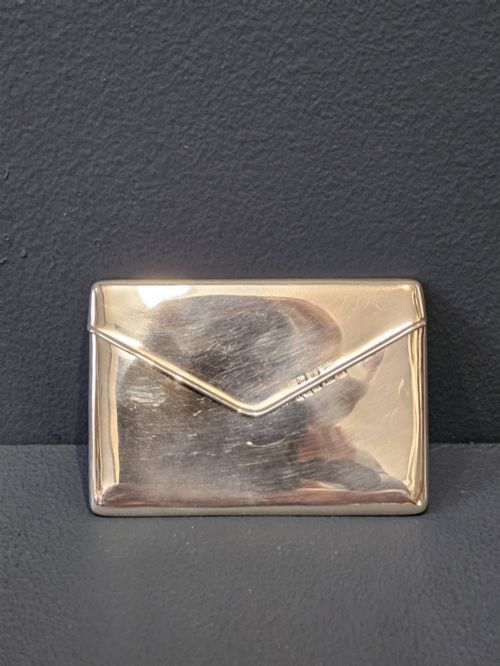
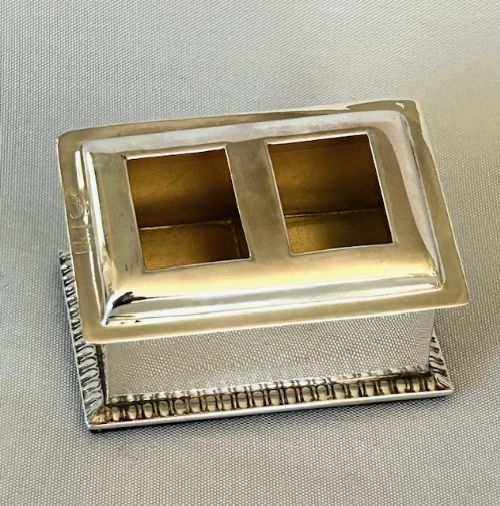
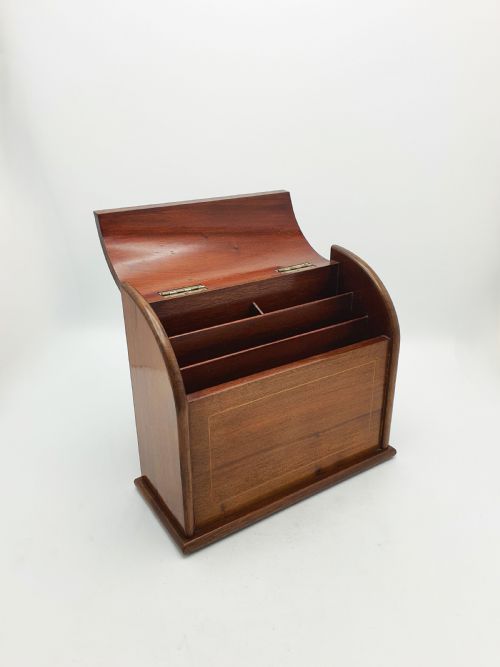
Forms range from simple carved mahogany waterfall desk tidies to elaborate sterling silver stamp boxes and novelty letter clips shaped as butterflies or golfing motifs. Buyers encounter both utilitarian pieces meant for daily correspondence and more decorative items intended for display upon a partner's desk.
Materials and construction methods
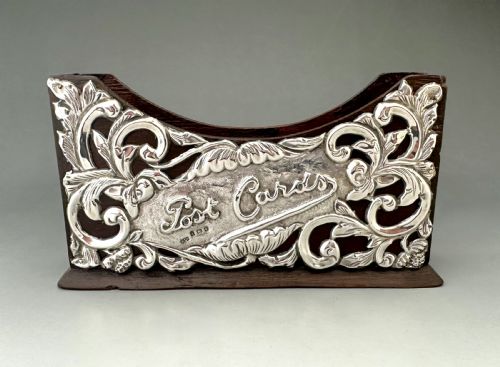
Makers utilised solid timbers like oak, mahogany, walnut, coromandel and burr yew, frequently shaping them into hinged boxes, sloping stationery cabinets and tiered racks with dovetailed joints and turned feet. Inlaid details, carved surfaces and domed lids demonstrate traditional cabinet-making skills.
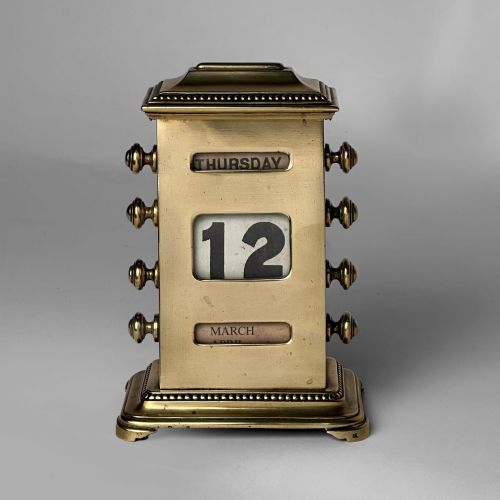
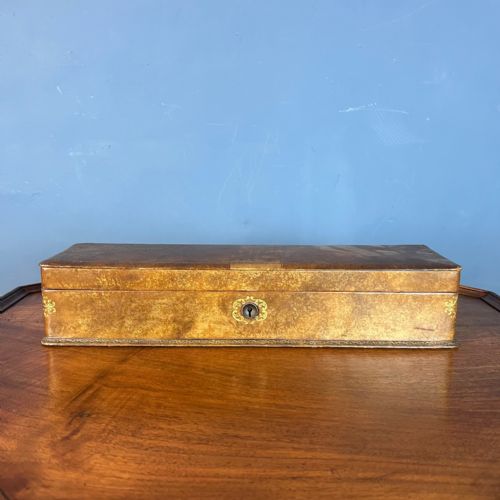
Metalwork played a central role, featuring cast brass, copper, silver plating and sterling silver worked into perpetual calendars, rocker ink blotters, inkstands and spring-loaded letter clips. Tortoiseshell inserts and tooled leather panels were often combined with silver fronts to create tactile surfaces.
Specialised techniques such as hinged mechanisms for stamp boxes and spring tension for letter clips ensured these objects functioned reliably during daily writing tasks.
Edwardian Stationery Accessories Retail Price Guide 2026
Typical asking prices for edwardian stationery accessories among the pieces listed under this phrase on Sellingantiques today, from the lower quarter to the upper quarter. They describe what is for sale here now, not the wider market.
Listings feature items dated across the nineteenth and early twentieth centuries, spanning the Victorian, Edwardian, Arts and Crafts and Art Nouveau periods.
Factors that distinguish quality
Quality rests upon the choice of materials and the crispness of the workmanship, from the depth of a timber's grain to the intricacy of cast brass or sterling silver mounts. Pieces featuring combined materials, such as tortoiseshell paired with sterling silver or detailed novelty forms like butterflies and hearts, represent a higher tier of production.
The integrity of the mechanism dictates the standard of items like letter clips, stamp boxes and perpetual calendars. Smooth movement in hinged lids, drawers and spring clips separates standard desk accessories from superior examples.
William Tonks of Birmingham
The Edwardian Stationery Accessories Glossary
- Desk tidy
- A fitted desktop stand or tray designed to organise letters, pens, inkwells and small writing necessities.
- Letter clip
- A spring-loaded metal clip mounted on a wooden or metal base, used to hold incoming mail or notes securely.
- Inkstand
- A tray or stand holding one or more inkwells, often incorporating pen rests and space for sand or wafers.
- Stationery box
- A tabletop cabinet with compartments and hinged or falling fronts to store writing paper and envelopes upright.
- Rocker ink blotter
- A curved wooden or metal tool with a handle, fitted with blotting paper to absorb excess ink from handwritten pages.
Edwardian Stationery Accessories: Frequently Asked Questions
What is a stationery box used for?
Stationery boxes were designed to keep writing paper, envelopes and cards organised and protected from dust on a desk or writing table. Their stepped interior compartments allowed different sizes of correspondence to be sorted for quick access.
During the period, letters were written daily by hand, making these boxes essential furniture for any home study or office. The drop-front or hinged lid kept private correspondence neatly concealed when not in use.
How do I care for silver and tortoiseshell accessories?
Sterling silver and tortoiseshell require gentle cleaning with a soft, dry cloth to remove dust without scratching the polished surfaces. Avoid liquid polishes that can seep into hinges or damage the organic layers of tortoiseshell.
Keep these items away from direct sunlight and extreme temperature fluctuations to prevent the tortoiseshell from warping or separating from its metal mount.
What is the difference between a desk tidy and an inkstand?
An inkstand focuses primarily on the act of writing, featuring built-in inkwells, pen grooves and sometimes a sander for drying ink. These sat centrally on the desk for immediate writing tasks.
A desk tidy serves a broader organisational role, combining letter racks, pen trays and small compartments for stamps and paper clips into a single desktop stand.
How can I tell Edwardian pieces from Victorian ones?
Edwardian stationery accessories often display lighter timbers like mahogany and oak, alongside brighter silver mounts and sleeker Arts and Crafts or Art Nouveau influences. Victorian pieces frequently utilise darker woods such as coromandel and walnut with heavier, more ornate Gothic Revival or heavily carved detailing.
However, style transitions were gradual around the turn of the twentieth century, so craftsmanship and hallmarked silver dates provide the most accurate guide to a piece's exact period.