





Edwardian Smokers Chair
An edwardian smokers chair is a sturdy, low-backed elbow seat built for daily studies and smoking rooms.
Edwardian Smokers Chair
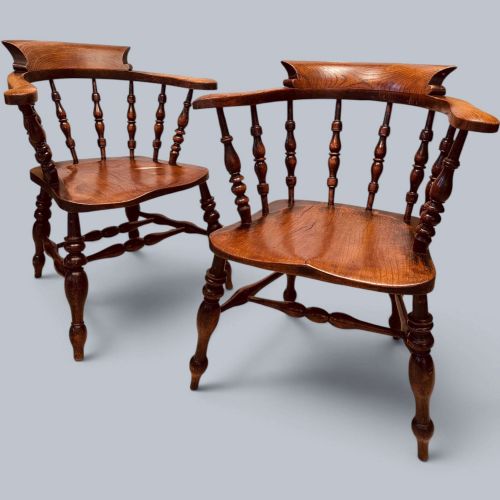
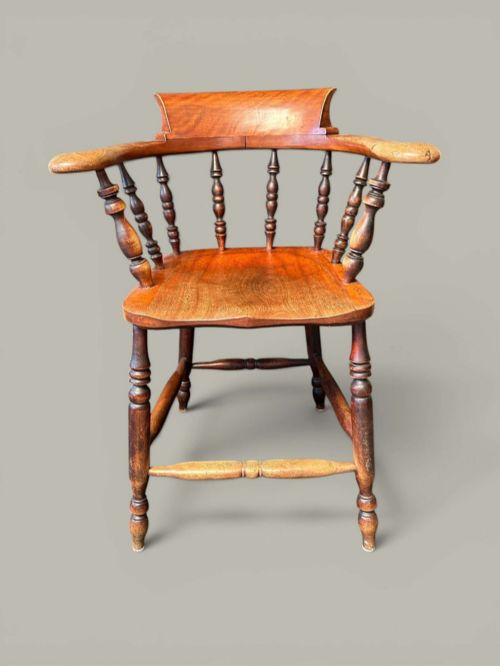
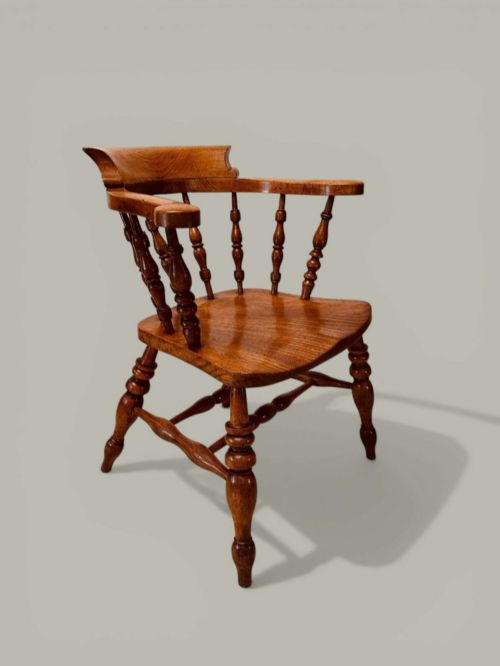
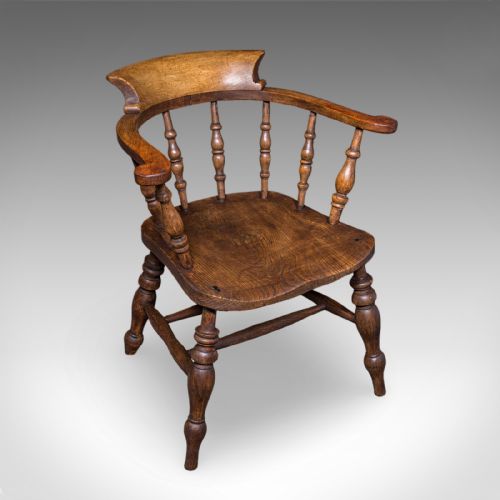
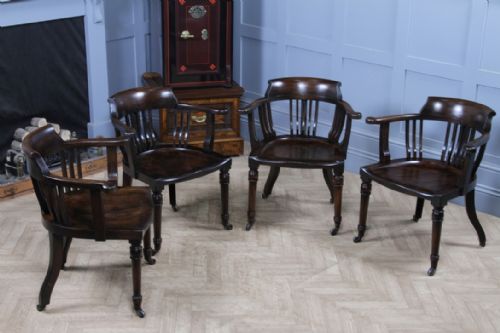
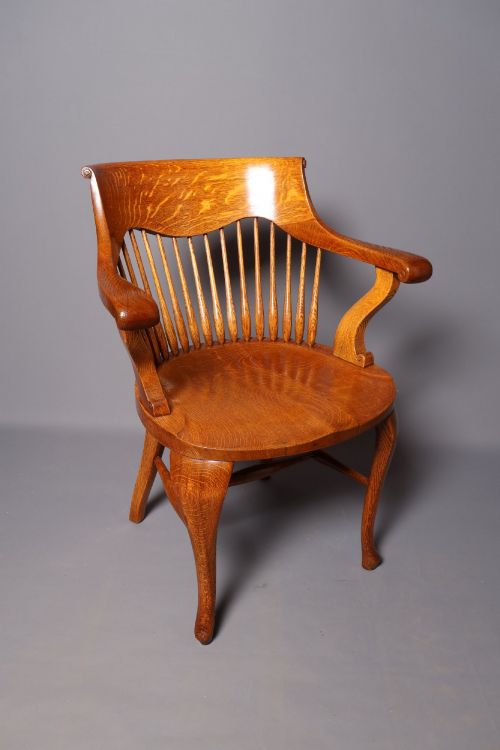
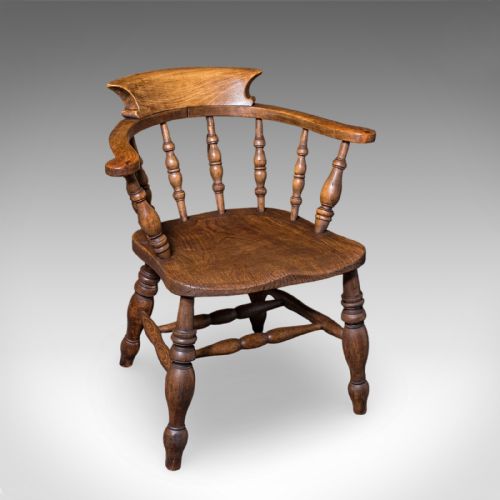
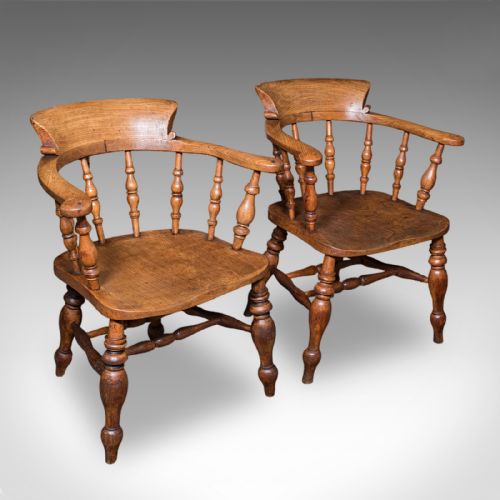
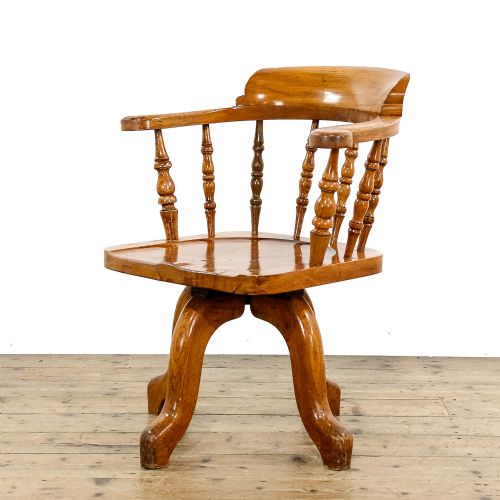
The edwardian smokers chair is a solid timber elbow seat designed for studies, offices and smoking rooms during the early twentieth century. You will most frequently meet these pieces rendered as oak or elm smoker's bows and captain's chairs originating from English country houses and offices.
Most examples combine a robust curved backrest with turned spindle supports and a generous saddle seat intended for hours of comfortable sitting. These functional armchairs bridge the gap between heavy Victorian office seating and lighter Arts and Crafts domestic furniture.
Materials and Construction
Makers built these heavy armchairs using resilient native timbers such as oak, elm, beech and ash for structural strength and longevity. The characteristic bow back is steam-bent from a single piece of wood, secured to shaped seats and reinforced with turned spindles.
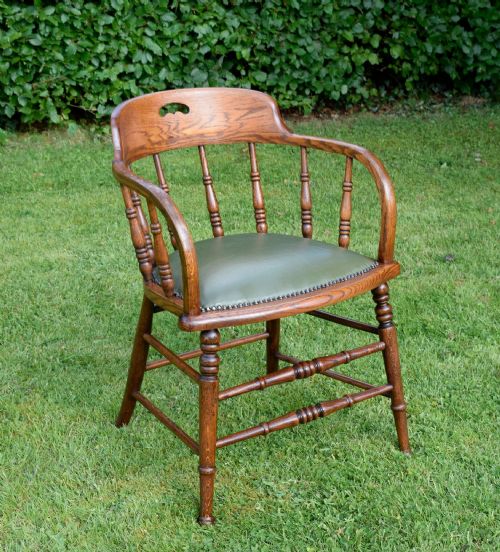
Selected models incorporate padded leather or hide inserts into the wooden saddle seats, while others retain plain timber. Simple joinery methods, including wedged tenons and peg fixings, keep the heavy frames rigid through decades of use.
Edwardian Smokers Chair Retail Price Guide 2026
Typical asking prices for edwardian smokers chair among the pieces listed under this phrase on Sellingantiques today, from the lower quarter to the upper quarter. They describe what is for sale here now, not the wider market.
The archive includes desks chairs, armchairs and dining chairs spanning the Victorian and Edwardian periods.
Judging Quality
Quality rests upon the choice of timber and the depth of the grain in the turned spindles and saddle seats. Dense oak and figured elm examples display superior hand-carving and careful matching of the wooden components.
The smoothness of the steam-bent bow and the integrity of the original joints distinguish finer workshop production from utilitarian office seating. Uniform patination across the wood and hide surfaces indicates careful preservation over time.
J Elliott & Son
The Edwardian Smokers Chair Glossary
- Smoker's bow
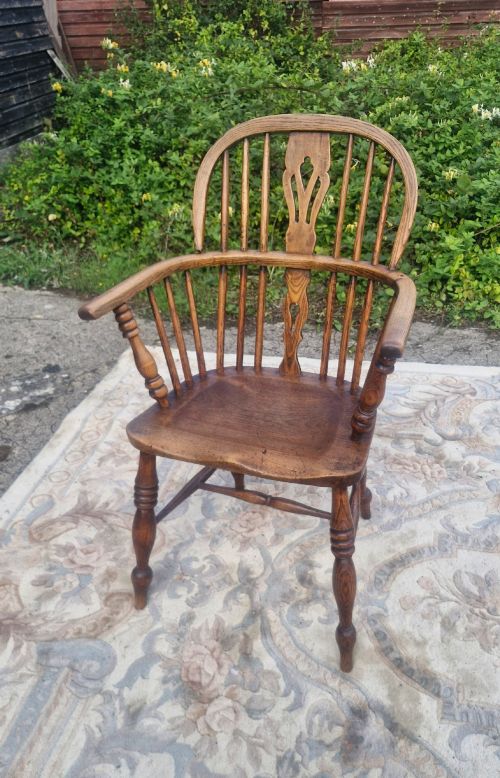
- A sturdy, low-backed wooden armchair with a continuous curved rail forming the arms and back. This form evolved from the traditional Windsor chair.
- Captain's chair
- A low-backed revolving or stationary desk chair with a rounded upper rail supported by spindles. These seats were common in nineteenth-century offices and libraries.
- Comb back
- A Windsor chair variation where the vertical spindles extend above the top rail to form a crest resembling a comb. It provides extra support to the upper back.
- Saddle seat
- A wooden seat base carved into a concave shape to mimic a riding saddle. Makers sculpted these surfaces by hand for user comfort.
Edwardian Smokers Chair: Frequently Asked Questions
What is an edwardian smokers chair?
An edwardian smokers chair is a sturdy wooden elbow seat featuring a low, curved backrest and a solid saddle base. These chairs were designed for studies and smoking rooms.
They combine the heavy proportions of Victorian office seating with early twentieth-century domestic craftsmanship, usually rendered in oak, elm or ash.
How do I style a smokers bow chair?
These robust armchairs suit modern home offices, reading corners or dining tables as occasional seating. Their warm timber tones blend easily with various interior styles.
Pare them with a simple wooden desk or let one stand alone in a hallway as a functional statement piece.
Are these chairs comfortable for daily use?
The deep saddle seats and supportive curved backrests make them remarkably comfortable for prolonged sitting at a desk. Many examples also feature upholstered leather pads.
Their ergonomic wooden shaping supports an upright posture while remaining durable enough for everyday tasks.
How do I date an antique smokers chair?
Dating relies on examining the timber species, joinery techniques and hardware used in the frame. Edwardian pieces often display lighter oak tones and simpler turned spindles than their Victorian predecessors.
Makers' stamps and the specific curvature of the bow back offer further clues to their period of origin.