

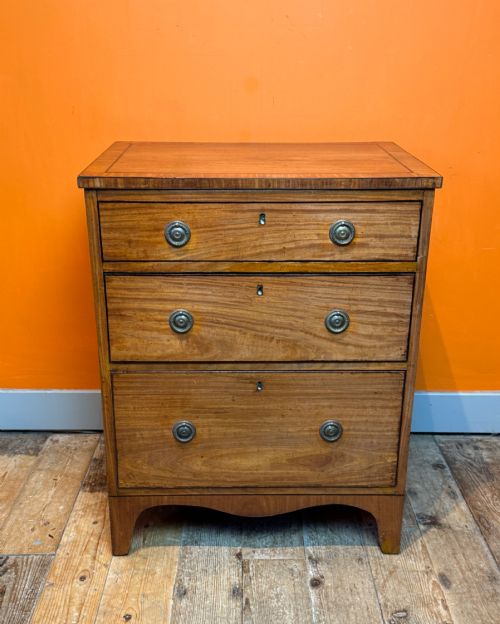
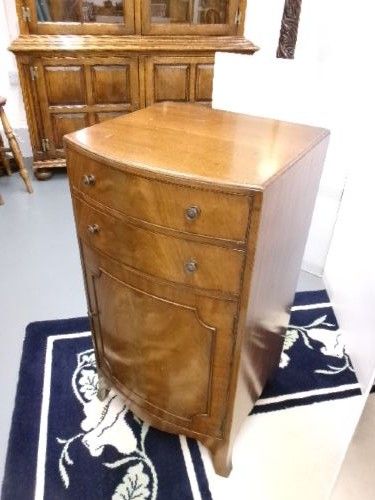
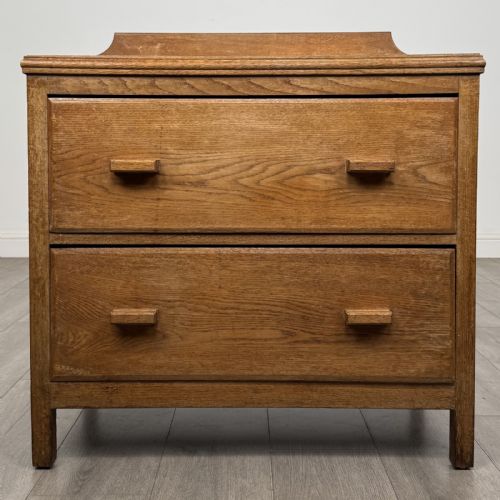
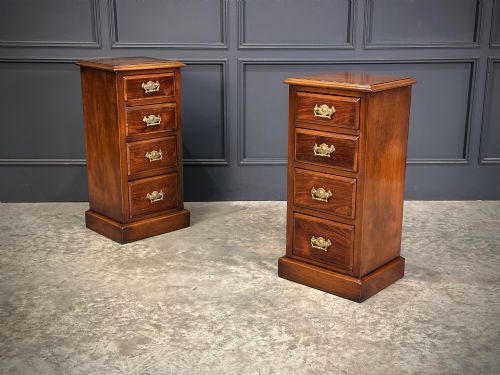
Edwardian Small Bedside Chest
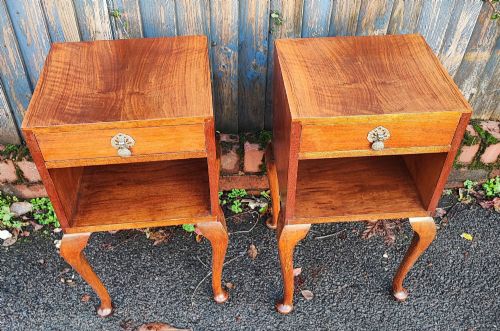
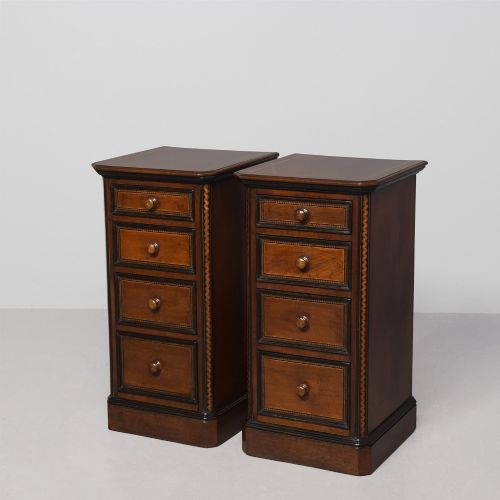
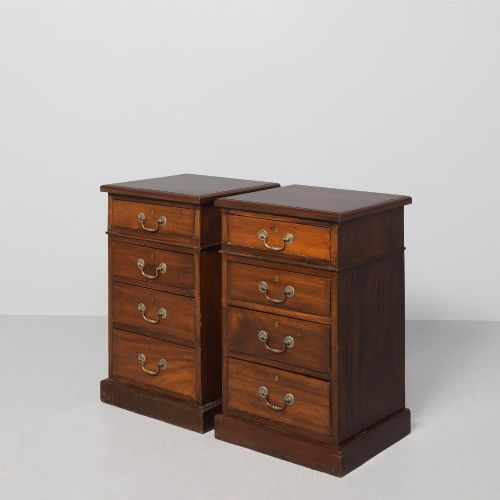
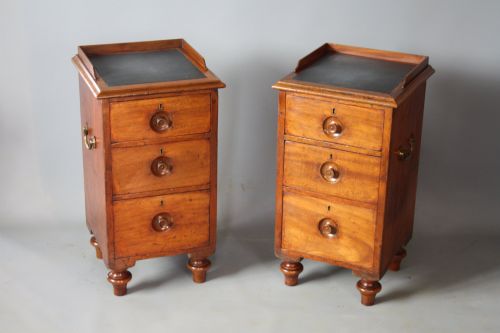
These edwardian small bedside chest selections provide compact storage with period character, offering neat proportions alongside timber grain.
Edwardian Small Bedside Chest
An edwardian small bedside chest typically delivers functional storage beside a bed through diminutive proportions and compact drawers or cupboards. Buyers looking at this page encounter pieces originating predominantly from the Edwardian era alongside Victorian and early twentieth-century examples.
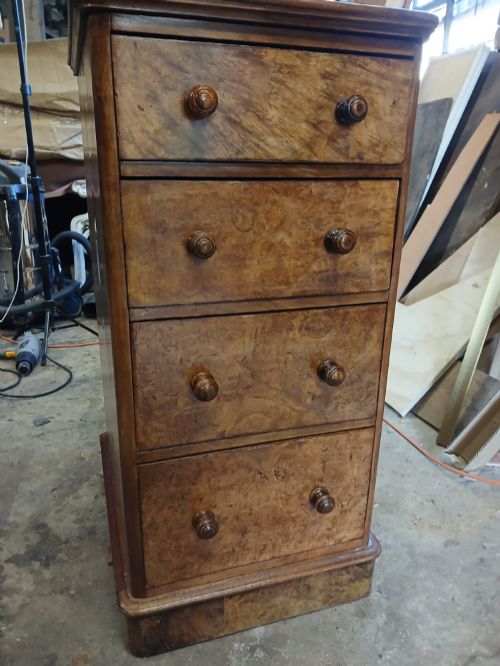
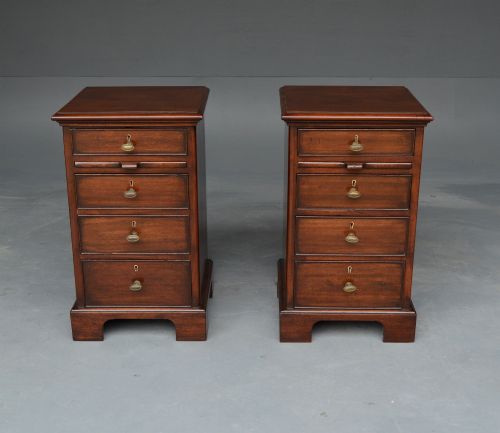
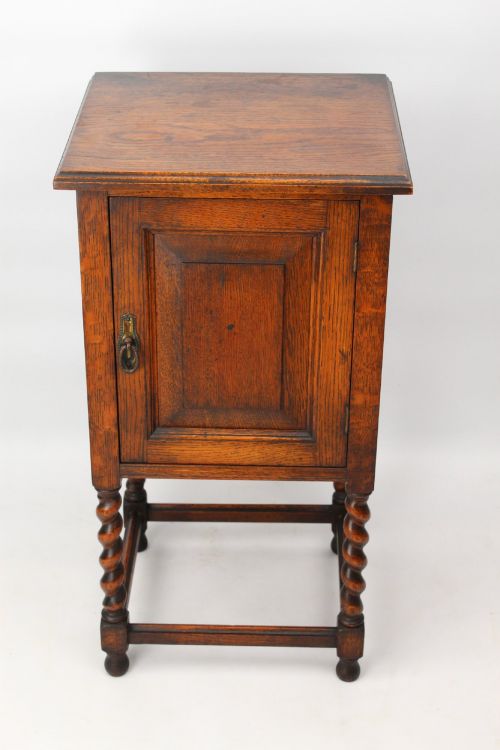
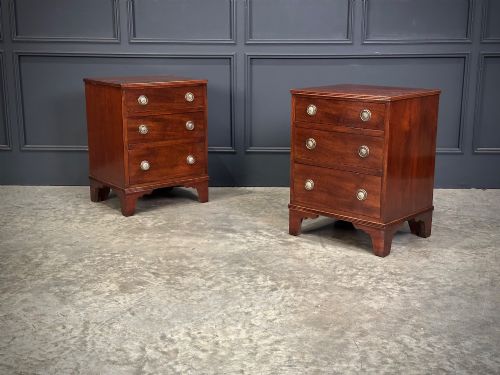
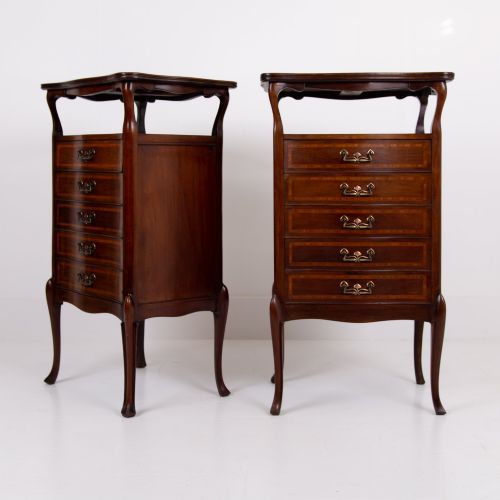
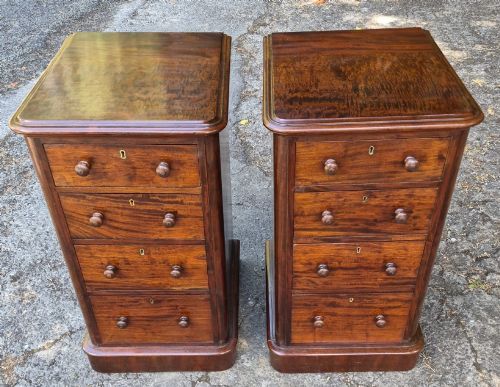
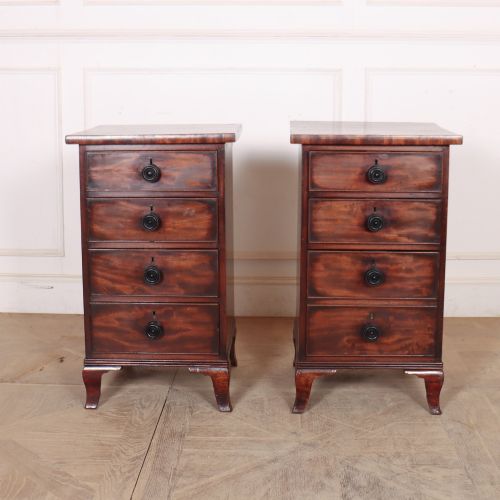
The objects span varied configurations including bedside chests of drawers, cabinets, and small side tables. Mahogany and burr walnut dominate the forms, frequently appearing as matched pairs suited to symmetrical bedroom layouts.
Materials and Construction
Cabinetmakers utilised rich timbers such as mahogany, burr walnut, satinwood, and ash to construct these pieces, often applying flame mahogany veneer to primary surfaces. Brass hardware functions as pulls and handles, while secondary woods like pine appear in drawer linings.
Joinery techniques balance utility with decorative finish, incorporating inlaid details and waxed surfaces. Painted finishes also emerge within the selection, showing how makers adapted timber surfaces to suit changing tastes.
Edwardian Small Bedside Chest Retail Price Guide 2026
Typical asking prices for edwardian small bedside chest among the pieces listed under this phrase on Sellingantiques today, from the lower quarter to the upper quarter. They describe what is for sale here now, not the wider market.
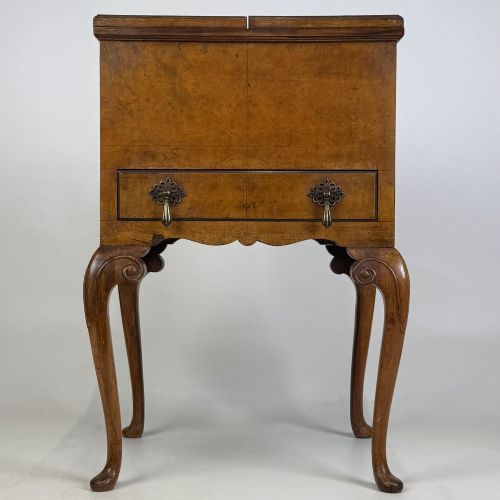
A drop flap mechanism conceals storage with a subtle hinge, letting a bedside cabinet double as an impromptu writing surface.
Assessing Quality
The distinction between tiers rests upon timber selection and the crispness of cabinetmaking. Richly figured burr walnut and carefully matched flame veneer elevate a piece above plain surfaces.
Subtleties in proportion and integrated details such as serpentine fronts or inlaid stringing separate standard utility pieces from finer workshops. Original brass hardware and consistent patination complete the upper tier.
Edwards and Roberts
The Edwardian Small Bedside Chest Glossary
- Burr walnut
- A figured wood veneer harvested from the wart-like growths on walnut trees. It creates swirling, highly decorative patterns across cabinet fronts.
- Flame mahogany
- Timber cut to expose a distinctive feather-like grain pattern. This technique highlights the natural fire of the wood.
- Inlay
- A method of embedding contrasting strips of wood or brass into the primary surface. It defines geometric panels and borders.
- Serpentine front
- A furniture front curving outward in the centre and inward at the sides. This shape requires skilled joinery.
- Satinwood
- A pale, hard timber yielding a lustrous sheen. Makers utilised it for contrasting banding and decorative accents.
Edwardian Small Bedside Chest: Frequently Asked Questions
What is an edwardian small bedside chest?
These compact pieces serve as bedside storage units featuring small drawers or enclosed cabinet spaces. They combine domestic utility with the refined cabinetry typical of the period.
Dimensions remain modest to fit tighter bedside spaces without overwhelming a bedroom. They bridge the gap between purely functional furniture and decorative antique furnishings.
How do I style these chests?
Pairs work effectively flanking a bed to create visual symmetry. Placing a small lamp or decorative tray on top enhances the practical surface.
Mixing eras allows an Edwardian piece to sit comfortably beside modern decor. The warm tones of mahogany or walnut anchor neutral colour schemes.
Are pairs common in these listings?
Matched pairs appear frequently among the pieces designed for bedroom use. Finding two identical cabinets simplifies symmetrical interior arrangements.
Single examples also emerge for standalone placement in smaller rooms. Near pairs offer a closely matched alternative for balanced placement.
How do I distinguish Edwardian from Victorian?
Edwardian pieces often display lighter timbers, simpler lines, and delicate Sheraton revival influences. Victorian examples tend toward heavier proportions and darker mahogany or walnut.
Inlay work and painted finishes became increasingly refined into the early twentieth century. Examining the interior secondary woods also helps indicate the period of construction.