
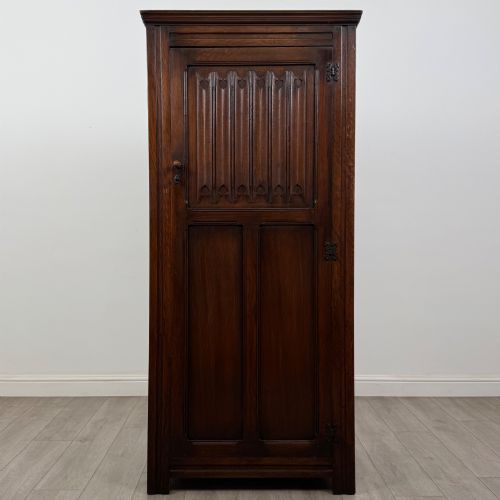
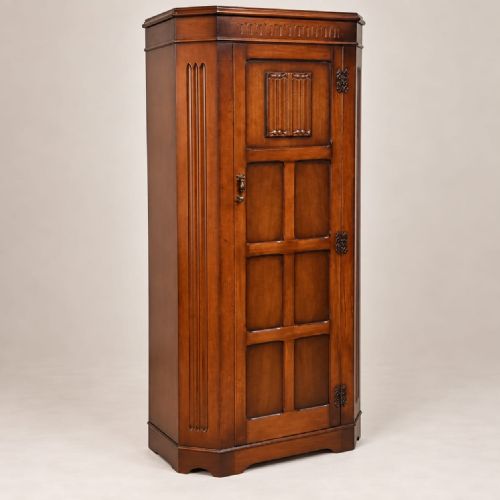
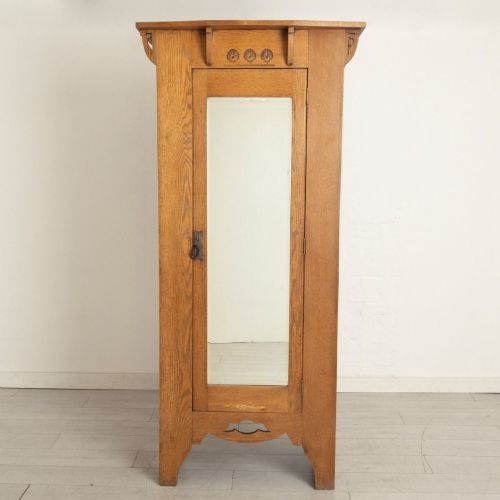
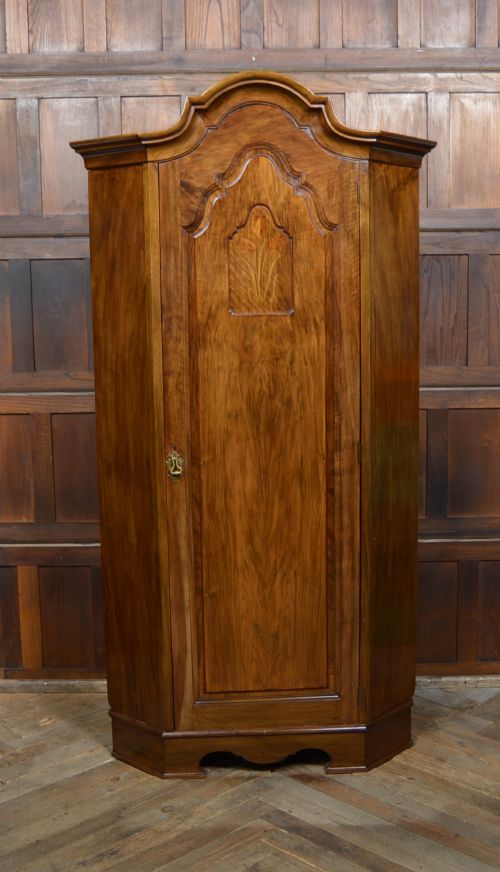


Edwardian Single Armoire
An edwardian single armoire brings compact elegance to a bedroom, offering tall hanging space without dominating the floor.
Edwardian Single Armoire
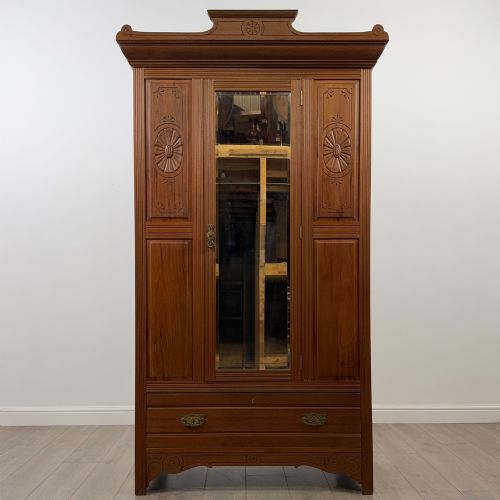
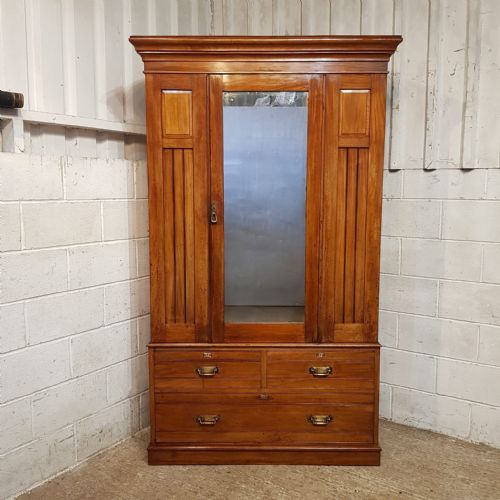
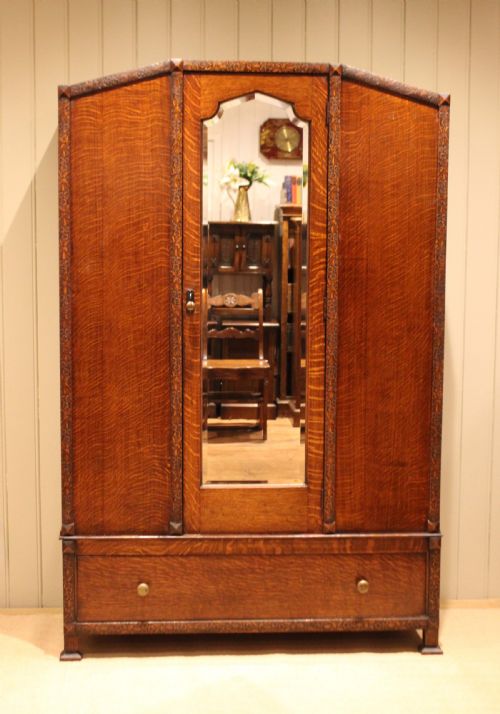
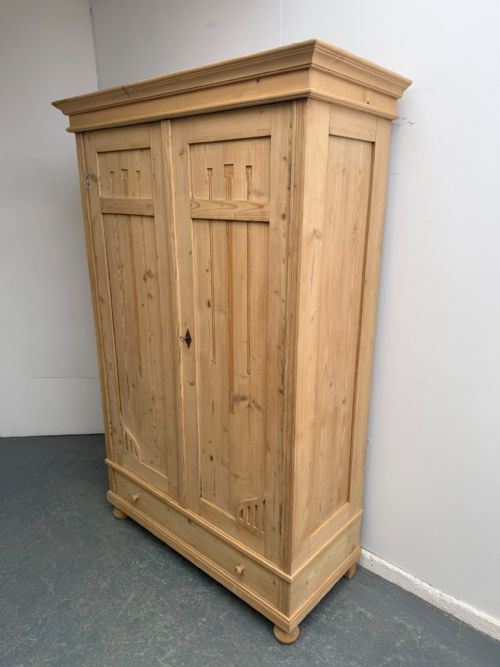
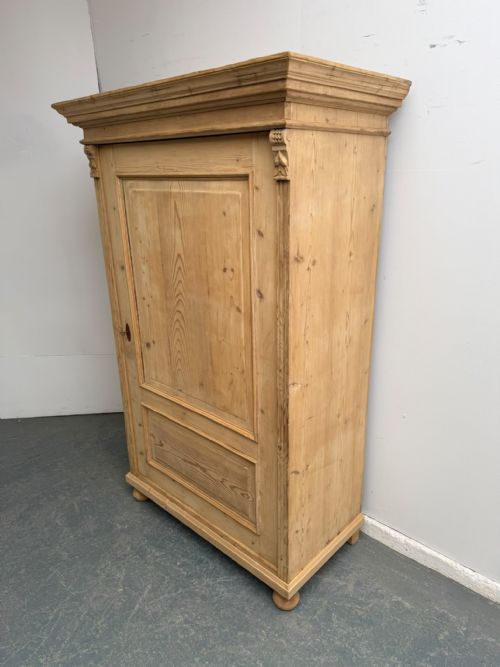
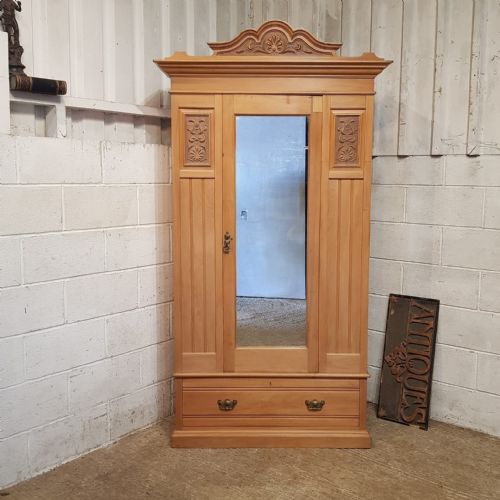
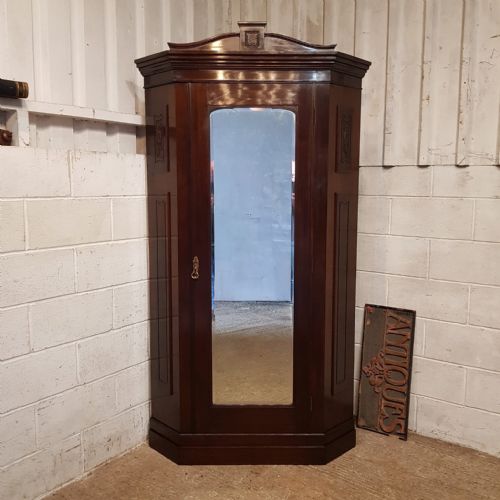
An edwardian single armoire is a compact wardrobe designed for smaller chambers, typically featuring a single mirrored or panelled door that opens to reveal hanging rails and sometimes interior hooks or small drawers.
The pieces appearing on this page span the Edwardian period and neighbouring Victorian, 19th-century, and 1920s eras, reflecting the sustained demand for space-saving bedroom storage.
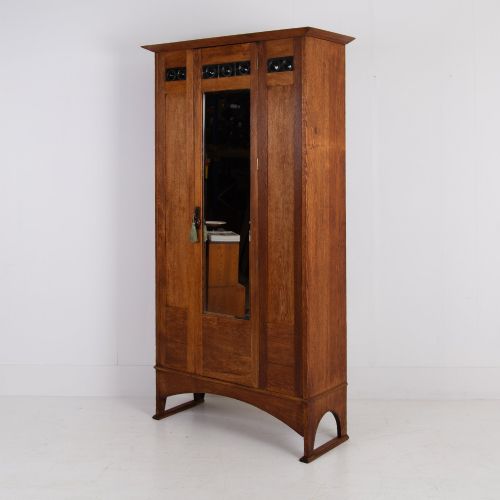
Among the variations available, oak and walnut examples dominate the selection, often accompanied by pine, mahogany, and occasional maple or satinwood pieces shaped by Arts and Crafts, Art Nouveau, or revival styles.
Materials and construction
Cabinet makers built these wardrobes using solid timbers and veneers such as oak, walnut, mahogany, and pine, frequently incorporating brass hinges, handles, and bevelled glass mirror plates into the doors.
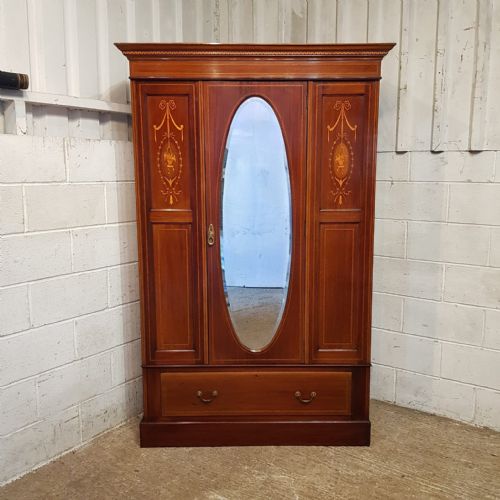
Construction techniques combine traditional frame-and-panel joinery with applied mouldings, marquetry inlay, and carved detailing characteristic of the period's diverse stylistic influences.
Several charming specimens include clever internal hooks and corner configurations designed to squeeze proper wardrobe function into tight Victorian hallways.
What separates the finest examples
Quality in these wardrobes is evident in the selection of figured timber, the crispness of any marquetry inlay or carved decoration, and the substance of the brass hardware.
Finer pieces display balanced proportions, sound structural integrity in the door frames, and high-grade glass within the mirrored panels rather than plain or later replacements.
Early Heals·Gillows of Lancaster
The Edwardian Single Armoire Glossary
- Armoire
- A tall cupboard or wardrobe, historically used for storing weapons or garments. In British usage, the term often describes large or decorative single and double door wardrobes.
- Marquetry
- Decorative inlay work where small pieces of contrasting veneer are fitted into a wooden background to form pictorial or geometric patterns. It appears on select cabinet doors and friezes.
- Bevelled glass
- Mirror or window glass with edges cut and polished at an angled facet. This technique adds a decorative refraction to the mirror plates set into wardrobe doors.
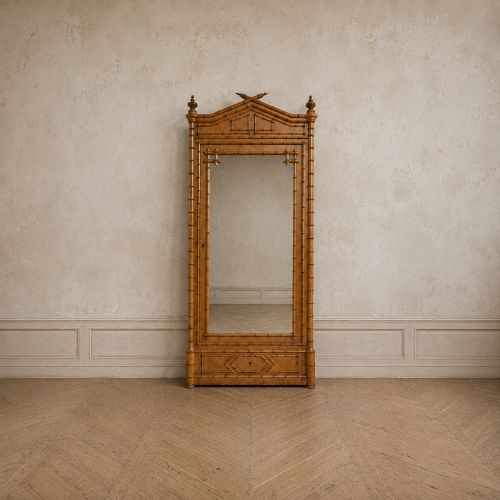
- Faux bamboo
- A decorative finish where wood is carved and painted to resemble natural bamboo canes. This style appears on eclectic pieces influenced by nineteenth-century Japanese design.
- Fielded panel
- A wooden panel with bevelled or recessed edges raised above the surrounding frame. It adds depth and structural stability to cabinet doors.
Edwardian Single Armoire: Frequently Asked Questions
Will a single armoire fit modern hangers?
Many Edwardian single wardrobes are relatively shallow compared to modern closets, meaning standard clothes hangers may need to hang diagonally.
Some examples feature front-to-back pull-out metal hanging rails rather than traditional side-to-side rails to accommodate modern garment widths.
How do I distinguish Edwardian from Victorian wardrobes?
Edwardian pieces generally favour lighter timber tones, simpler lines, and gentler decorative motifs influenced by the Arts and Crafts and Art Nouveau movements.
Victorian wardrobes tend to be heavier in scale, often utilising darker mahogany or walnut with more robust classical cornices and mouldings.
Are the mirror plates original?
Many surviving pieces retain their original bevelled glass mirrors, which often exhibit characteristic light speckling or foxing from age.
Unblemished mirrors can indicate a later replacement, though silvering was sometimes renewed during the working life of the furniture.
Can these wardrobes be dismantled for moving?
Unlike larger triple or breakfront wardrobes, single armoires are typically constructed as a single rigid carcase that does not dismantle.
Buyers should carefully measure stairwells, doorways, and ceiling heights before attempting delivery, as the tall solid frame must pass through in one piece.