





Edwardian Silver Writing Accessories
Edwardian silver writing accessories are functional desk items created to organise correspondence, and collectors prize them for their fine metalwork and period character.
Edwardian Silver Writing Accessories
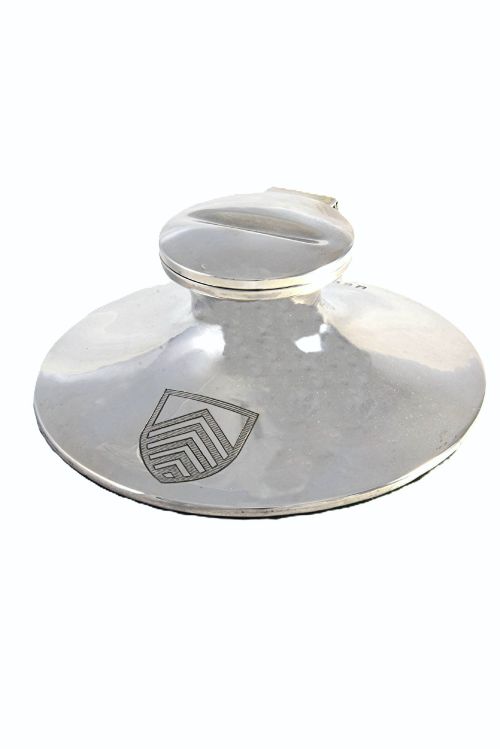
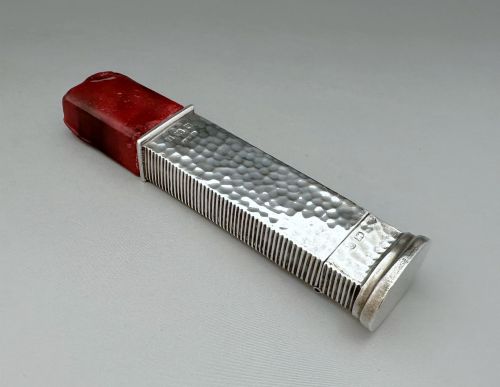
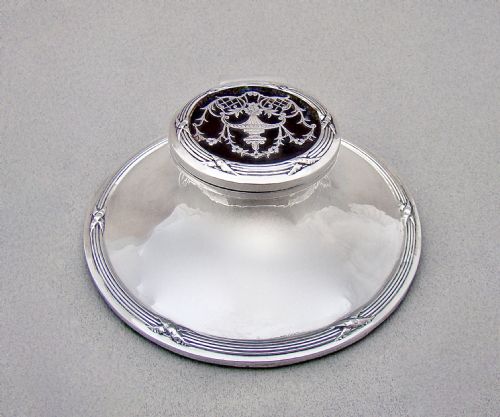
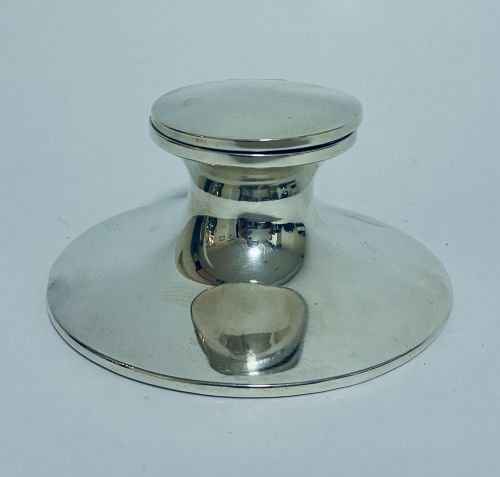
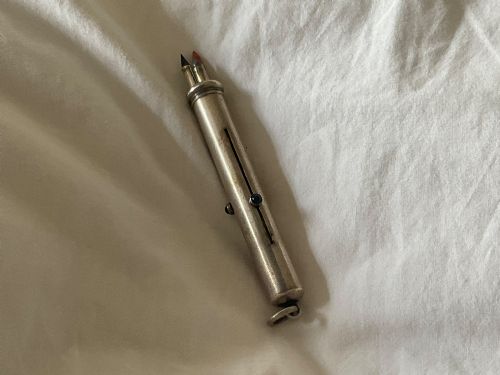
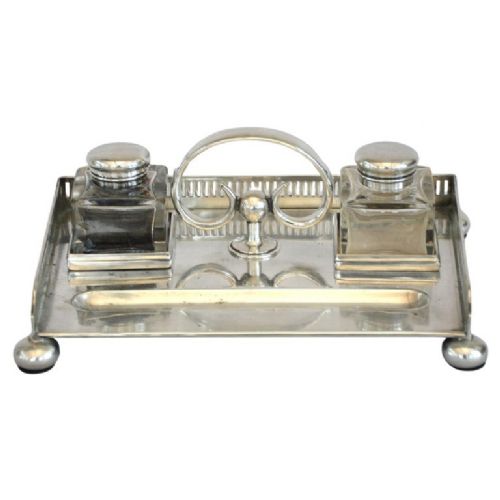
Capstan inkwells and double inkstands dominate the available forms, often incorporating cut glass bottles or novelty designs shaped like bells or pony hooves. Smaller accessories such as vesta cases, propelling pencils, letter openers, pen wipes, and telegram folders appear frequently alongside larger desk stands.
Craftsmanship and Distinction
Quality rests upon the crispness of the silversmith's chasing and the presence of intricate decorative details like guilloche enamel work or inlaid tortoiseshell. Superior items often feature novelty forms or combined functions, such as integrated clocks, calendars, or multi-compartment stamp boxes.
The integrity of fitted components, including original cut glass inserts, intact sealing wax, and fully functioning propelling mechanisms, distinguishes standard desk pieces from exceptional examples.
Edwardian Silver Writing Accessories Retail Price Guide 2026
Typical asking prices for edwardian silver writing accessories among the pieces listed under this phrase on Sellingantiques today, from the lower quarter to the upper quarter. They describe what is for sale here now, not the wider market.
Listings combine sterling silver and silver plate with cut glass, tortoiseshell, and enamel across desks from the Victorian to George V periods.
Henry Matthews·Walker And Hall·Sampson Mordan·William Graeme·Zimmermann·Elkington
The Edwardian Silver Writing Accessories Glossary
- Capstan Inkwell
- A desk inkwell shaped like a ship's capstan, widening from a narrow top to a broad circular base. This wide base prevents the inkwell from tipping over on a busy desk.
- Vesta Case
- A small pocket or desk box designed to hold matches and safety matches. They frequently appear combined with sealing wax compartments in writing accessory sets.
- Pounce Pot
- A small container with a perforated lid used to sprinkle resin or gum sandarac powder onto rough paper. This preparation created a smooth writing surface for ink.
- Guilloche Enamel
- A decorative technique where precise geometric patterns are mechanically engraved into metal beneath a translucent enamel layer. It adds colourful floral or abstract medallions to desk accessories.
- Pen Wipe
- A small fabric or novelty pad used to clean surplus ink from nibs during correspondence. These items often take whimsical animal shapes, including pheasants.
Edwardian Silver Writing Accessories: Frequently Asked Questions
How were inkstands used on desks?
Inkstands provided a central, stable station for writing letters, holding one or more inkwells alongside trays for pens and stamps. They organised loose desk items and protected fine wooden furniture from ink spills.
Larger stands accommodated accessories like chambersticks, pounce pots, and sealing wax holders. This kept all necessary writing implements within reach during daily correspondence.
How do I identify an Edwardian piece?
Examination of the hallmarks stamped on the silver provides the most reliable date and origin. Birmingham and London punch marks often include date letters specific to the Edwardian decade.
Stylistic cues also help, as these items frequently blend late Victorian heaviness with lighter Art Nouveau motifs. Novelty shapes and combination pieces became especially popular during this era.
How do I care for silver desk accessories?
Gentle dusting with a soft cloth preserves the metal surface without wearing away fine chasing or hallmarks. Avoid abrasive polishes, particularly on pieces featuring delicate enamel or tortoiseshell inserts.
Glass inkwell inserts can be washed separately in warm soapy water if dried thoroughly before replacement. Keeping pieces away from direct moisture protects internal mechanisms and organic materials.