


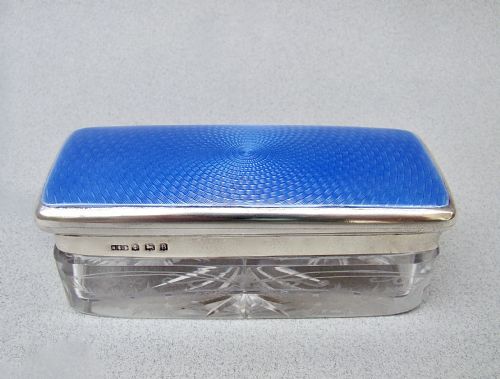
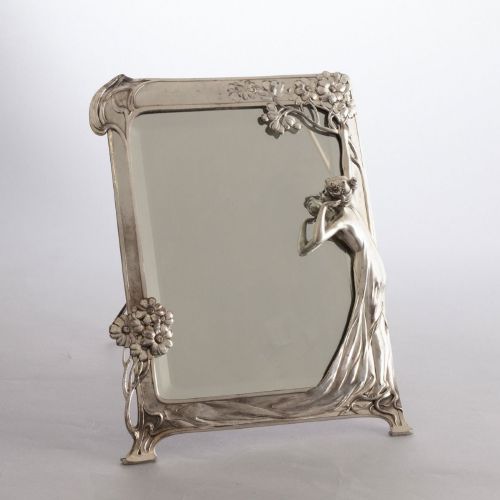
Edwardian Silver Vanity
When you search for edwardian silver vanity, you find dressing table items crafted in sterling silver alongside glass, enamel and tortoiseshell.
Edwardian Silver Vanity
An edwardian silver vanity collection comprises dressing table accessories designed for personal grooming and jewellery storage. These pieces date principally from the Edwardian period, accompanied by related Victorian and George V examples.
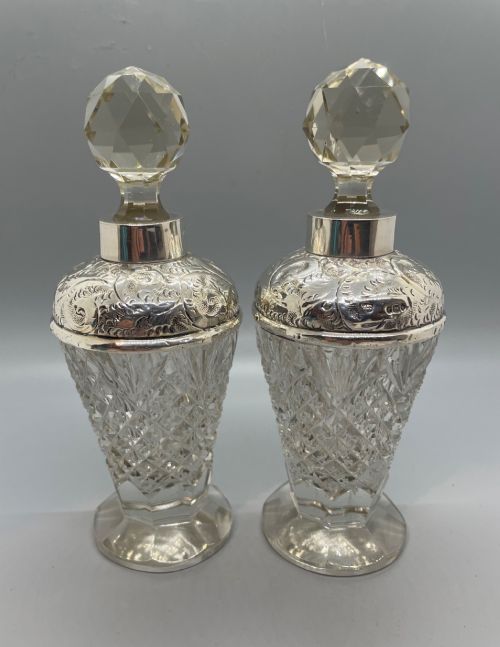
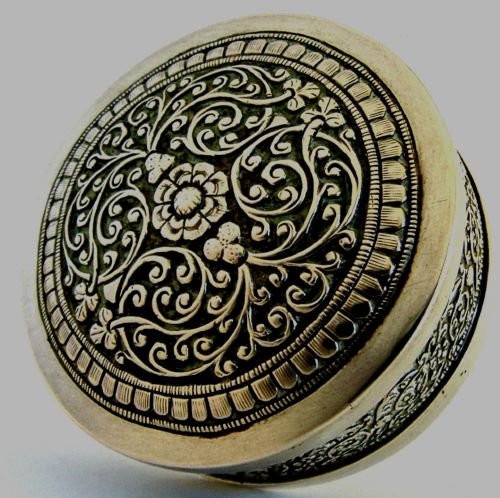
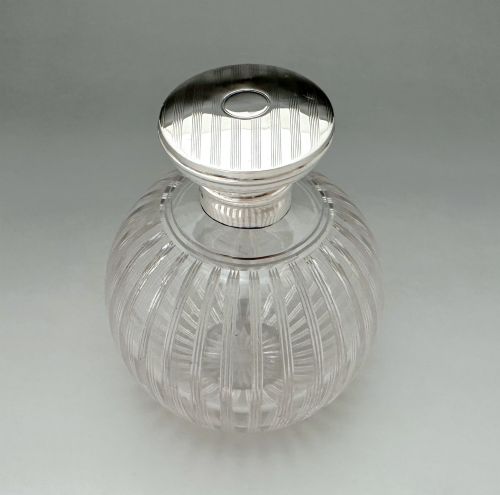
The objects take many forms, including trinket boxes, scent bottles, dressing table jars, mirrors and trays. Lidded pots and glass vanity jars with sterling silver mounts appear frequently among these listings.
Originating largely from British assay offices such as Birmingham and Chester, these items also encompass continental and international makers. The selection reflects the dressing habits of the early twentieth century.
Materials and Techniques
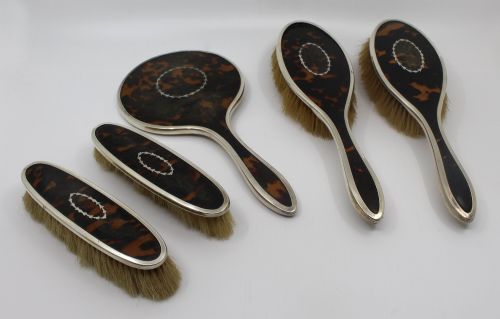
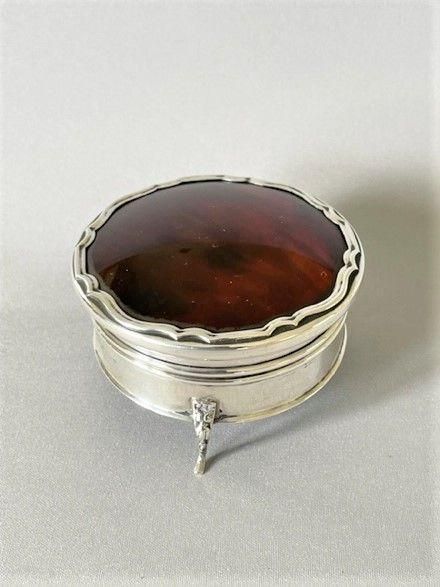
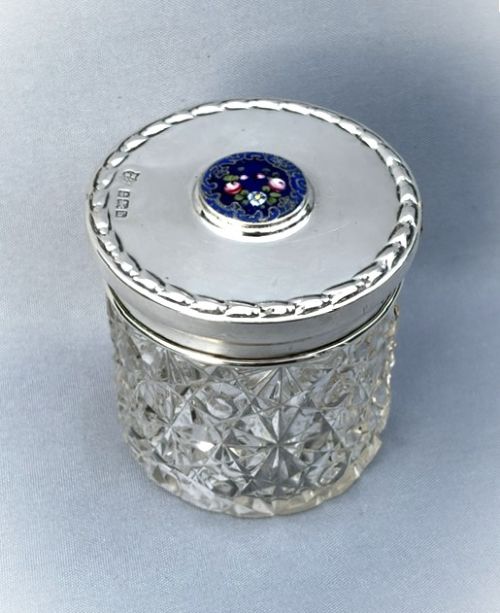
Makers utilised sterling silver for mounts, lids and frames, often combining it with cut glass, crystal or coloured glass bodies such as cranberry and satin glass. Tortoiseshell, mother of pearl and enamel provide decorative contrast on box lids and jar tops.
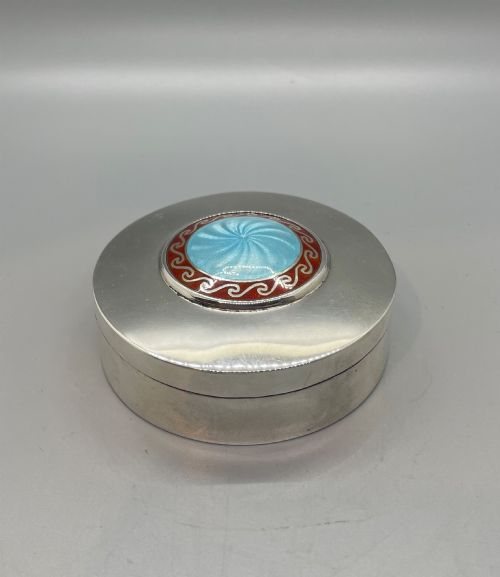
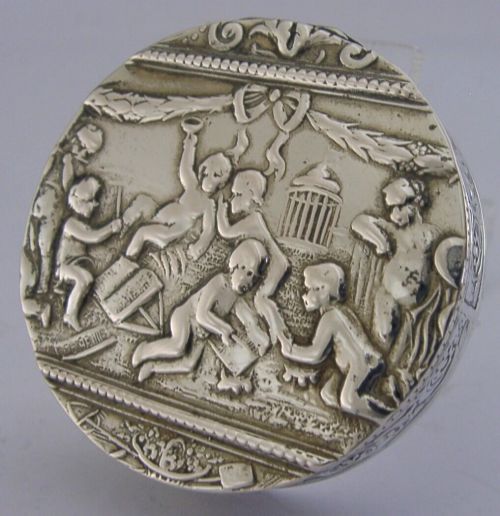
Surface decoration relies on repoussé work, pierced borders, guilloche enamel and piqué inlay. Silversmiths hammered, pressed and chased the metal to create floral motifs, figural scenes and Art Nouveau curves.
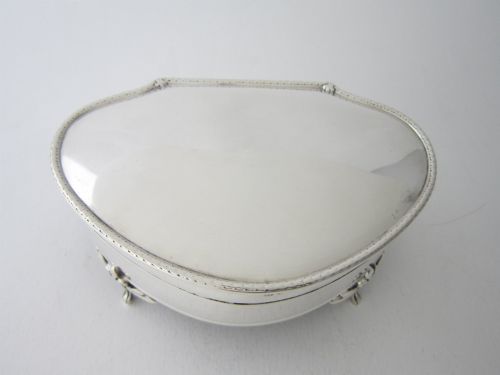
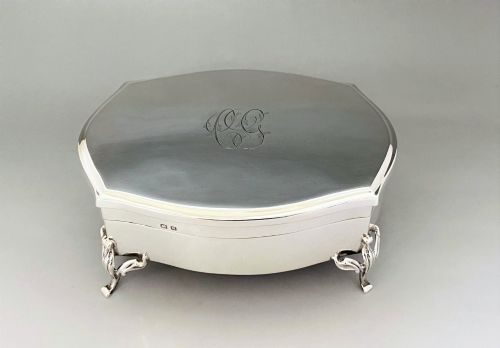
Object forms range from small pill boxes and scent bottles to large fitted jewellery boxes, hand mirrors and strut mirrors.
Distinctions in Quality
Quality rests upon the weight and thickness of the sterling silver mounts, the crispness of repoussé detailing and the integration of secondary materials like enamel or tortoiseshell. Finer items display deep, clear hallmarks and intricate hand-chased relief rather than shallow stamping.
The condition of accompanying glass, whether cut crystal or coloured glass, and the intact survival of delicate elements such as guilloche enamel or pique work determine the desirability of an individual piece.
Ollivant and Botsford·Henry Clifford Davis·Goldsmiths and Silversmiths Company·A. Bromet and Co·Harold Bushell and Co·Robert Pringle and Sons·Henry Matthews·R. Comyns
The Edwardian Silver Vanity Glossary
- Repoussé
- A metalworking technique where the silversmith hammers a design from the reverse side to form raised relief on the front. This decorative method frequently appears on Edwardian trinket boxes and brush backs.
- Guilloche
- An intricate mechanical engraving technique producing precise, repetitive patterns beneath translucent enamel. It is commonly found on the lids of dressing table jars from the period.
- Piqué
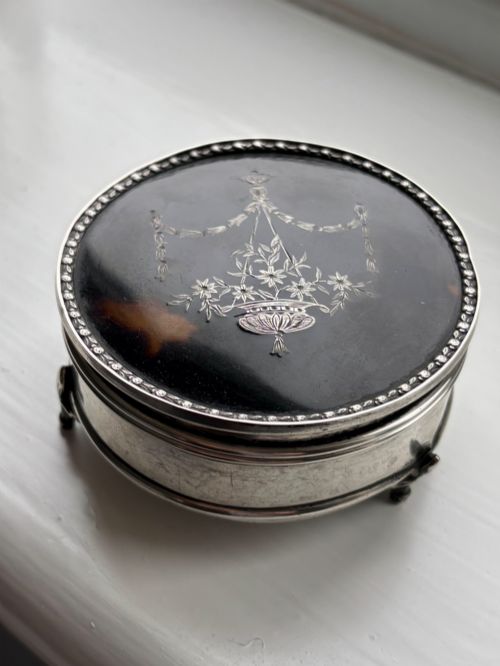
- A method of embedding tiny pins of gold or silver into tortoiseshell or ivory to form geometric or floral motifs. Asprey and other premier makers utilised this delicate inlay on vanity boxes.
- Assay Mark
- A stamp applied by an official office guaranteeing the purity of the precious metal. British pieces typically show a lion passant, a date letter and a town mark indicating where the silver was tested.
Edwardian Silver Vanity: Frequently Asked Questions
What items belong in an edwardian silver vanity set?
These sets and individual pieces include scent bottles, dressing table jars, trinket boxes, mirrors and hair tidies. They were designed to hold perfumes, powders, pins and jewellery on a dressing table.
Materials commonly paired with the silver include cut glass, tortoiseshell, enamel and coloured glass bodies.
How do I identify an Edwardian piece?
British pieces feature hallmarks that indicate the assay office, standard of silver and a specific date letter. The Edwardian period spans from 1901 to 1910, falling between Victorian and George V eras.
Stylistic cues such as Art Nouveau flowing lines or Rococo revival floral repoussé help date these vanity items.
Were these items used daily?
These objects served a functional role in daily grooming routines, holding perfumes, cosmetics and small personal items. Wealthy households displayed them prominently on dressing tables.
Scent bottles and travelling cases were also constructed for use away from home.
How should I care for silver vanity items?
Sterling silver benefits from gentle cleaning with a specialised microfibre cloth to remove tarnish without abrading the metal. Care must be taken around enamel, tortoiseshell and glass mounts.
Avoiding harsh chemical dips preserves the integrity of delicate decorative elements like piqué work and coloured glass.