




Edwardian Silver Table Vase
These edwardian silver table vases bring height and sparkle to a room, offering the collector refined metalwork and glass.
Edwardian Silver Table Vase
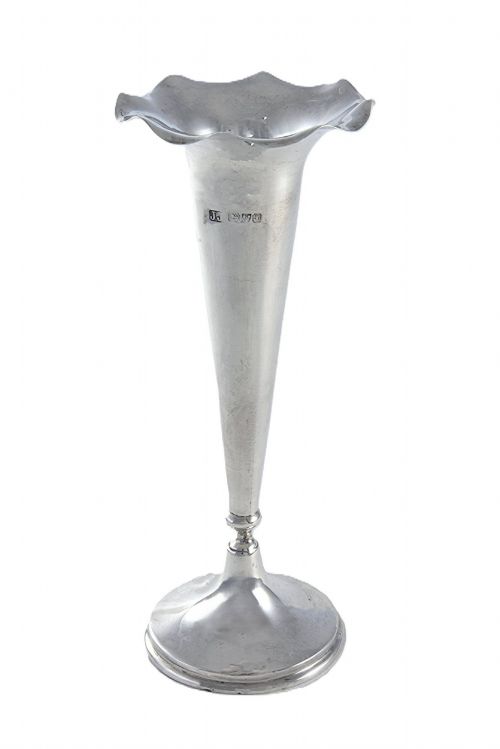
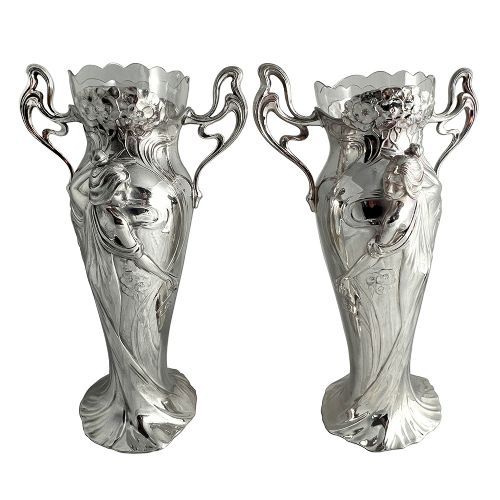
An edwardian silver table vase serves as a decorative centrepiece for the dining table or sideboard, designed to hold fresh blooms or stand alone as an ornamental piece. The forms on this page span the Edwardian period, Victorian era, and 1910, incorporating styles like Art Nouveau alongside traditional designs.
Buyers will encounter varied shapes, including single stem vessels, pairs of bud vases, and larger epergnes fitted with glass inserts. These objects combine precious metal or plated surfaces with glass components to create reflective surfaces for interior display.
The origin and period of these pieces often trace back to early twentieth century workshops, featuring hallmarks or electroplated finishes. Most examples bridge domestic utility and decorative arts, reflecting the tastes of households from the late nineteenth century into the 1920s.
How they were made
Makers utilised sterling silver, silver plate, and silvered pewter as primary metals, often combining them with cut glass liners or pearlescent glass bodies. These materials required skilled smithing and plating techniques to achieve durable yet graceful contours.
Manufacturing methods involved shaping sheet metal, casting pewter figures, and blowing or cutting glass inserts to fit specific mounts. Silversmiths applied hallmarks to sterling pieces to verify metal purity, while electroplated nickel silver provided an accessible alternative for larger forms.
Some Edwardian vases come equipped with delicate green glass liners designed to make the water look perpetually verdant.
What varies in quality
The distinction between standard domestic wares and finer items lies in the weight of the metal and the precision of the decorative motifs. Art Nouveau examples with figural pewter maiden mounts or complex fluted epergne frames show greater artistic ambition than plain tubular vessels.
The inclusion of original glass liners, particularly green glass or pearlescent variants, influences the integrity of a piece. Hallmarked sterling silver items hold a different intrinsic standing compared to electroplated nickel silver or silvered pewter, though craftsmanship remains high across both categories.
Goldsmiths & Silversmiths·WMF·Daniel & Arter
The Edwardian Silver Table Vase Glossary
- Epergne
- A large table centrepiece featuring a central vase surrounded by smaller hanging baskets or detachable trumpets. This form dominated formal dining tables during the Edwardian and Victorian eras.
- Hallmark
- An official stamp applied to precious metals indicating the standard of purity, the assay office, and the date letter. Sterling silver pieces carry these marks to verify their metal content.
- EPNS
- Electroplated nickel silver, a common base metal method where a thin layer of silver coats a durable alloy. It allowed makers to produce large table items affordably.
- Posy Vase
- A small vessel designed to hold a short bunch of flowers rather than long-stemmed blooms. These items were popular for intimate table settings.
- Art Nouveau
- A design style characterised by flowing, organic lines and floral motifs, frequently seen in pieces from the late nineteenth and early twentieth centuries.
Edwardian Silver Table Vase: Frequently Asked Questions
How do I clean silvered pewter?
Silvered pewter requires gentle cleaning with a soft cloth and mild soapy water to preserve the thin metallic surface. Avoid aggressive silver dips which can strip the delicate plating from the base metal.
Careful handling ensures the antique finish remains intact without wearing down the underlying pewter composition.
What is the difference between sterling and silver plate?
Sterling silver consists of solid precious metal meeting a specific legal purity standard, usually verified by official hallmarks. Silver plate involves a thin layer of silver bonded to a base metal such as nickel silver or pewter.
Both materials were utilised for table vases, with sterling carrying intrinsic metal value while plated items offered decorative durability at a lower cost.
Are glass liners original?
Original glass liners match the exact dimensions and colourways typical of the period, such as green glass or pearlescent finishes. They fit securely into the metal mounts designed to receive them.
Retaining the correct glass insert preserves the functional completeness and visual balance of the piece.