




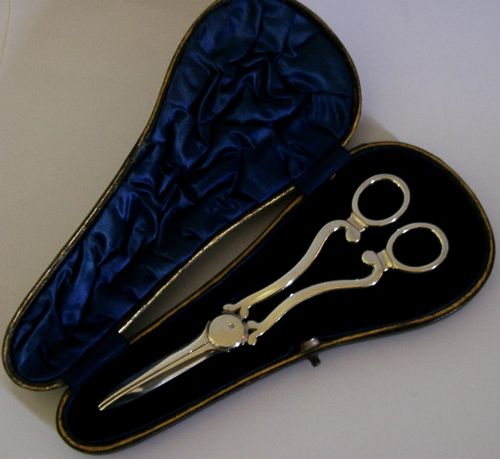
Edwardian Silver Table Box
When you search for an edwardian silver table box, you discover receptacles crafted for dressing tables, desks, and smoking rooms during the early twentieth century.
Edwardian Silver Table Box
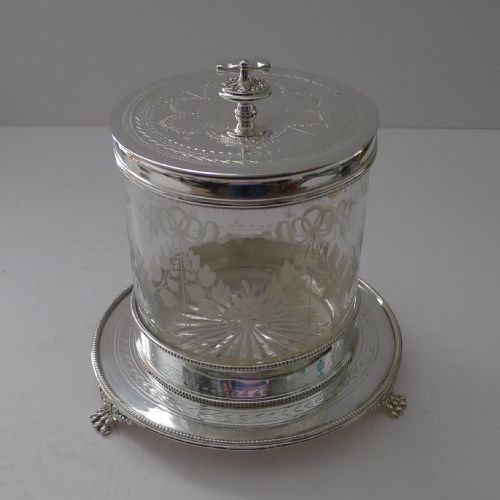
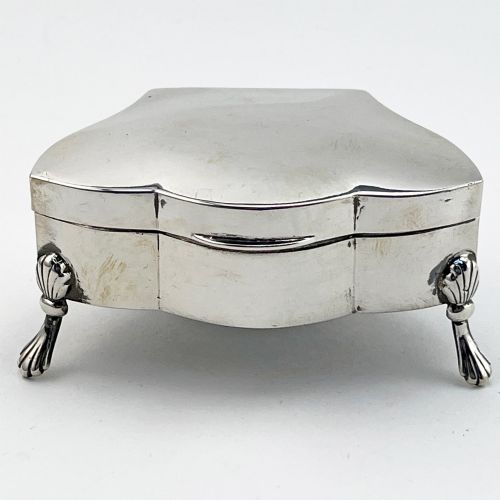
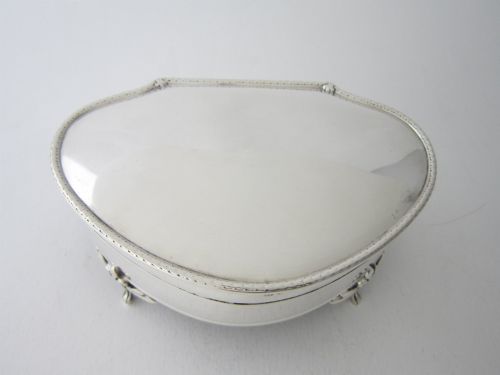
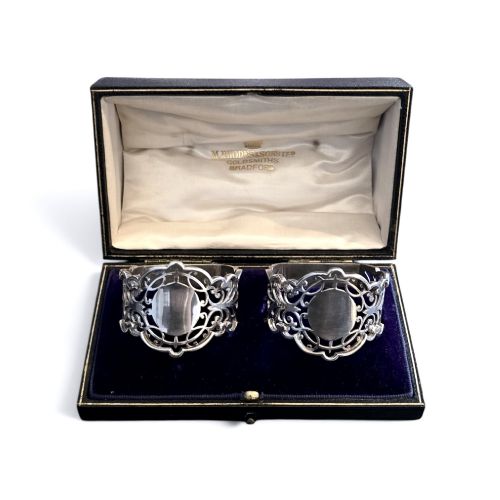
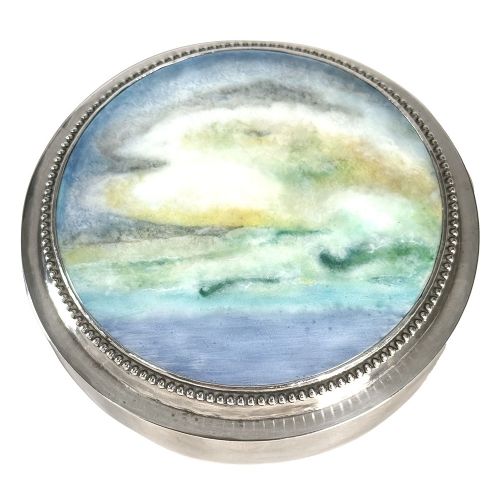
An edwardian silver table box encompasses small lidded containers designed to hold trinkets, jewellery, cigarettes, stamps, or matches upon domestic surfaces. The items appearing under this heading range from compact ring boxes and heart-shaped receptacles to larger tabletop chests and lidded glass jars.
Most examples originate from the early 1900s, aligning with the Edwardian period, though related pieces span from the late Victorian era through the Art Deco years. Makers produced them for functional display in bedrooms, drawing rooms, and studies, often lined with velvet or silk to protect delicate contents.
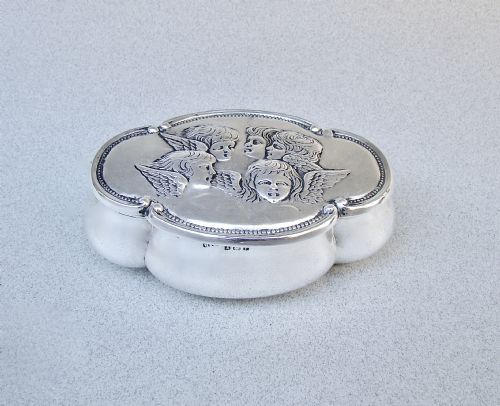
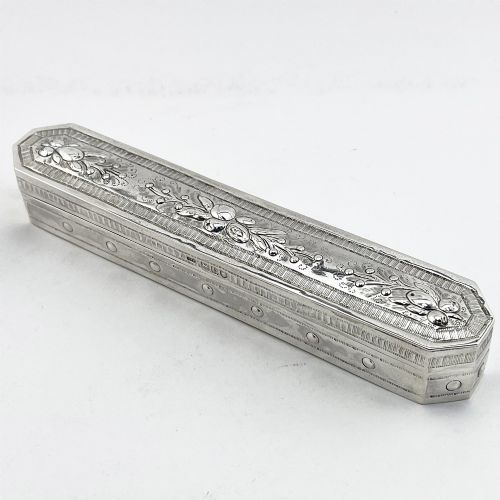
While many take simple geometric or rectangular shapes, others feature embossed floral motifs, figural cherub scenes, or figural castle tops. Buyers frequently encounter German Hanau imports alongside domestic British pieces hallmarked in Birmingham, Chester, or London.
How they were made
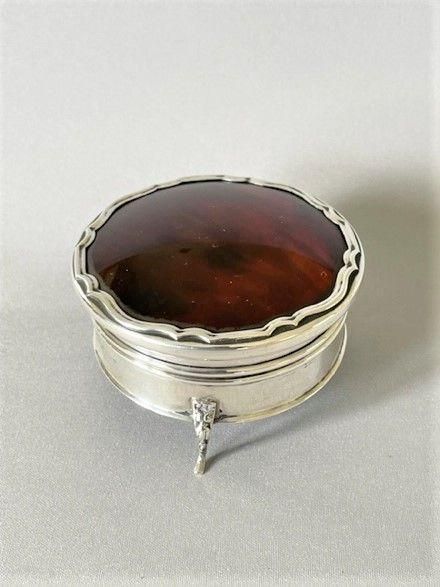
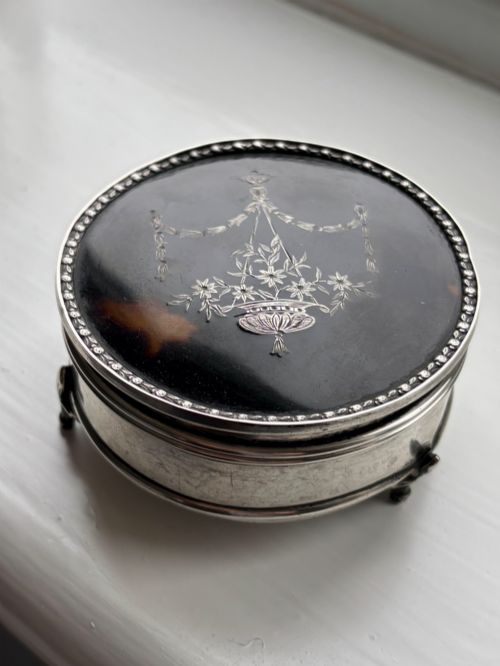
Silversmiths constructed these boxes using sterling silver or solid silver, occasionally combining the metal with glass, satin glass, tortoiseshell, or leatherette. Bodies were formed through hammering, casting, or stamping, allowing workshops to produce smooth surfaces or deeply embossed decoration.
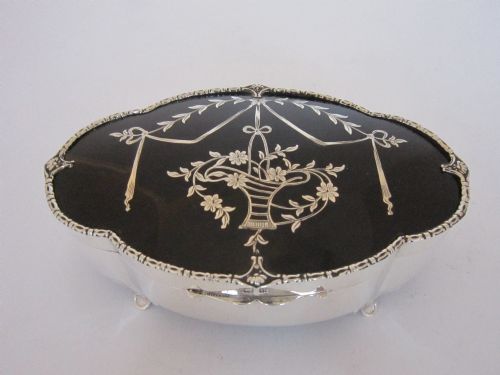
Interiors typically relied on wooden carcases encased in silver, or integrated textile linings made from fitted silk and velvet to cradle jewellery and keepsakes. Lids often incorporated hinges, secure clasps, or inset panels of faux tortoiseshell, enamel, and pique work.
Edwardian Silver Table Box Retail Price Guide 2026
Typical asking prices for edwardian silver table box among the pieces listed under this phrase on Sellingantiques today, from the lower quarter to the upper quarter. They describe what is for sale here now, not the wider market.
Some Edwardian smokers enjoyed specialised table boxes equipped with built-in drawers, trump markers, or tiny matched matchbox holders for the drawing room.
What varies in quality
Quality rests upon the gauge of the silver and the crispness of any embossed or chased ornamentation. Thicker metal walls provide structural rigidity that prevents denting, whilst superior casting preserves sharp details in figural scenes or floral scrolls.
The standard of internal craftsmanship separates standard production items from distinguished workshop outputs. Original silk or velvet linings, intact hallmarks, and well-fitted hinges maintained by makers such as William Comyns or Sampson Mordan elevate a piece.
Goldsmith & Silversmith's·Ollivant & Botsford·Henry Clifford Davis·A. Bromet & Co·Zimmermann·William Hutton·Sampson Mordan·William Neale·William Comyns
The Edwardian Silver Table Box Glossary
- Hallmark
- Official marks stamped into precious metals indicating the standard of silver, the assay office, and the date letter. These stamps allow collectors to verify the exact year of manufacture.
- Sterling silver
- An alloy consisting of ninety-two point five percent silver and seven point five percent other metals, usually copper. This standard dominated British silver production during the Edwardian era.
- Guilloche enamel
- A decorative technique where geometric patterns are engine-turned into metal before being covered with translucent enamel. It appears frequently on dressing table boxes from the nineteen-twenties.
- Hanau silver
- Silverware produced by various manufacturing silversmiths in Hanau, Germany, often copying historical styles and importing items into Britain. These pieces frequently feature detailed repousse cherub scenes.
- Pique work
- The art of inlaying tiny pins of gold or silver into tortoiseshell or ivory to create decorative motifs. This technique embellishes luxury trinket boxes of the period.
Edwardian Silver Table Box: Frequently Asked Questions
What fits inside an edwardian silver table box?
These receptacles served various domestic purposes depending on their internal depth and fitted partitions. Smaller circular or heart-shaped versions accommodated rings and small brooches, whilst rectangular varieties held visiting cards, cigarettes, or loose trinkets.
Larger tabletop examples often featured segmented compartments for keeping jewellery or personal accessories organised. Silk and velvet linings protected delicate items from scratching against the metal base.
How do I clean tarnished silver?
Tarnish develops naturally when silver reacts with sulphur compounds in the air, creating a dark surface layer. Gentle polishing with a specialised microfibre cloth and mild silver polish removes this oxidation without removing the underlying metal.
Avoid abrasive cleaners or harsh scrubbing, particularly on embossed areas or pieces featuring enamel, glass, or tortoiseshell panels. Proper storage in dry, acid-free environments helps minimise future tarnish formation.
How can I tell the date of a box?
British pieces carry clear hallmarks stamped directly onto the silver surface, usually near the rim or inside the lid. These assay office marks include a specific letter code that corresponds to the exact year of manufacture.
Stylistic indicators also help establish periods, such as the naturalistic floral embossing typical of Edwardian items or the geometric enamel designs of the Art Deco era. Maker's marks further narrow down the production timeframe.
Are these boxes waterproof?
Silver table boxes were built as dry storage containers for personal items rather than water-tight vessels. The fitted hinges and lids provide a secure closure against dust, but gaps can exist around the joins.
Exposing lined interiors or wooden carcases to moisture can damage the internal velvet, silk, or adhesive layers. Owners should keep these boxes away from damp environments and liquids.