

Edwardian Silver Silverware
When you search for edwardian silver silverware, you find dining table accessories and domestic vessels shaped by the early twentieth century.
Edwardian Silver Silverware
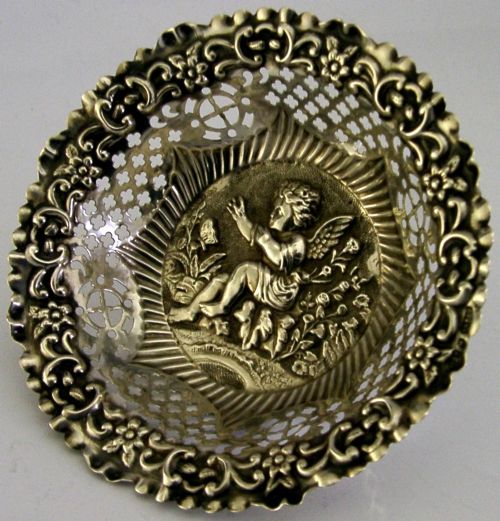
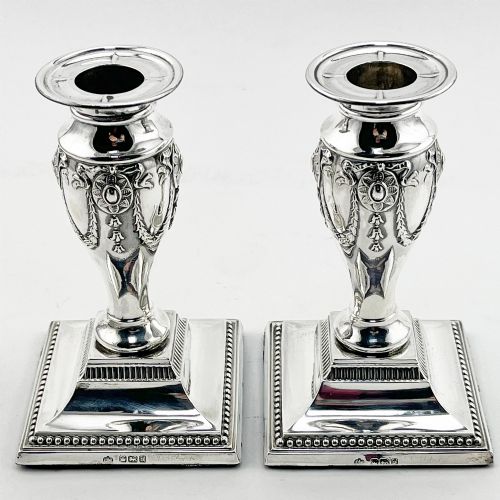
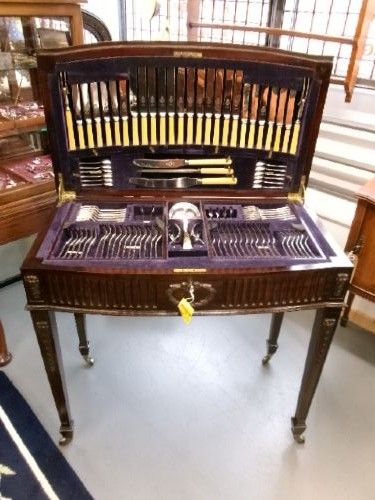
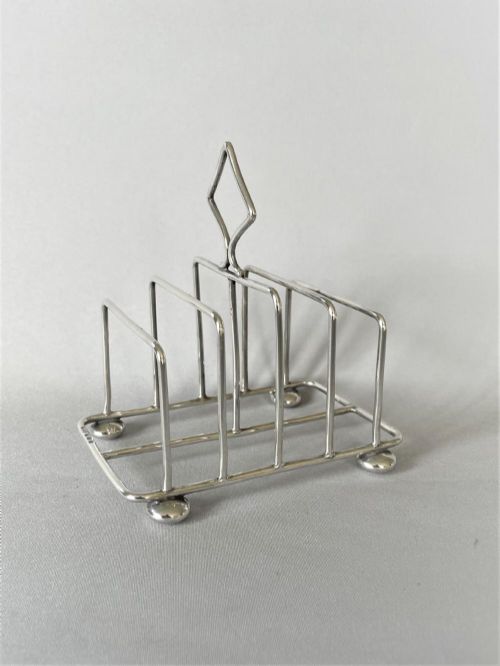
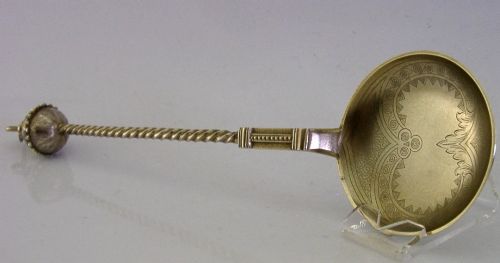
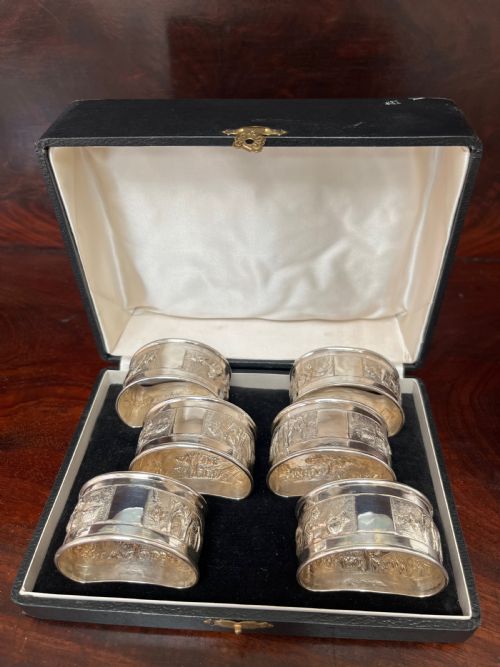
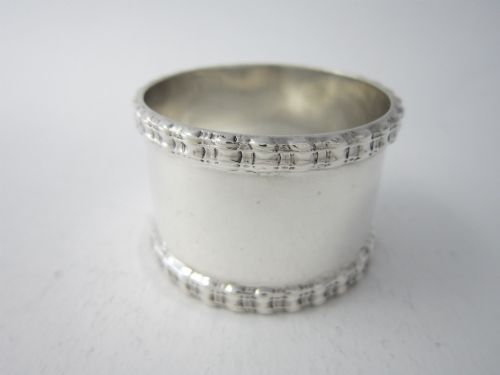
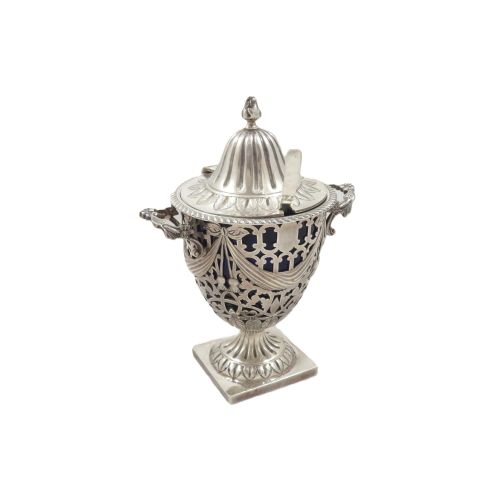
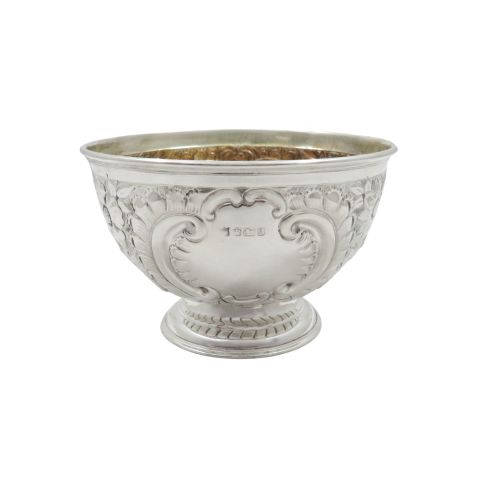
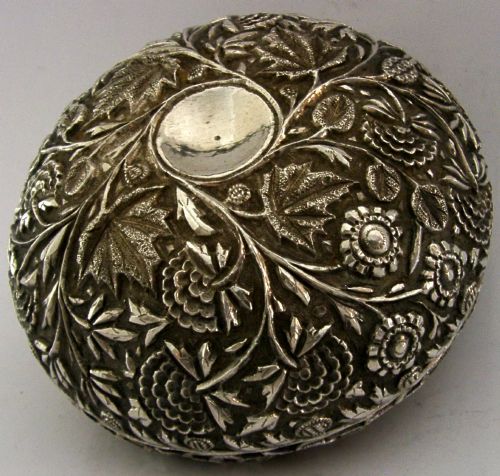
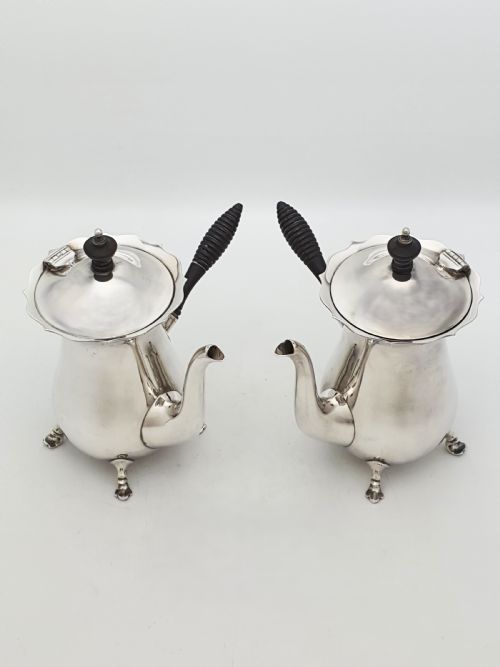
Edwardian silver silverware encompasses a diverse group of table items, serving pieces, and desk accessories originating predominantly from the opening decades of the twentieth century. The selection spans utilitarian forms like toast racks, napkin rings, and cutlery canteens alongside decorative vessels such as sugar baskets, porringers, and cafe au lait pots.
Most examples meet on this page hail from the Edwardian period itself, accompanied by related pieces from the late Victorian era and subsequent revivals stretching into the nineteen-thirties. Makers utilised sterling silver, silver plate, and mixed media like oak cabinets, horn, and enamel to produce objects ranging from simple napkin rings to large canteens on stands.
How They Were Made
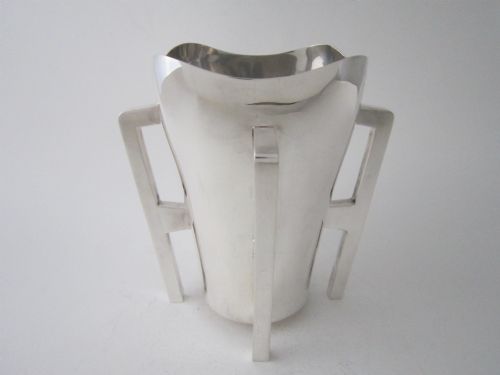
Silversmiths of this era employed traditional techniques such as hand hammering, casting, and piercing to shape sterling silver and silver plate. Pieces like the Arts and Crafts tyg demonstrate visible surface manipulation, while cast elements appear on sugar casters and tea caddy handles.
Edwardian Silver Silverware Retail Price Guide 2026
Typical asking prices for edwardian silver silverware among the pieces listed under this phrase on Sellingantiques today, from the lower quarter to the upper quarter. They describe what is for sale here now, not the wider market.
A solitary stag guards a card case, keeping card games strictly civil.
What Varies in Quality
The standard of these objects rests upon the weight of the metal, the crispness of the chasing or hammer marks, and the reputation of the maker or retailer. Substantial gauge silver and balanced proportions distinguish finer table vessels from lighter, mass-produced counterparts.
Design ambition also separates the ordinary from the exceptional, as seen in pieces exhibiting distinct stylistic movements like Arts and Crafts, Art Nouveau, or Celtic Revival. Fitted oak canteens with complete, matched flatware sets represent higher tiers of craftsmanship compared to loose, assembled cutlery.
Asprey·Martin Hall and Co·Elkington and Co·Lambert and Co·Liberty and Co·The Barker Brothers·John Grinsell and Sons·Hamilton and Inches·Harrison Brothers and Howson·Walker and Hall·Mappin and Webb
The Edwardian Silver Silverware Glossary
- Porringer
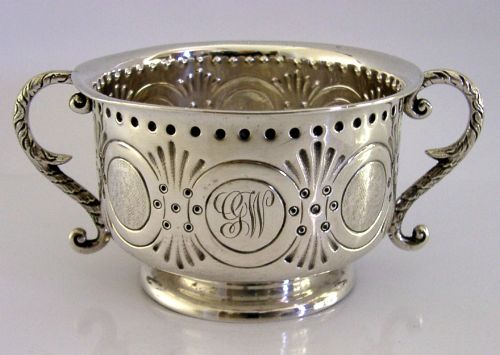
- A small, two-handled bowl used historically for porridge or broth. Edwardian reproductions often emulate seventeenth-century forms with pierced flat handles.
- Tyg
- A large drinking vessel featuring three or more handles designed for communal passing. Arts and Crafts examples often display prominent hand-hammered surfaces.
- Quaich
- A traditional Scottish two-handled drinking vessel. These objects frequently combine silver mounts with turned horn bodies.
- Caddy spoon
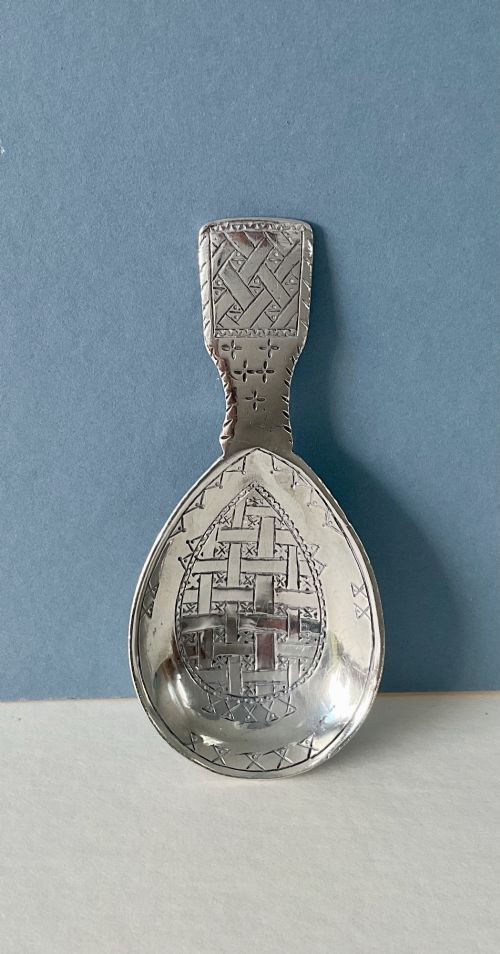
- A short-handled spoon specifically designed for measuring loose tea leaves from a caddy. Makers produced these in varied revivalist and modernist styles.
- Epergne
- An ornamental centrepiece featuring a central dish with branching arms for holding fruit or sweets. They dominate dining tables with tiered silver frameworks.
Edwardian Silver Silverware: Frequently Asked Questions
What is a toast rack?
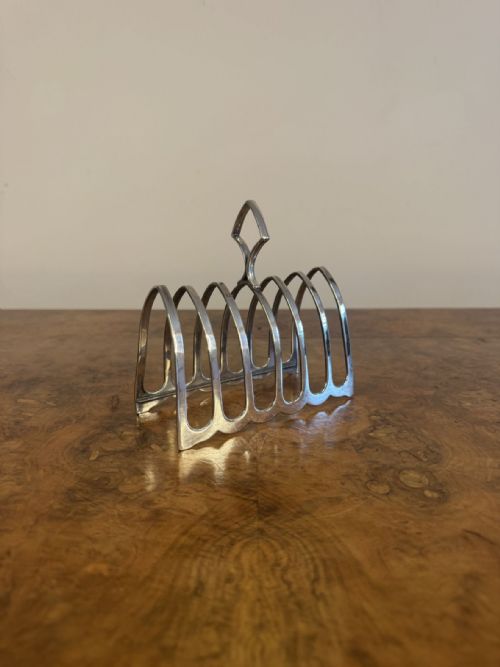
A toast rack is a small tabletop framework featuring vertical dividers designed to hold slices of toast upright and prevent them from becoming soggy.
Silversmiths produced these in various configurations throughout the period, often incorporating a central carrying loop for ease of service.
How do I use a sugar caster?
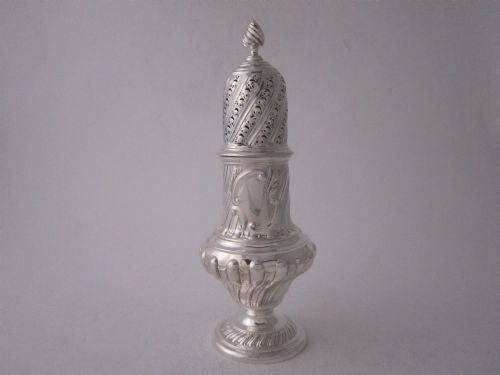
A sugar caster is a perforated shaker used for sprinkling loose sugar over desserts, pastries, or fruit. They sit on the dining table as part of a formal service.
Victorian and Edwardian examples often feature weighted pedestal bases and screw-on pierced lids for refilling.
How do I care for silver flatware?
Silver flatware requires regular, gentle cleaning with non-abrasive polish to remove tarnish and maintain the lustre of the metal. Hand washing in warm, soapy water prevents damage to older handles and joints.
Storing pieces in lined wooden canteens or anti-tarnish cloth rolls protects them from airborne sulphur and scratches when not in use.