



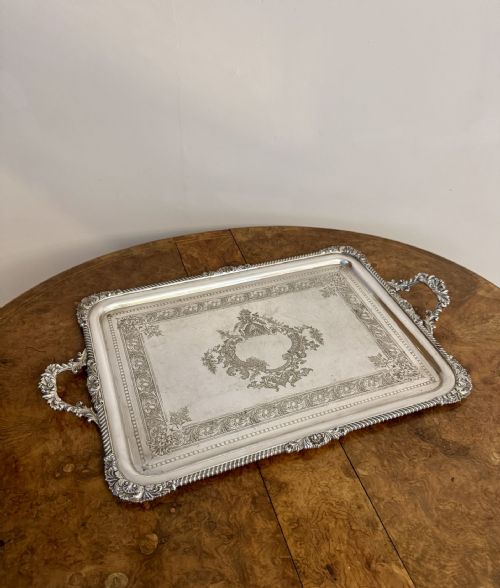
Edwardian Silver Plate Tray
An edwardian silver plate tray brings formal hospitality into daily use with substantial metalwork and refined period borders.
Edwardian Silver Plate Tray
When searching for an edwardian silver plate tray, a buyer encounters serving items designed for tea, cocktails, and domestic presentation. These pieces originate predominantly from the Edwardian era, alongside related 19th-century and early 20th-century examples.
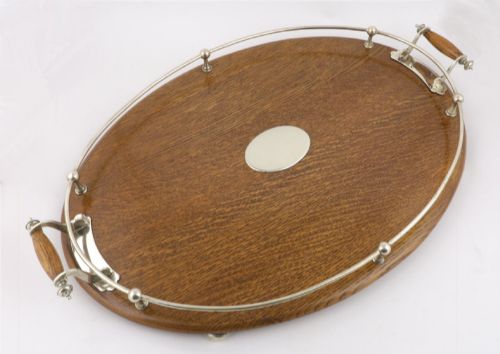
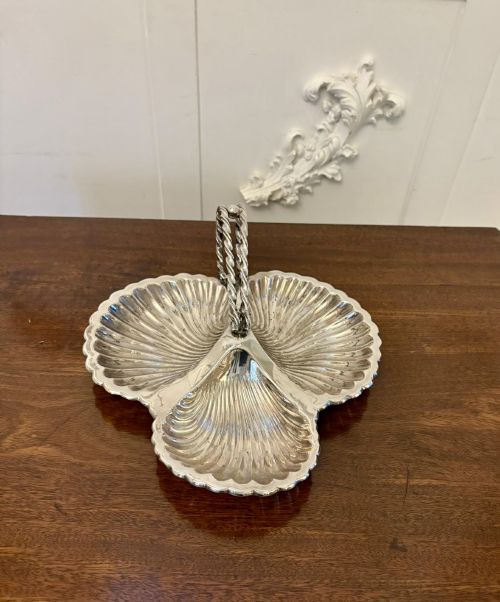
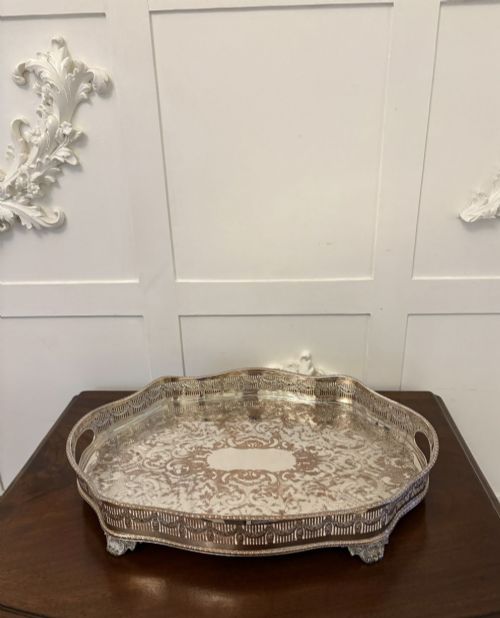
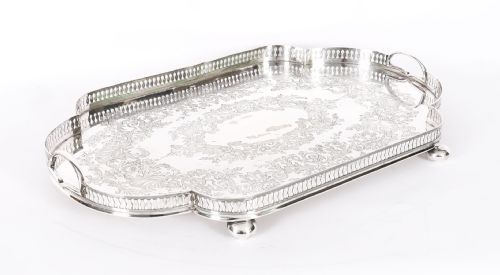
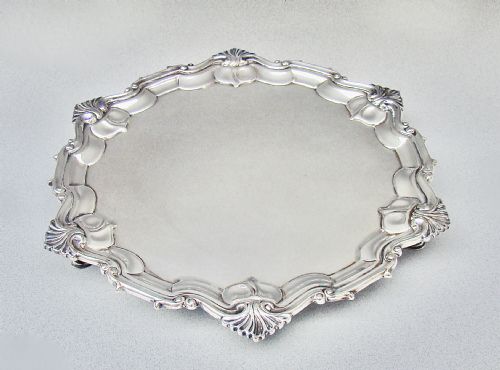
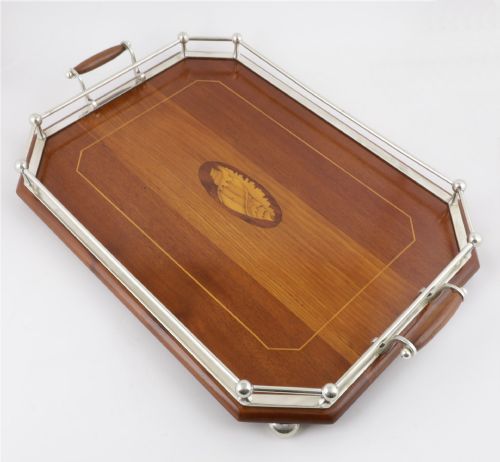
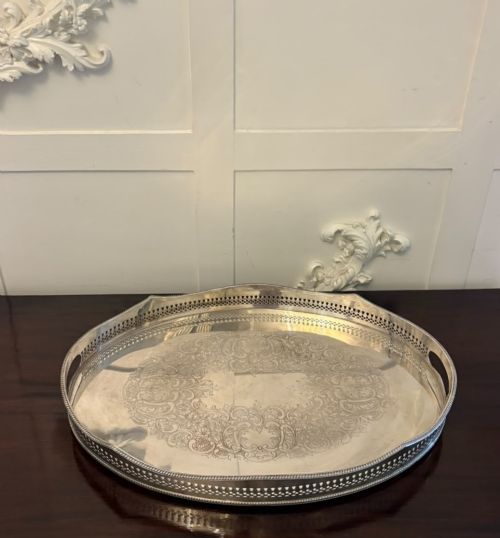
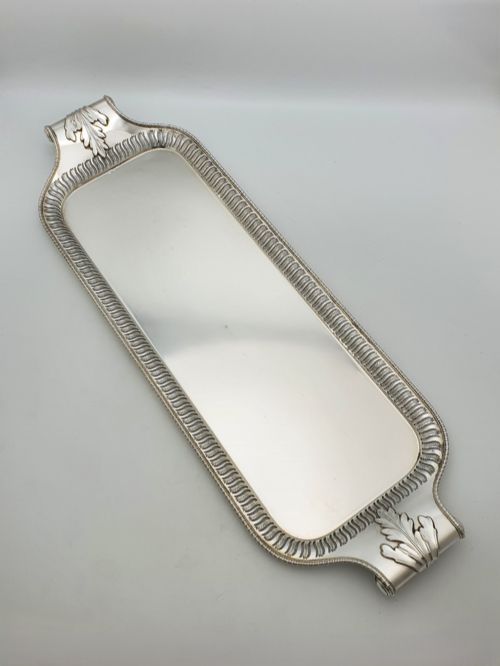
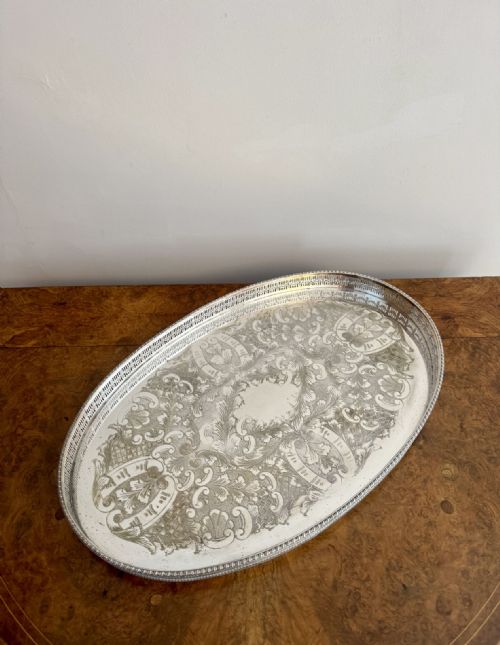
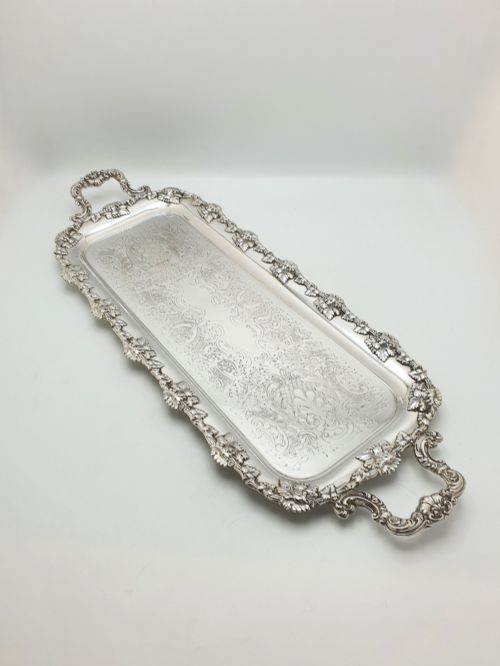
The version met most frequently on this page is the silver plated tea or drinks tray, often featuring a raised gallery or engraved surface. Forms range from oval and circular shapes to octagonal and rectangular designs.
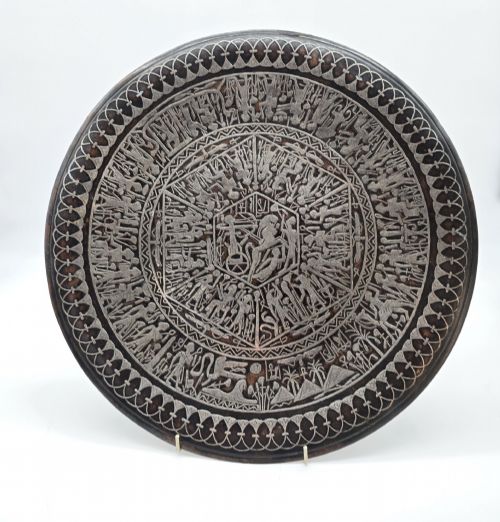
Makers integrated various materials into these serving pieces, combining metal with mahogany, oak, and cut glass. Such trays functioned historically in dining rooms and drawing rooms for organised hospitality.
How they were made
Production relied on electroplated nickel silver and standard silver plate over base metals, providing a durable metallic finish. Manufacturers applied techniques such as piercing, engraving, and border casting to ornament the metal surface.
Timber bases in mahogany and oak appeared alongside glass inserts in specific serving trays and galleries. Artisans secured handles and gallery rails through mechanical joining and soldering methods typical of the period.
Edwardian hosts trusted raised galleries to keep ambitious cocktail shakers from sliding onto the drawing room rug.
What varies in quality
Depth and clarity of hand engraving distinguish finer trays from plainer commercial output. The weight of the base metal and the thickness of the silver plating determine the resilience of the piece under regular use.
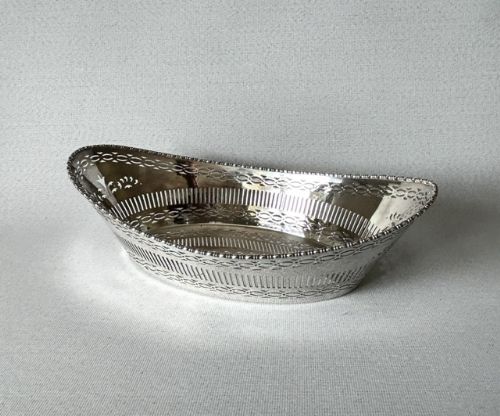
Complexity in border design, such as pierced galleries or applied grapevine motifs, reflects the original manufacturing cost and artistic ambition. Integration of subsidiary materials like inlaid wood bases indicates superior workshop standards.
James Deakin·William Hutton and Sons·Mappin and Webb·Walker and Hall·Atkins Brothers
The Edwardian Silver Plate Tray Glossary
- Silver Plate
- A thin layer of silver bonded to a base metal such as nickel silver or copper. This technique allowed manufacturers to produce domestic metalware with the appearance of solid silver at a lower cost.
- EPNS
- Electroplated Nickel Silver. This abbreviation denotes a durable alloy core coated with silver through an electrolytic process.
- Gallery Tray
- A serving tray featuring an upright pierced or solid metal rail around its perimeter. The gallery prevented decanters and glasses from sliding off during service.
- Salver
- A flat serving tray typically supported on small feet. These pieces were traditionally used for presenting letters, calling cards, or drinks.
- Grapevine Border
- A cast decorative edge ornament featuring clusters of grapes and vine leaves. This classical motif was popular on Edwardian and Victorian silver plate.
Edwardian Silver Plate Tray: Frequently Asked Questions
How do I clean an edwardian silver plate tray?
Use a specialised silver polish and a soft cloth to remove tarnish gently. Avoid abrasive pads that can wear through the thin plating.
Wash the tray in warm soapy water and dry thoroughly after polishing to preserve the finish.
Were these trays used only for tea?
While tea service was common, these pieces served multiple functions in Edwardian homes. They accommodated decanters, cocktail glasses, and general hospitality items.
Larger variants also functioned as meat trays or warming dishes in the dining room.
What is the difference between a tray and a salver?
A salver is traditionally a flat serving vessel supported on small feet, designed for carrying glasses or presenting calling cards. A standard tray usually has raised sides or handles without raised feet.
Both forms appear frequently within Edwardian silver plate categories.
Can I use these trays for daily serving?
These pieces handle regular domestic use well, provided they are treated with care. The underlying electroplated nickel silver is robust.
Storing them properly and avoiding acidic foods helps maintain the surface plating over time.