



Edwardian Silver Owl
These edwardian silver owl pieces combine functional novelty with avian form, capturing the period's taste for humorous desk and table accessories.
Edwardian Silver Owl
An edwardian silver owl most frequently appears in practical domestic forms such as menu holders, condiment sets, and small boxes rather than pure sculpture. These items span the Edwardian period alongside late Victorian examples, reflecting a distinct turn towards whimsical animal representations in silver and plate.
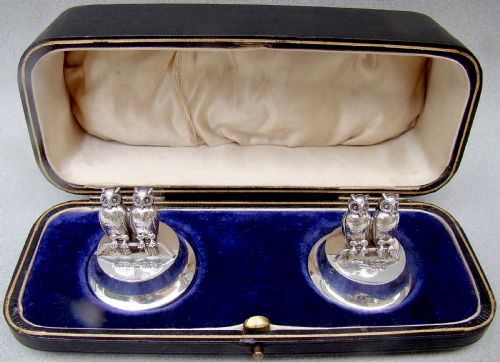
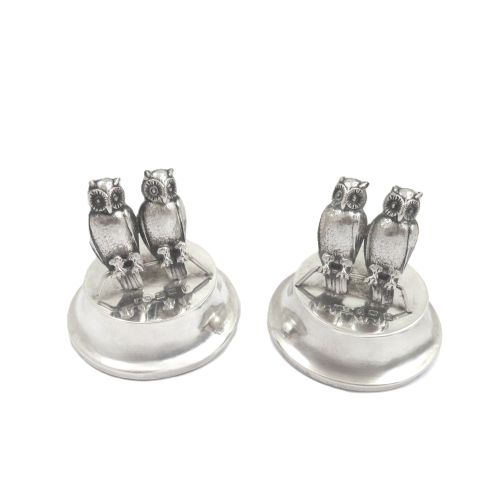
Menu holders and pepperettes dominate the available selection, often found as matched pairs with hinged wings or detailed feather chasing. Alongside British sterling silver pieces, related novelty items incorporating glass eyes or ceramic bodies emerge from the same workshops.
Materials and Technique
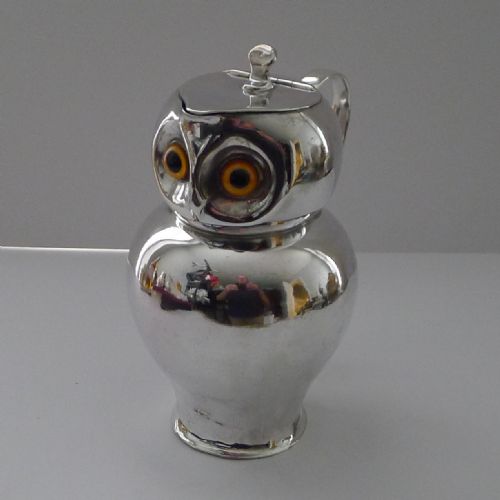
Maker's workshops utilised sterling silver, silver plate, and nickel silver as primary metals, often combining them with inset glass eyes for realism. Casting and hand-chasing allowed silversmiths to texture individual feathers and define the facial discs of each bird.
Internal structures rely on brass pins, weighted lead bases, or fitted glass inserts depending on whether the piece functions as a scent bottle, inkwell, or desk weight.
Edwardian Silver Owl Retail Price Guide 2026
Typical asking prices for edwardian silver owl among the pieces listed under this phrase on Sellingantiques today, from the lower quarter to the upper quarter. They describe what is for sale here now, not the wider market.
Several menu holders feature owls standing upright with stern expressions, quietly judging your choice of roast joint.
Standards of Craftsmanship
Quality rests in the crispness of the feather chasing and the anatomical proportion of the head and beak. Superior examples maintain clear hallmarks and retain their original glass eyes without replacement.
The weight of the metal and the stability of the base separate standard production items from master-silversmith commissions produced by recognised assay offices.
Levi and Salaman·Crisford and Norris·Sampson Mordan·Goldsmiths and Silversmiths·Goldsmiths of London
The Edwardian Silver Owl Glossary
- Hallmark
- Official stamp applied by an assay office indicating metal purity, origin city, and date letter. These marks verify the period and maker of silver items.
- Chasing
- Metalwork technique where a silversmith depresses the front surface with punches to create texture and design. This method defines the feather patterns on owl figures.
- Novelty silver
- Functional tableware or desk objects shaped as animals, figures, or inanimate objects. These humorous pieces gained immense popularity during the late Victorian and Edwardian eras.
- Pepperette
- Small tabletop container designed for dispensing ground pepper, usually pierced on top. Owl forms serve as hinged containers where the head lifts off for filling.
- Silver plate
- Base metal coated with a thin layer of silver through electroplating or older manufacturing methods. This offered an accessible alternative to solid sterling.
Edwardian Silver Owl: Frequently Asked Questions
How do I clean an edwardian silver owl?
Use a soft microfiber cloth and a mild silver dip formulated to remove tarnish without stripping the underlying detail. Avoid abrasive brushes that can damage delicate feather chasing.
Keep moisture away from inset glass eyes and weighted interiors to prevent internal corrosion or loosening of components.
Were these items meant for daily use?
Original owners placed these items on dining tables for formal dinners or on mahogany desks to hold stationery. Their construction balances decorative appeal with practical utility.
Modern owners generally display them in cabinets or on side tables rather than subjecting them to heavy handling.
How can I tell sterling from silver plate?
Sterling pieces bear crisp assay office stamps, including a lion passant and date letter, indicating solid precious metal content throughout. Silver plate items display maker marks like EPNS or simply show base metal wear underneath.
Testing with a magnet or examining high-wear edges reveals the underlying white metal if the silver coating has thinned.
Why do some owls have glass eyes?
Glass eyes added a lifelike intensity that flat metal engraving could not achieve, aligning with the Victorian and Edwardian taste for naturalism. Artisans set amber or dark glass beads into the cast sockets during assembly.
These additions make surviving examples particularly susceptible to loss if the surrounding metal expands or contracts.