

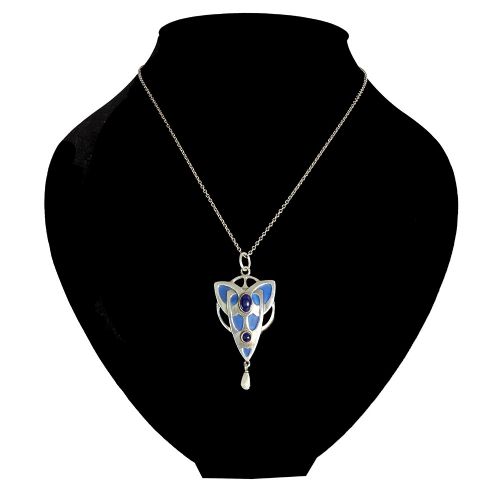
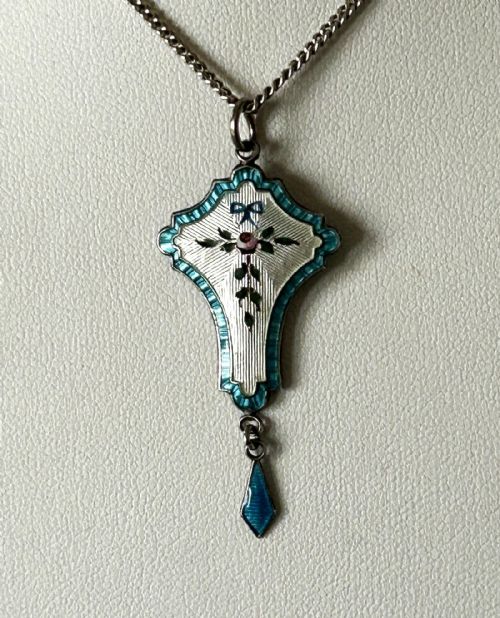


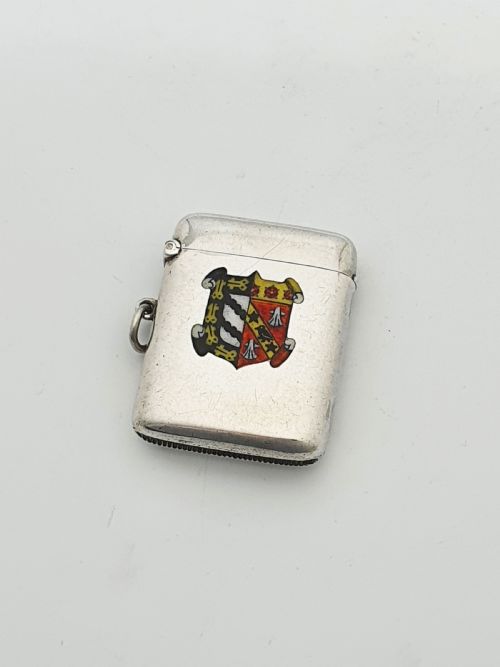


Edwardian Silver Enamel Pendant
These edwardian silver enamel pendant pieces capture the fluid lines and vibrant coloured glass of the early twentieth century, offering a wearable piece of history.
Edwardian Silver Enamel Pendant
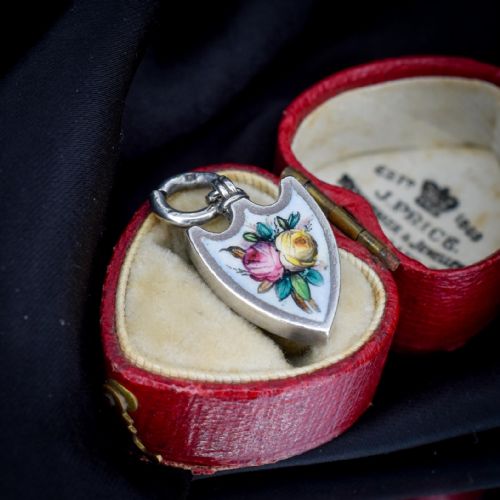
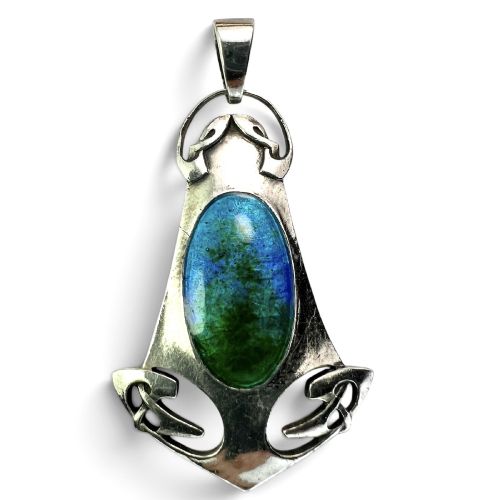
When you search for an edwardian silver enamel pendant, you encounter delicate neck ornaments shaped by the aesthetic movements of the early twentieth century. The examples on this page span the Edwardian era, alongside related pieces from the late Victorian period through to the Art Deco years.
Art Nouveau and Arts and Crafts designs dominate the selection, frequently featuring floral motifs, naturalistic curves, and geometric enamel work. These items range from simple silver drops to elaborate necklaces accented with pearls and coloured stones.
Makers and designers of the period utilised silver, silver gilt, and vitreous enamel to create striking contrasts of colour and light. Many pieces incorporate seed pearls, blister pearls, amethyst, or citrine to complement the central enamel panels.
How they were made
Silversmiths formed the mounts and chains from sterling silver or silver gilt, employing techniques such as casting, wirework, and hand-beating. Enamel work took various forms, including translucent guilloche, opaque coloured fields, and intricate plique-a-jour that allowed light to pass through the coloured glass like miniature stained glass windows.
Gems and pearls were hand-set into bezels or hung from delicate loops and festoons beneath the main pendant body. Artisans integrated seed pearls and larger blister pearls as dangling drops or accent beads to complete the composition.
Listings include silver pendants from the Edwardian era featuring plique-a-jour, guilloche, and cloisonne enamel techniques.
What varies in quality
The distinction between standard commercial pieces and the finest work lies in the execution of the enamel and the finesse of the metalwork. Superior examples display flawless vitreous enamel without cracking or bubbling, often utilising advanced techniques like plique-a-jour.
Design attribution and metal selection also elevate a piece, particularly when executed by renowned firms using high-grade silver, gold wash, and carefully matched natural pearls or semiprecious stones rather than paste substitutes.
Murrle Bennett·Archibald Knox·Liberty and Co·Henry Matthews·Meyle and Mayer·Charles Horner·Eduard Loss
The Edwardian Silver Enamel Pendant Glossary
- Plique-a-jour
- An enamelling technique where the enamel is applied within a open wire frame without a backing, creating a translucent, stained-glass effect. This method requires considerable skill to prevent the glass from fracturing during firing.
- Guilloche
- A decorative mechanical engraving technique that produces precise, intricate geometric patterns beneath a translucent enamel layer. The underlying pattern reflects light through the coloured glass.
- Silver gilt
- Sterling silver that has been coated with a thin layer of gold, giving it a warm, golden appearance. This finish was frequently used in Art Nouveau jewellery to enhance coloured enamel work.
- Seed pearl
- A very small, natural or saltwater pearl, often pierced and strung, used extensively in Edwardian and Arts and Crafts jewellery as delicate hanging drops or border accents.
- Vitreous enamel
- A material made by fusing powdered glass to a metallic substrate through firing at high temperatures. It provides a durable, glossy coloured surface that resists fading.
Edwardian Silver Enamel Pendant: Frequently Asked Questions
What is an edwardian silver enamel pendant?
It is a decorative neck ornament created during the early twentieth century, combining silver metalwork with fused glass enamel.
These items often reflect Art Nouveau or Arts and Crafts design principles, frequently incorporating botanical motifs and gemstone drops.
How do I care for silver and enamel jewellery?
Store each piece separately in a soft pouch to prevent the silver from scratching and to protect the delicate enamel surface from impact.
Avoid using harsh chemical dips or abrasive cloths, cleaning the metal gently with a soft microfibre cloth instead.
How can I tell if an enamel pendant is Edwardian?
Examine the stylistic cues, such as whiplash curves, naturalistic flower forms, and characteristic pastel or deep blue enamel shades typical of the period.
Look for hallmarks on the silver mount that indicate Birmingham or other British assay offices, alongside maker marks from the early nineteen hundreds.
Did Liberty and Co make these pendants?
Liberty and Co retailed and commissioned numerous silver and enamel pendants designed by leading artists of the Arts and Crafts movement.
Prominent designers such as Archibald Knox created distinctive pieces for the firm, which are often stamped with maker marks.