


Edwardian Silver Dressing Bottle
Edwardian silver dressing bottles are refined vanity vessels combining precious metal mounts with glass, frequently encountered here from the early twentieth century alongside Victorian and later examples.
Edwardian Silver Dressing Bottle
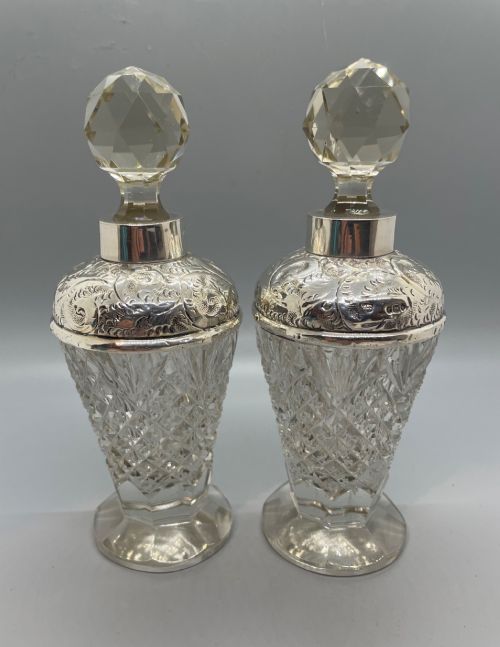
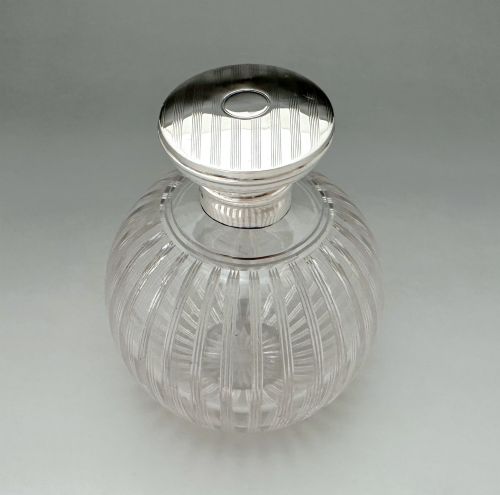
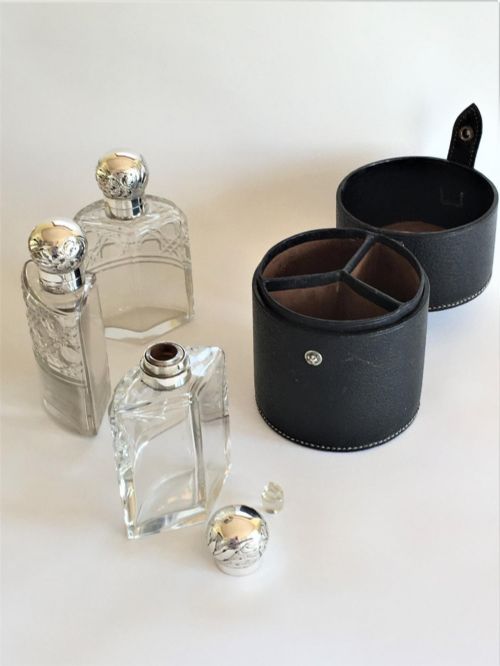
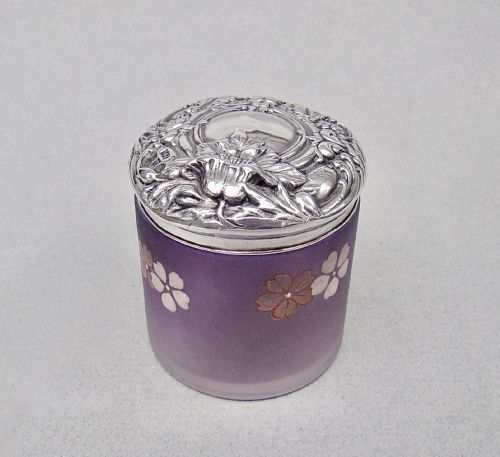
When you search for an edwardian silver dressing bottle, you are looking at small vanity containers designed for perfume, cologne or cosmetics on a dressing table. The pieces found here range from individual scent bottles to travelling trios and lidded dressing table jars, spanning the Edwardian period alongside Victorian, George V and Art Deco eras.
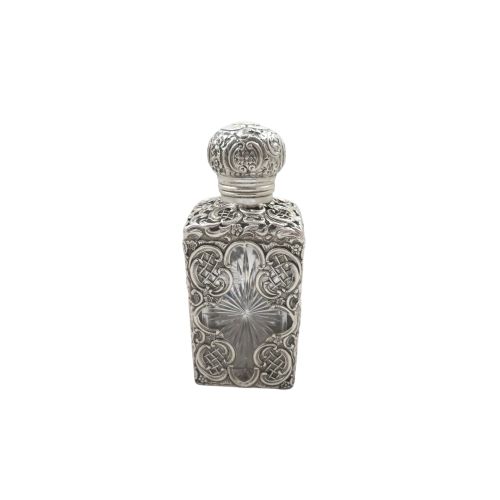
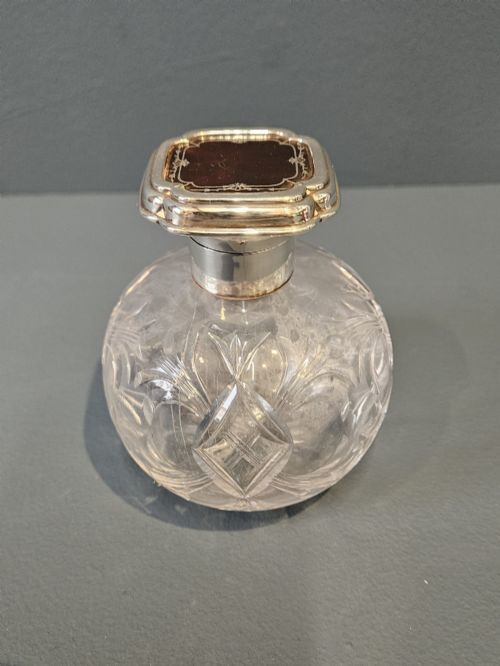
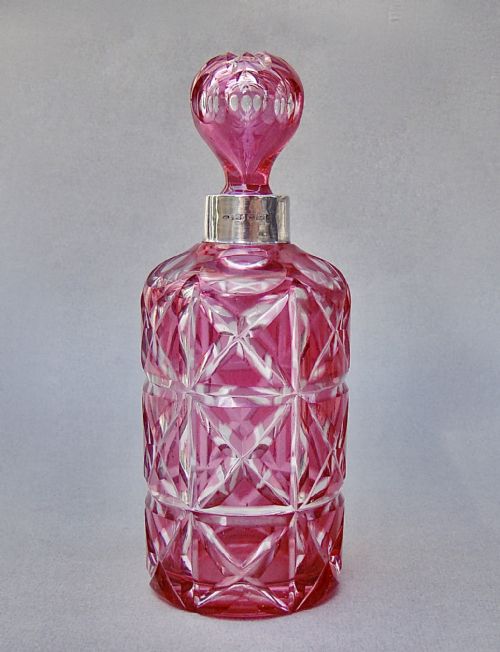
The version you are most likely to meet on this page pairs a cut glass or crystal body with a sterling silver collar and lid, often bearing hallmarks from assay offices such as Birmingham or London. These vessels also appear with decorative overlays in silver, alongside variants incorporating tortoiseshell, enamel or coloured glass.
Object types stretch from globular perfume bottles and decanters to compact vanity accessories and gentleman's cologne bottles. While many date directly to the Edwardian decades, related pieces stretch from the late nineteenth century into the nineteen-thirties.
Materials and construction methods
Makers utilised heavy cut glass, crystal and occasionally frosted or coloured Bohemian glass for the bodies, shaping them by blowing and wheel-cutting. These glass bases provide the weight and clarity characteristic of the period's vanity wares.
Sterling silver mounts, collars and lids were fashioned to fit snugly over the glass necks, often secured with cork or ground glass stoppers to prevent evaporation. Artisans applied techniques like repoussé, piercing or smooth polishing to the silver components.
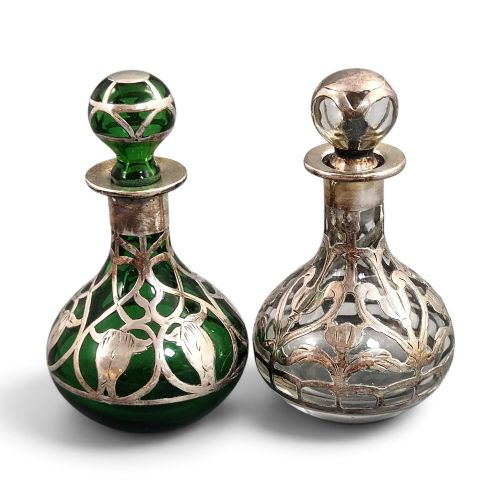
More decorative examples incorporate natural tortoiseshell inlaid into the silver lid, guilloche enamel in bright tones, or delicate sterling silver overlay hugging the glass contours in organic Art Nouveau motifs.
Several gentleman's cologne bottles listed here include lockable mechanisms, ensuring private access to one's preferred fragrance.
Assessing quality in dressing bottles
Quality rests significantly on the depth and crispness of the glass cutting, where sharp facets and clear, heavy crystal elevate a piece above simpler moulded glass bodies. The thickness and proportion of the silver mount relative to the glass also indicate the original maker's investment in materials.
The integrity of secondary materials marks another distinction, particularly in how neatly tortoiseshell is fitted beneath silver pique work or how evenly guilloche enamel covers the metal lid without chipping. Complete sets, original stoppers and legible assay hallmarks further distinguish finer specimens.
Gorham·Harold Bushell and Co·Barnsley and Co
The Edwardian Silver Dressing Bottle Glossary
- Hallmark
- Official marks stamped into the silver indicating the metal standard, assay office, and year of manufacture. These stamps allow collectors to date the mount precisely.
- Guilloche
- Enamel applied over engine-turned metalwork, creating a repeating geometric pattern beneath a translucent coloured surface. This technique appears frequently on Art Deco and Edwardian vanity items.
- Overlay
- A decorative layer of silver cut and applied directly onto the exterior of a glass bottle, popular during the Art Nouveau period.
- Collar
- The silver band fitted around the neck of a bottle to secure the hinged or screw-on lid. It frequently carries the primary hallmarks for the piece.
- Cologne bottle
- A larger vessel traditionally used for eau de cologne rather than concentrated perfume, often found in travelling cases or pairs.
Edwardian Silver Dressing Bottle: Frequently Asked Questions
What is an edwardian silver dressing bottle?
An edwardian silver dressing bottle is a small glass container fitted with a sterling silver top, designed to hold perfume, cologne or cosmetic liquids on a dressing table. These functional items reflect the detailed craftsmanship of early twentieth-century vanity wares.
They were produced in various forms, from single globular scent bottles to matched pairs and cased sets intended for travel or display.
How were these bottles used?
These vessels held scented waters, perfumes and toilet waters used for personal grooming during the Victorian and Edwardian eras. Owners kept them on dressing tables or packed them into fitted leather cases for travel.
Many featured secure stoppers and tight-fitting silver lids to prevent delicate fragrances from evaporating over time.
How do I date an antique silver dressing bottle?
Dating relies heavily on the silver hallmarks stamped onto the collar or lid, which indicate the specific assay office and year of manufacture. Stylistic clues such as floral Art Nouveau repoussé work or geometric Art Deco enamel also help place a piece in its era.
Comparing the depth of the glass cutting and the materials used alongside the silver provides additional context for the period.
How should I care for silver and glass bottles?
Care involves gently cleaning the glass with warm soapy water while protecting any delicate silver mounts, enamel, or tortoiseshell from harsh polishing agents. Soft cloths prevent scratching the metal and glass surfaces.
If the bottle retains its original cork stopper, keeping the interior dry helps preserve the historic fitting.