



Edwardian Silver Compact
These edwardian silver compact pieces bring tactile early twentieth-century elegance to the dressing table, prized for their delicate enamel work and bright polished metal.
Edwardian Silver Compact
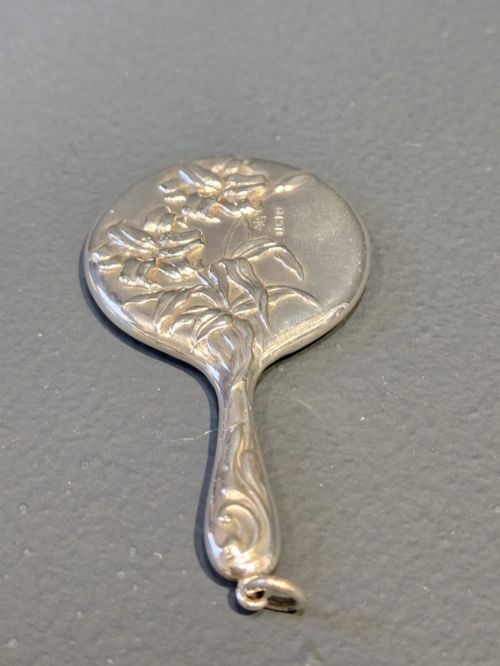
When you search for an edwardian silver compact, you are looking at small personal accessories and vanity items made during the early decades of the twentieth century. These items include powder compacts, rouge pots, pill boxes, trinket boxes, and watch cases designed for pocket or dressing table use. Most examples date from the Edwardian period through to the George V and Art Deco years, capturing a distinct shift in decorative taste.
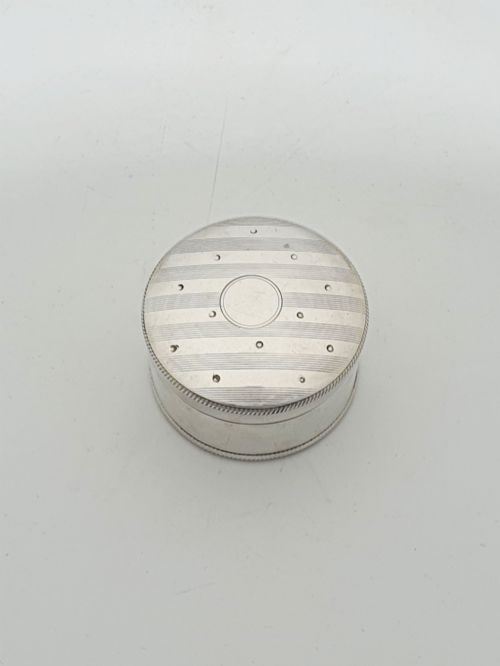
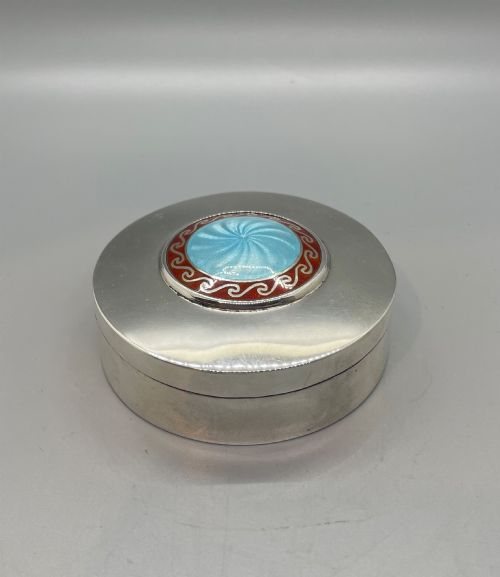
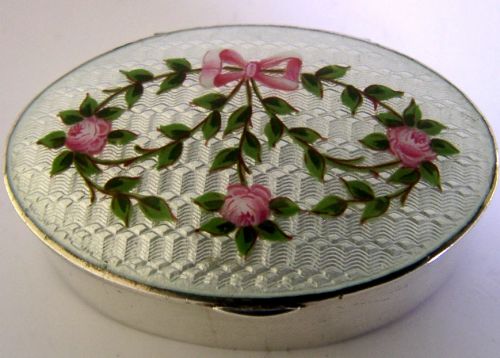
On this page, the pieces you meet most often combine sterling silver with colourful vitreous enamel surfaces. Forms range from simple round pill boxes with engine-turned geometric patterns to bright guilloche enamel boxes originating from Birmingham and continental makers. While some function as desk clocks or fob watch cases, the core focus remains on small portable containers meant for cosmetics and keepsakes.
How they were made
Makers fashioned these pieces primarily from sterling silver and brass, often applying engine-turning directly to the metal substrate to create precise geometric textures. This mechanical engraving catches the light beneath translucent layers of coloured enamel. Glass components also appear internally in specific vanity containers.
Enamelling forms the defining visual technique across the selection, utilising vitreous enamel and guilloche methods. Artisans fused powdered glass to the textured silver base under high heat, producing durable coloured surfaces with concentric or sunburst patterns beneath the glaze.
Edwardian Silver Compact Retail Price Guide 2026
Typical asking prices for edwardian silver compact among the pieces listed under this phrase on Sellingantiques today, from the lower quarter to the upper quarter. They describe what is for sale here now, not the wider market.
Objects span the Edwardian era, the First World War years, and the early Art Deco period.
What varies in quality
Quality rests significantly on the precision of the engine-turning and the depth of the enamel work. Finer examples display crisp, even mechanical patterns that interact harmoniously with the translucent glaze above them, whereas simpler pieces rely on plain polished silver surfaces.
The sophistication of the maker's mark and the complexity of the form also distinguish the tier of a piece. Signed works from established silversmiths command attention through balanced proportions and clean hinge fittings that reflect high standards of period craftsmanship.
Walker & Hall·Henry Matthews·Elkington & Co
The Edwardian Silver Compact Glossary
- Guilloche enamel
- A decorative technique where an intricate mechanical pattern is engraved into metal before a translucent layer of enamel is applied on top. This allows the underlying geometric design to remain visible through the coloured glaze.
- Engine-turned
- A method of mechanical decoration using a lathe to cut precise, repetitive geometric lines into metal surfaces. It adds texture and reduces glare on the polished silver.
- Vitreous enamel
- A material made by fusing powdered glass to a substrate by firing, usually between seven hundred and nine hundred degrees Celsius. The resulting compound is a durable, smooth and chemically resistant decorative layer.
- Sterling silver
- An alloy of silver containing ninety-two point five percent by mass of silver and seven point five percent by mass of other metals, usually copper. It provides the standard durable foundation for British decorative boxes of this era.
- Fob watch case
- A small protective housing designed to hold a pocket watch meant to be attached to a ribbon or chain. These cases often share the same decorative enamel treatments found on cosmetic compacts.
Edwardian Silver Compact: Frequently Asked Questions
What is an edwardian silver compact used for?
These small containers were originally designed for holding loose face powder, rouge, or pills for personal grooming throughout the day. They served as functional vanity accessories that fit easily into a small handbag or sat on a dressing table.
Today, collectors use them to display miniature decorative arts or to store small modern items like pills and mints. Their tactile nature makes them pleasant to handle and examine up close.
How do I identify an Edwardian piece?
Identification relies heavily on official hallmarks stamped into the silver, which indicate the assay office, such as Birmingham or London, and a specific date letter. Style cues also help, as Edwardian pieces often lean towards lighter, refined ornamentation compared to heavier Victorian designs.
Looking at the construction methods, such as the style of the hinge and the type of engine-turning, further helps narrow down the production era to the early twentieth century.
What is guilloche enamel?
Guilloche is a decorative technique where a metal surface is mechanically engraved with precise, repetitive patterns using a lathe. A translucent enamel layer is then fired over the top, allowing the engraved design to show through with striking depth.
This method was widely utilised on vanity items during the Edwardian and Art Deco periods to create vibrant, shimmering colour effects on silver.
How should I clean silver and enamel?
Silver components benefit from gentle cleaning with a soft microfibre cloth and specialised silver polish, taking care to avoid abrasive scrubbing near the edges of the enamel. Enamel surfaces simply require a wipe with a damp cloth and mild soap to maintain their glossy finish.
Harsh chemical dips must be avoided entirely, as they can permanently damage or discolour the vitreous enamel and weaken soldered joints.