





Edwardian Serpentine Server
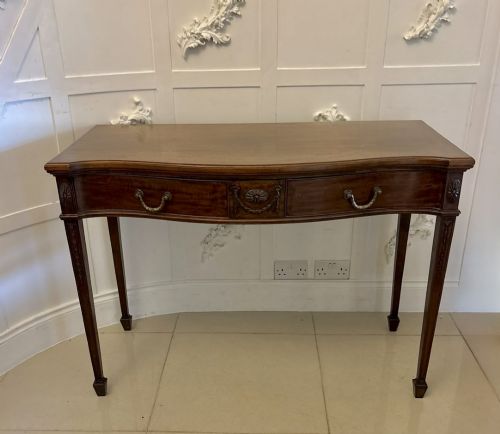
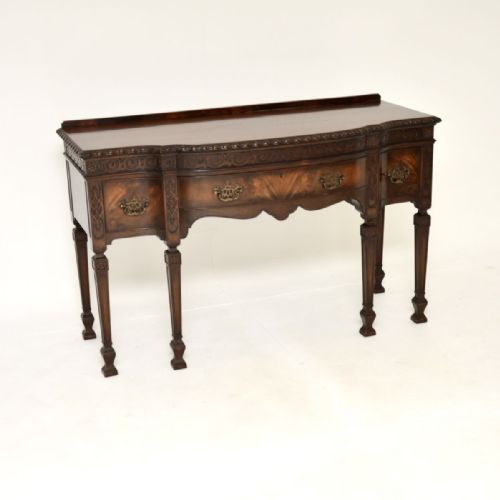
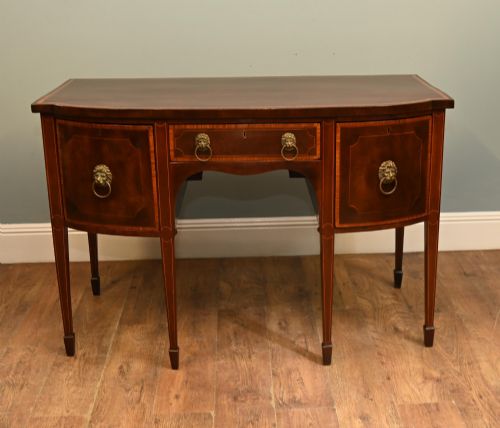
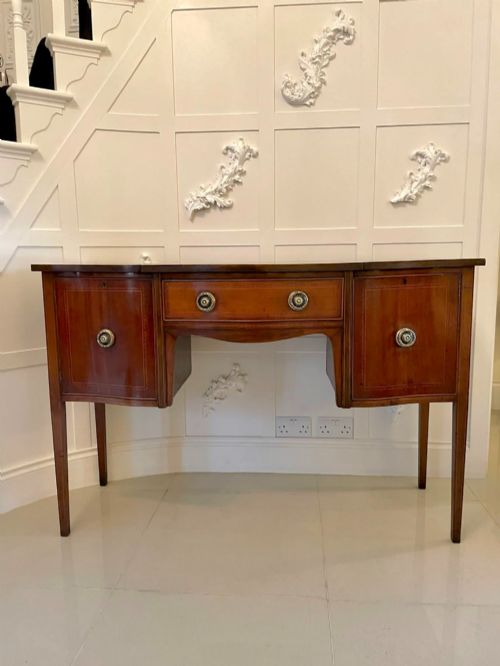
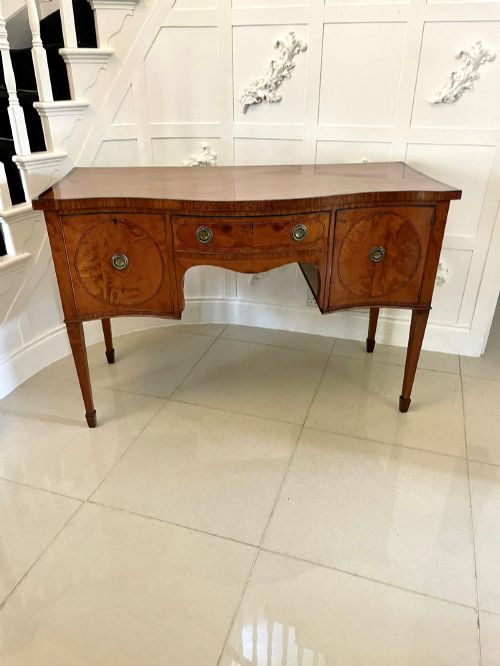
An edwardian serpentine server offers a graceful curved front and fine timber work, bringing functional elegance to a dining room.
Edwardian Serpentine Server
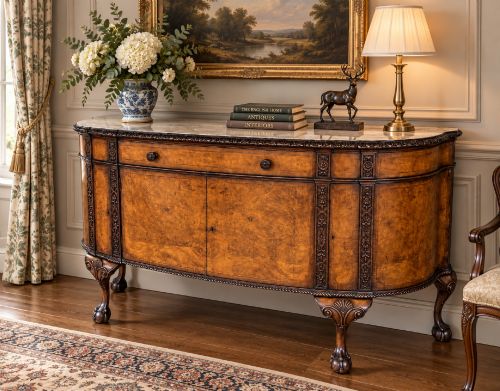
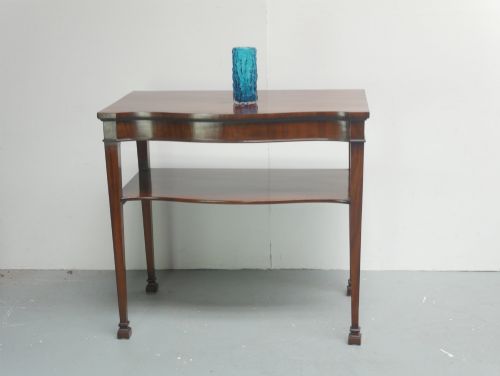
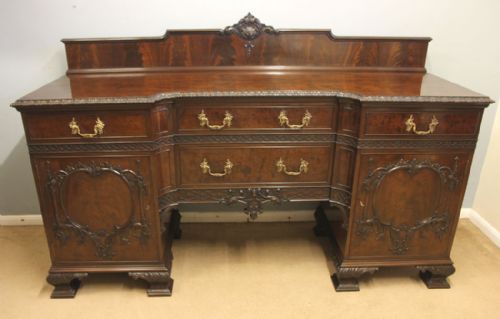
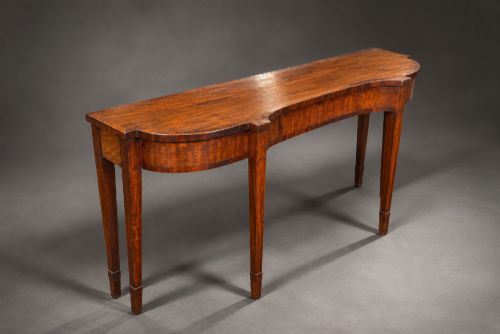
The edwardian serpentine server brings a distinct curved silhouette to dining spaces, often taking the form of a substantial sideboard or serving table. These pieces emerge across several periods including the Edwardian era, Victorian period, and George III style, reflecting a sustained appreciation for flowing lines.
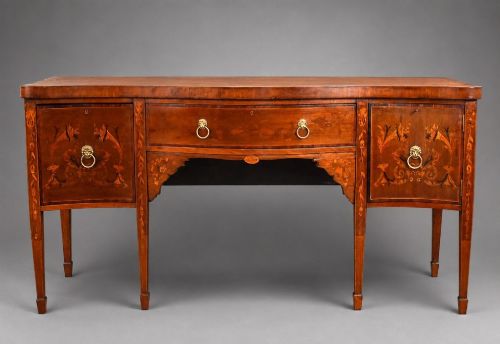
Most examples found here present a mahogany construction, frequently enhanced with boxwood or marquetry inlay. Makers drew upon Sheraton Revival and Chippendale styles to shape the timber into the characteristic undulating front that defines the category.
Materials and construction
Makers utilised solid mahogany and burr walnut as the primary timber, employing skillful turning and joinery to achieve the complex curved silhouette. Brass hardware often complements the rich grain of the wood.
Edwardian Serpentine Server Retail Price Guide 2026
Typical asking prices for edwardian serpentine server among the pieces listed under this phrase on Sellingantiques today, from the lower quarter to the upper quarter. They describe what is for sale here now, not the wider market.
One unexpected survivor includes a matching twelve-piece cutlery set tucked away inside the timber frame.
Factors of quality
The precision of the curved serpentine front distinguishes finer examples, requiring expert handling of timber to maintain structural integrity and visual flow. Simpler forms lack the intricate shaping found on the most ambitious pieces.
The complexity and execution of the inlay work dictate the refinement of the piece, with delicate satinwood and boxwood detailing elevating the craftsmanship above plain timber surfaces.
The Edwardian Serpentine Server Glossary
- Serpentine front
- A curved furniture front featuring a convex centre flanked by concave wings. This shape requires advanced woodworking skill to construct harmoniously.
- Marquetry inlay
- Decorative patterns formed by fitting small pieces of veneer into a prepared recess in the wood. It often depicts floral or geometric motifs.
- Sheraton Revival
- A late nineteenth-century design movement inspired by the furniture of George Sheraton. It favours light proportions, satinwood, and classical ornamentation.
- Satinwood
- A durable tropical timber with a lustrous yellowish grain used extensively for banding and inlay. It provides a bright contrast against darker woods like mahogany.
- Flame mahogany
- Mahogany veneer cut to reveal a characteristic flamelike grain pattern. It was selected for prominent surfaces to create visual depth.
Edwardian Serpentine Server: Frequently Asked Questions
How do I clean an antique server?
Dust the timber regularly with a soft, dry cloth to prevent a buildup of grit. Avoid modern chemical polishes that can damage the antique finish over time.
Apply a traditional beeswax occasionally to nourish the wood and maintain its natural lustre. Keep the piece away from direct sunlight and radiators to prevent the timber from splitting.
Can I use this in a modern dining room?
These servers integrate well into contemporary interiors, offering generous surface space and practical storage for modern dining needs. The curved silhouette softens rigid architectural lines in newer rooms.
Pair the piece with minimalist furniture to let the traditional timber grain and inlay work stand out. Ensure the room humidity remains stable to protect the antique wood.
What is the difference between a sideboard and a server?
Servers generally offer a lighter profile and were traditionally designed for holding dishes during a meal rather than heavy storage. They often feature slender legs and a more compact footprint.
Sideboards frequently incorporate more extensive cupboard and drawer space for tableware. Both share the characteristic curved front in this specific group.
How do I identify a Sheraton Revival piece?
Sheraton Revival furniture typically dates from the late Victorian or Edwardian eras and mimics eighteenth-century lightness. Look for tapered legs, delicate stringing, and classical neoclassical motifs.
The use of satinwood inlay alongside mahogany is a strong indicator of this revival style. The construction methods and interior secondary woods usually confirm the later nineteenth or early twentieth-century date.