



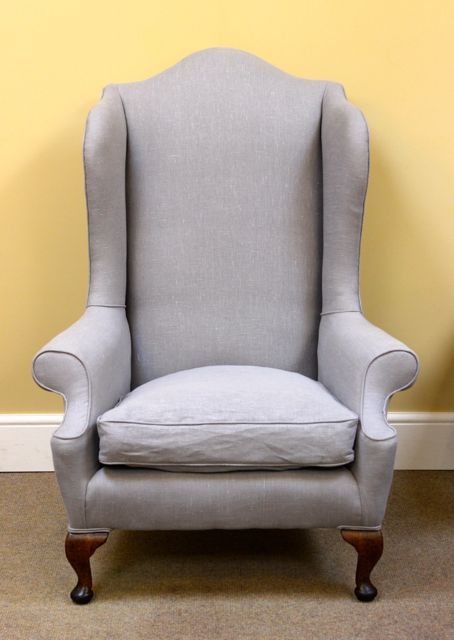


Edwardian Scroll Armchair
An edwardian scroll armchair offers deep, sprung comfort with sweeping arms, bringing understated elegance and inviting proportions to a period room.
Edwardian Scroll Armchair
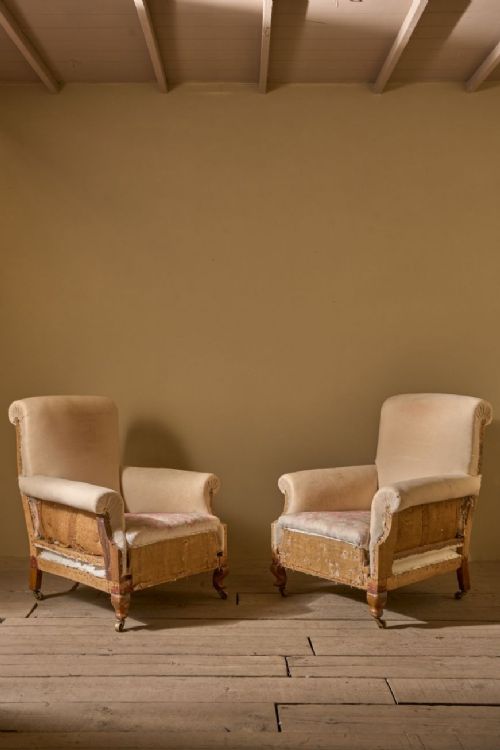
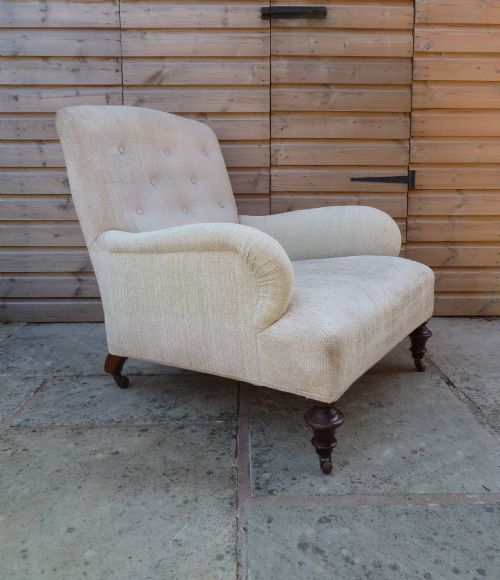
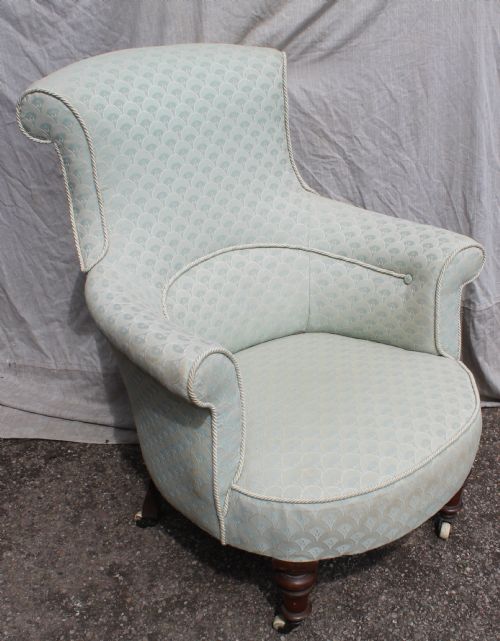
The edwardian scroll armchair is defined by its generous proportions, rolled armrests and fully upholstered frame designed for relaxation. These chairs often arrive covered in calico or replacement fabric, ready for a bespoke finish.
While the label points to the early twentieth century, the inventory reveals related forms from the Victorian era and the nineteenth century. Buyers frequently encounter country house models alongside library armchairs and smaller club styles.
Origins stretch from formal townhouses to English country houses, reflecting a period when seating prioritised deep cushioning. Maker influences range from classical Regency lines to comfortable Victorian frames.
How they were made
Construction relies on sturdy hardwood frames, typically mahogany or walnut, providing a robust skeleton hidden beneath layers of traditional upholstery. Metal components such as brass castors often support the feet, allowing smooth movement across floorboards.
The characteristic scroll arms and backs are shaped from timber before being padded with natural stuffings and covered in hard-wearing fabric or calico. Bentwood variants utilise steaming techniques to bend timber into curved structural elements.
Edwardian Scroll Armchair Retail Price Guide 2026
Typical asking prices for edwardian scroll armchair among the pieces listed under this phrase on Sellingantiques today, from the lower quarter to the upper quarter. They describe what is for sale here now, not the wider market.
Listings feature mahogany, walnut and general hardwood frames paired with traditional calico, fabric and brass elements across nineteenth-century and Edwardian periods.
What varies in quality
Quality rests in the integrity of the underlying timber frame and the depth of the original sprung seat. Heavier hardwood construction and disciplined joinery distinguish superior workshop production from simpler commercial output.
The refinement of the carved scrollwork and the balance of the proportions dictate the visual success of the piece. Subtle details in the turnings and the quality of the concealed upholstery materials separate standard seating from exceptional examples.
Howard and Sons·Trollope and Sons·Hampton and Sons
The Edwardian Scroll Armchair Glossary
- Calico
- A plain-woven cotton fabric used as the initial upholstery cover beneath decorative top cloths. This unbleached material provides a neutral foundation for future recovering.
- Bentwood
- Wood that has been heated and bent into curved shapes. This technique creates lightweight yet resilient frames.
- Sabre leg
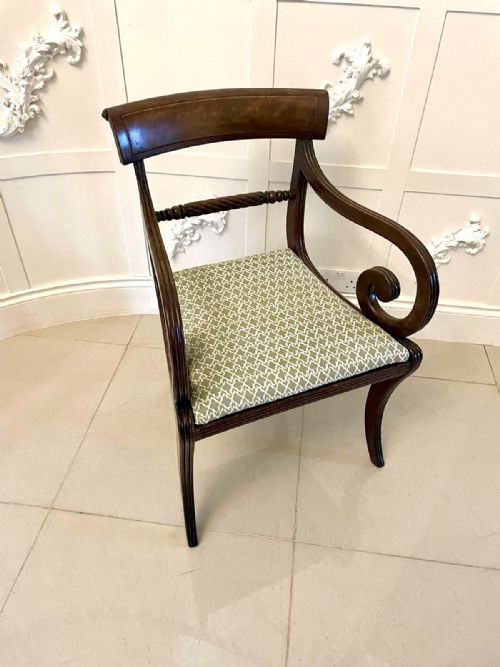
- A concave-tapered furniture leg resembling a curved sword. It appears frequently on desk chairs and classical seating.
- Tub chair
- An armchair with a rounded back that flows directly into the arms. This enclosed design offers compact and supportive seating.
- Scroll back
- A chair back featuring an outward-curving top rail or arms shaped like a scroll. It adds a decorative flourish to upholstered frames.
Edwardian Scroll Armchair: Frequently Asked Questions
What defines an edwardian scroll armchair?
These armchairs feature sweeping scrolled arms and deep upholstered seats designed for comfort. They typically date from the early twentieth century or late nineteenth century.
They reflect the relaxed domestic styling of English country houses. The generous scale makes them practical for modern living spaces.
Are these chairs comfortable for daily use?
The deep seats and sprung interiors provide substantial support for reading or relaxing. Their robust hardwood frames withstand regular daily sitting.
Many examples arrive newly upholstered in calico, allowing owners to apply their own fabric choice. This ensures the seating matches contemporary interiors while retaining historical charm.
How do I identify a Howard and Sons chair?
Makers mark their work on the castors, legs or webbing straps beneath the seat. Stamped serial numbers often accompany these signatures.
The quality of the internal stuffing and the tension of the springs also indicate workshop origin. These pieces represent the pinnacle of nineteenth-century upholstery standards.
What is the difference between Edwardian and Victorian armchairs?
Victorian seating often employs darker ebonised or heavy mahogany frames with rigid button-backed upholstery. The proportions tend to be more formal and upright.
Edwardian designs introduce lighter woods, bentwood techniques and looser, deeper cushioning. The overall aesthetic shifts toward relaxed domestic comfort rather than formal reception rooms.