
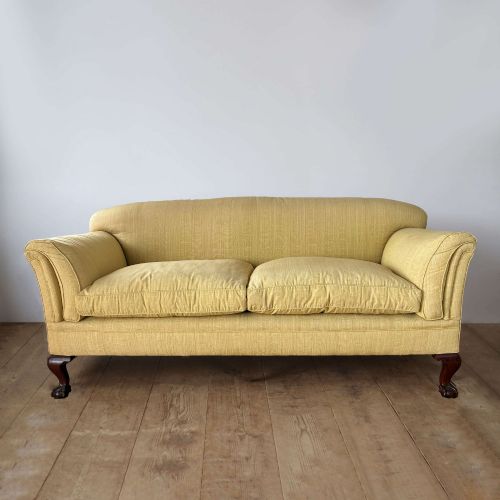


Edwardian Scroll Arm Seat
An edwardian scroll arm seat brings grounded comfort and formal line together, offering low, sweeping supports designed for relaxed lounging.
Edwardian Scroll Arm Seat
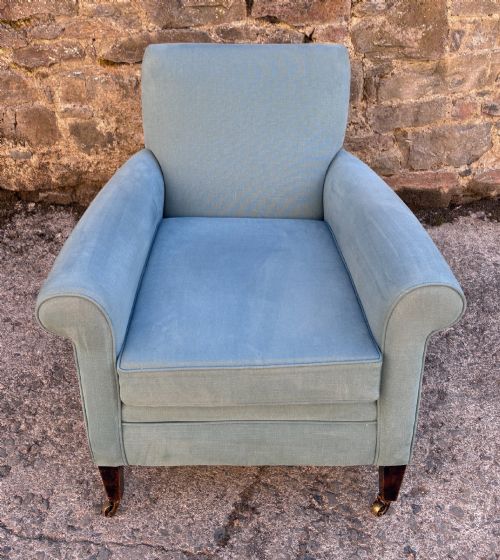
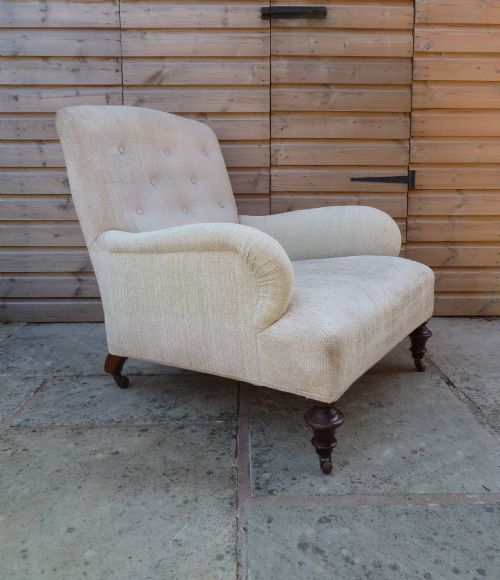
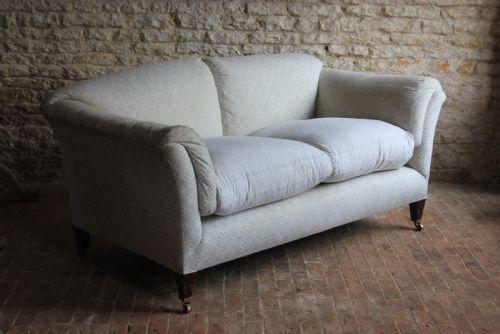
When you search for an edwardian scroll arm seat, you encounter upholstered armchairs, sofas, and window seats originating primarily from the Edwardian period and the nineteenth century, alongside later revivals. These forms combine substantial frames with padded armrests that curve outward in a distinct scroll profile, often associated with English country house interiors.
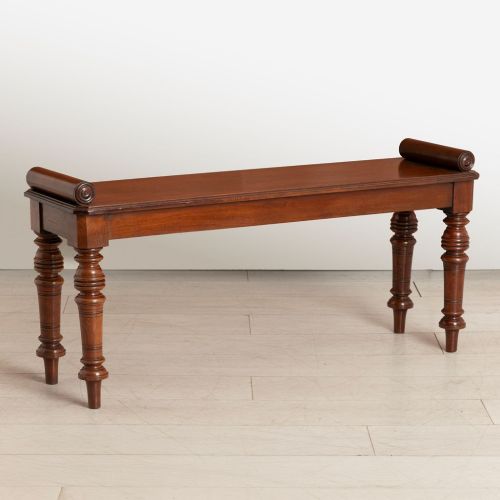
The selections on this page span compact window seats and deep-seated armchairs to large sofas and settees. You are most likely to meet armchairs and sofas featuring generous proportions, paired with supporting benches and stools that share similar stylistic roots.
Makers and workshops of the era, such as Howard and Sons, Trollope and Sons, and Hampton and Sons, established specific standards for these seating types. Their output ranges from club armchairs to Chesterfield sofas and library seating, reflecting both neoclassical and revivalist influences.
Materials and construction
Frameworks rely on dense hardwoods such as mahogany, walnut, and general hardwood timber, providing the structural integrity needed to support deep upholstery. Visible wooden elements, including legs and framing, are frequently polished or ebonised.
Upholstery techniques incorporate traditional materials like cotton calico, fabric, and damask, layered over internal springing and padding. Details such as feather seat cushions and brass castors complete the construction of these pieces.
Some nineteenth-century sofas hide feather cushions inside their scroll arms, offering an unexpected pocket of softness where you least expect it.
Distinctions in quality
The distinction between standard examples and the finest pieces rests upon the precision of the frame joinery and the integrity of the internal stuffing. Superior items maintain rigid structural skeletons beneath the upholstery, ensuring the scroll arms retain their designed contour under regular use.
Material selection further defines the hierarchy, where dense hardwoods and higher-grade textiles like silk damask or heavy cotton distinguish workshop-produced seating from simpler commercial variants. The execution of carved details on exposed wooden elements also indicates the level of craftsmanship involved.
Howard and Sons·Trollope and Sons·Hampton and Sons
The Edwardian Scroll Arm Seat Glossary
- Scroll arm
- A rolled or curved armrest profile characteristic of nineteenth and early twentieth-century seating. This design provides a soft contour for the arm while framing the upholstered body.
- Window seat
- A long, narrow bench designed to fit beneath a window recess. These pieces frequently feature upholstered tops and short wooden legs.
- Damask
- A reversible figured fabric traditionally woven on a jacquard loom with patterns formed by contrasting warp and weft threads. It is frequently utilised for formal upholstery.
- Calico
- A plain-woven unbleached cotton textile often used as a base lining beneath outer upholstery fabrics. It provides a stable foundation for stuffing.
- Chesterfield sofa
- A large upholstered sofa featuring rolled arms of the same height as the back. This form is traditionally associated with deep buttoning and tailored pleating.
Edwardian Scroll Arm Seat: Frequently Asked Questions
What defines an edwardian scroll arm seat?
An edwardian scroll arm seat is defined by its characteristic rolled armrests, which curve outward to frame an upholstered seat and back. These pieces typically date from the late nineteenth or early twentieth century and were built for domestic comfort.
They appear in forms ranging from compact window seats and stools to deep armchairs and large sofas. Their design draws upon traditional English country house aesthetics and revival styles.
How were these seats used historically?
Historically, these seats served as primary domestic furnishings in parlours, libraries, and drawing rooms. Deep-seated armchairs and sofas were designed for extended lounging and reading.
Window seats were specifically placed in alcoves to provide casual seating near natural light. Benches and stools functioned as flexible auxiliary furniture for larger rooms.
How should I care for upholstered antique seating?
Care for antique upholstered seating involves gentle vacuuming with a soft brush attachment to remove dust from fabric crevices. Direct sunlight should be avoided to prevent fading of textiles and drying of wood.
Internal padding and feather cushions benefit from periodic professional inspection to maintain structural support. Wooden elements require minimal cleaning with dry cloths, avoiding harsh chemical polishes.
How do I distinguish Edwardian pieces from Victorian ones?
Edwardian seating generally exhibits lighter proportions and simpler decorative schemes compared to earlier Victorian furniture. The palette often shifts toward brighter fabrics and less dense woodwork.
Victorian pieces from the nineteenth century tend to feature heavier frames, darker timbers like ebonised wood or mahogany, and more elaborate neoclassical or revival ornamentation. Maker stamps and labels can further clarify the exact period of production.