
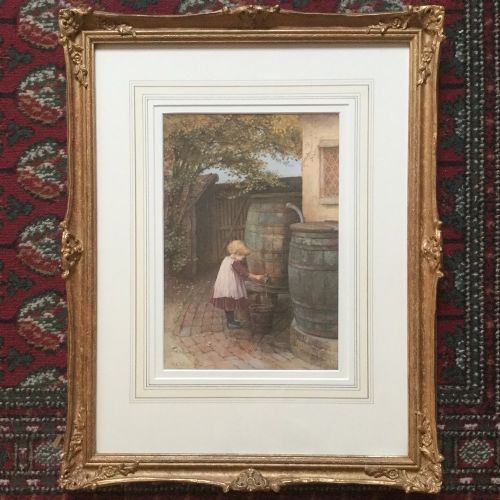


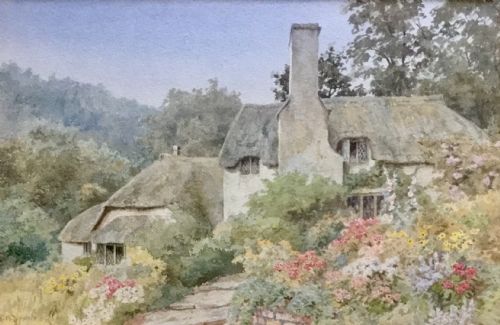


Edwardian Rustic Landscape Picture
An edwardian rustic landscape picture captures the quiet charm of the British countryside through the skilled hands of period artists.
Edwardian Rustic Landscape Picture
An edwardian rustic landscape picture brings traditional rural scenery into the home through period works created between the late nineteenth century and the early decades of the twentieth century. These pieces record pastoral scenes such as farm yards, hay fields, country inns, and quiet village streets across various regions of Britain.
The selection on this page unites works spanning the Victorian, Edwardian, and later periods up to the nineteen-thirties. Buyers encounter both delicate watercolours on paper and substantial oil paintings on canvas or board.
Works attributed to known artists sit alongside examples from the broader English School and primitive folk art pieces. Each object preserves a specific corner of the countryside as observed by painters working during these eras.
What Varies in Quality
The distinction between works rests upon the artist's handling of light, perspective, and the specific details of rural life. Master painters captured natural movement in figures, animals, and weather with greater precision than anonymous or folk art practitioners.
Condition also separates examples, as works executed on paper require careful preservation behind glass to prevent fading and damp damage. Oil paintings on canvas or board maintain their structural integrity differently, relying on the stability of the ground layer and support.
Several artists captured horses mid-labour, proving that Edwardian farm animals possessed a professional patience we rarely see today.
Charles Edward Wilson·Henry John Yeend King·John Atkinson·James William Booth·David Woodlock·William Miller Frazer·William Manners·George Hamilton Constantine·Walter Henry Sweet·Thomas Nicholson Tyndale·John Falconar Slater·Wycliffe Egginton
The Edwardian Rustic Landscape Picture Glossary
- Watercolour
- A painting method where fine pigment is suspended in a water-based solution and applied to paper. This medium creates translucent washes of colour suited to pastoral scenes.
- Oil on Canvas
- A technique involving oil-based pigments applied to a woven fabric stretched across a wooden frame. This method permits rich texture and deep colour layering.
- Gesso
- A plaster-like mixture applied to wooden frame mouldings as a base for gilding. It provides a smooth surface for gold leaf application.
- British Impressionism
- An art movement focusing on everyday subjects and natural light through loose brushwork. Practitioners recorded rural views with an emphasis on immediate visual atmosphere.
- Folk Art
- Artistic production created by self-taught or provincial makers outside academic traditions. These works display a direct, unpretentious approach to local subject matter.
Edwardian Rustic Landscape Picture: Frequently Asked Questions
What subjects appear in these pictures?
The artworks depict traditional rural views including farm yards, harvest scenes, country lanes, and village buildings. Artists recorded specific locations across Britain, from Devon and Somerset to northern England and Scotland.
Human activity forms a central element in many compositions. Labourers, farmers with horses, and gardeners appear at work amid fields, streams, and herbaceous borders.
How do watercolours differ from oils here?
Watercolour works utilise pigment on paper, resulting in lighter, transparent effects that often require protection behind glass. They offer a delicate record of atmospheric conditions and rural light.
Oil paintings utilise suspended pigments on canvas or board, yielding richer textures and heavier material presence. These works often carry greater surface depth and reflect the physical touch of the brush more overtly.
How do I date a rural landscape?
Dating relies on stylistic markers, artist biographical dates, and period framing methods recorded in the individual listings. Pieces span from the late Victorian era through the Edwardian period and into the nineteen-thirties.
Clothing styles of figures within the scene, signature formats, and the specific medium provide additional clues for placing a work within its historical decade.
How should I display these pictures?
Watercolour paintings require placement away from direct sunlight to prevent fading of the pigments on paper. Framing behind glass protects the surface from environmental moisture and dust.
Oil paintings on canvas tolerate ambient light conditions more readily but benefit from stable indoor temperatures. Matching the work to an appropriate wall space ensures proper visibility of its detail and scale.