







Edwardian Ruby Pearl Jewellery
Edwardian ruby pearl jewellery brings together rich red gems and lustrous pearls in delicate gold and platinum settings.
Edwardian Ruby Pearl Jewellery
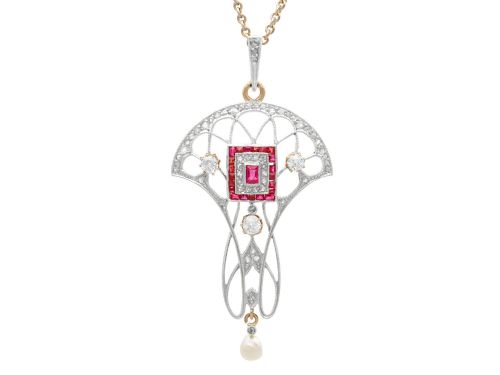
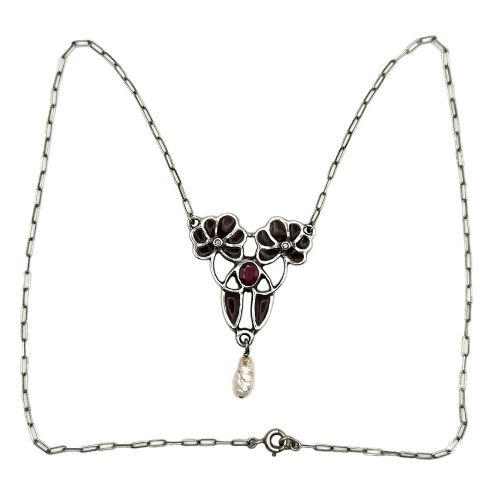
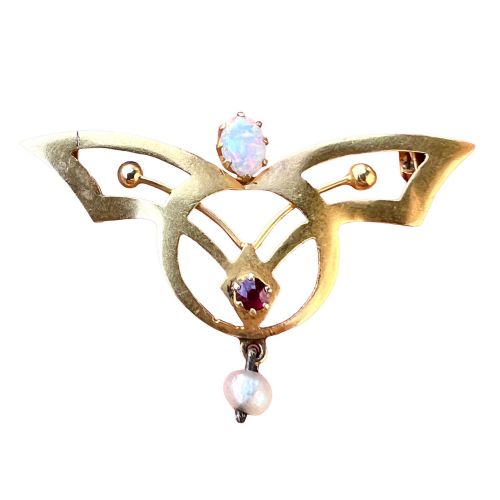
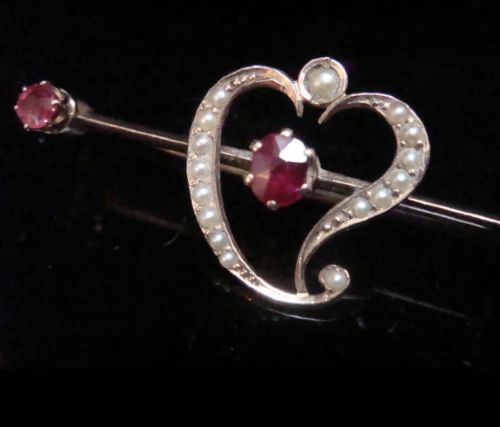
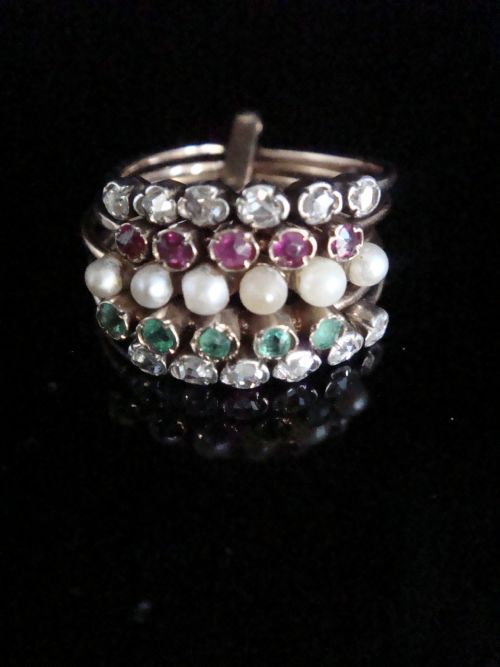
Edwardian ruby pearl jewellery encompasses rings, brooches, necklaces, pendants, and lockets created during the early twentieth century alongside select Victorian pieces. When you search for edwardian ruby pearl jewellery, you encounter delicate cluster rings, heart brooches, crescent moons, and intricate bar brooches that showcase characteristic lightness.
The pieces on this page span the Edwardian and Victorian periods, featuring the Belle Epoque and Art Nouveau styles that defined the era. Common forms include snake pendants, stacking rings, and coronet brooches set with natural rubies and pearls.
Materials and Construction
Goldsmiths utilised varied gold purities including 9ct, 15ct, and 18ct yellow and rose gold, often combining gold with platinum in later Edwardian works. Metalwork frequently incorporates openwork wire scroll design and fine millegrain borders to secure stones without heavy bezels.
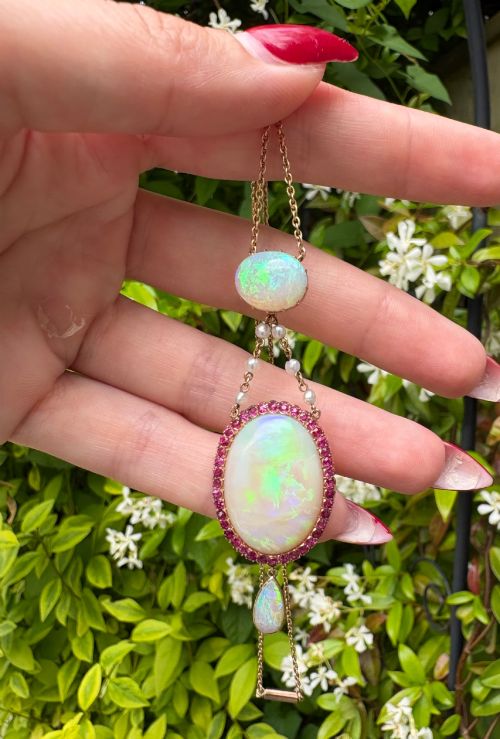
Rubies and pearls appear alongside diamonds, seed pearls, emeralds, sapphires, opals, and enamel to build layered colour and texture. Stones are set into yellow or rose gold mounts, sometimes backed with silver for diamond work.
Edwardian Ruby Pearl Jewellery Retail Price Guide 2026
Typical asking prices for edwardian ruby pearl jewellery among the pieces listed under this phrase on Sellingantiques today, from the lower quarter to the upper quarter. They describe what is for sale here now, not the wider market.
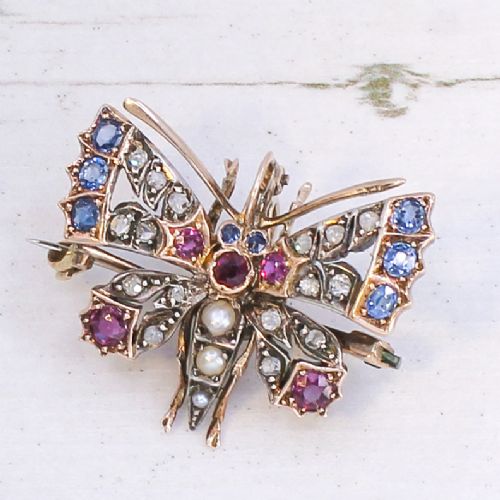
Several pieces incorporate coiled snakes and creepy-crawly insects, proving that Edwardian sentimentality had a surprisingly wild side.
Quality Variations
Quality rests in the precision of the metalwork, such as the delicacy of the millegrain edge and the integration of wirework in brooches and rings. Heavier gold purities like 15ct and 18ct indicate finer production compared to standard 9ct alternatives.
The harmony between ruby colour and pearl lustre determines the visual impact of a cluster ring or heart pendant. Well-matched natural stones and balanced proportions separate standard production from exceptional examples.
The Edwardian Ruby Pearl Jewellery Glossary
- Millegrain
- A decorative technique featuring a raised border of tiny metal beads along the edges of a setting. This method softens the transition between metal and stone.
- Seed Pearl
- Very small natural pearls, often half-drilled and glued or pegged onto a backing. They create delicate shimmering borders in Edwardian clusters.
- Belle Epoque
- A French term denoting the beautiful era spanning the late nineteenth century to the First World War. Designs from this period emphasise graceful garlands and platinum settings.
- Cluster Ring
- A ring featuring a central gemstone surrounded by a ring of smaller stones, typically diamonds or pearls. This layout maximises sparkle and colour contrast.
- Bar Brooch
- A slender horizontal pin featuring decorative elements centred along a metal bar. These pieces were pinned to lapels and collars.
Edwardian Ruby Pearl Jewellery: Frequently Asked Questions
How do I wear these brooches?
Pin them to heavy winter coats, linen jackets, or knitted scarves to secure the weight of the gold and gemstones safely.
Ensure the safety catch functions correctly before fastening the piece to valuable fabrics.
Are these rubies treated?
Rubies from the Edwardian period are predominantly natural stones originating from traditional mines without modern enhancement treatments.
Gemmological testing can confirm the natural origin and lack of heat treatment in specific stones.
How do I clean gold jewellery?
Clean gold mounts and durable gemstones using warm soapy water and a soft brush to remove dust from settings.
Keep pearls away from harsh chemical cleaners, as moisture and strong agents damage their organic nacre.
What is 15ct gold?
Fifteen carat gold is a specific alloy standard containing sixty-two point five percent pure gold, commonly found in British antique jewellery.
This purity standard was abandoned in Britain in nineteen thirty-one, making it a reliable indicator of antique provenance.